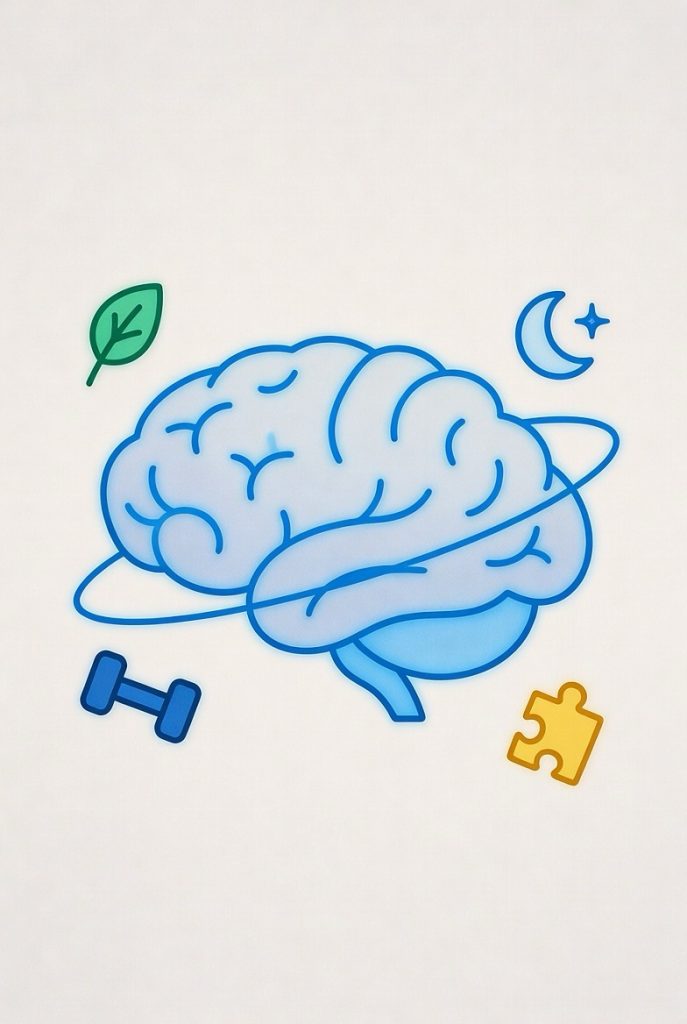
Optimizing brain performance supports memory, focus, productivity, and long-term mental health. Key strategies work by boosting neuroplasticity and cognitive reserve. Regular physical exercise, especially aerobic and strength training, increases blood flow and BDNF to strengthen memory and learning. A healthy diet like the MIND or DASH diet—rich in leafy greens, berries, whole grains, and omega-3 fatty acids—protects the brain from inflammation and cognitive decline. Quality sleep (7–9 hours) restores neurotransmitters, clears toxins, and sharpens focus. Mental stimulation through learning, puzzles, and novelty builds processing speed and problem-solving skills. Meditation helps manage stress, improves attention, and supports emotional balance, while social engagement strengthens brain networks and resilience. Combined, these habits enhance cognitive function, reduce dementia risk, and promote lifelong mental well-being.
Long Version
Optimizing Brain Performance: A Comprehensive Guide to Enhancing Cognitive Function
In today’s fast-paced world, optimizing brain performance has become essential for maintaining mental sharpness, boosting productivity, and supporting overall mental well-being. Brain optimization involves strategies that enhance cognitive function, including memory improvement, focus and concentration, processing speed, problem solving, and attention to detail. By leveraging the brain’s inherent neuroplasticity—the ability to form new synapses and adapt nerve cells—we can improve mental performance and build cognitive reserve, which acts as a buffer against cognitive decline, dementia prevention, and Alzheimer’s risk. This article explores evidence-based approaches to unleash your brain power, drawing from scientific insights into brain health.
The Foundations of Brain Health and Neuroplasticity
At the core of brain optimization lies brain plasticity, the process by which the brain reorganizes itself through changes in synapses, neurotransmitters, and trophic factors like Brain-Derived Neurotrophic Factor (BDNF). BDNF plays a pivotal role in neuroplasticity, promoting the growth and survival of nerve cells, particularly in the hippocampus, a region crucial for memory and learning. Low levels of BDNF are associated with reduced brain performance, but lifestyle interventions can elevate it, fostering stronger neural connections and enhancing overall cognitive function. Neurotransmitters, such as those involved in reward and motivation pathways, further support this plasticity, while trophic factors ensure the maintenance of healthy synapses. Understanding these mechanisms empowers individuals to adopt habits that not only prevent cognitive decline but also amplify mental performance.
Physical Exercise: Fueling Brain Power Through Movement
Physical exercise is a cornerstone of brain optimization, with aerobic activity standing out for its profound impact on cognitive function. Regular aerobic exercise increases blood flow to the brain, stimulates BDNF release, and enhances neuroplasticity, leading to improved memory improvement and focus and concentration. Studies show that aiming for at least 150 minutes of moderate aerobic activity per week can reduce Alzheimer’s risk by preserving the hippocampus and strengthening synapses. Beyond aerobics, strength training supports mental sharpness by optimizing energy production, including adenosine triphosphate (ATP), the brain’s primary fuel source. Incorporating activities like walking, cycling, or yoga not only boosts productivity but also combats cognitive decline by building cognitive reserve through enhanced neurotransmitter activity. For optimal results, start gradually and choose enjoyable forms of physical exercise to sustain long-term brain health. To further enhance benefits, combine aerobic and resistance exercises, as this dual approach maximizes synaptic growth and cognitive flexibility across various age groups.
Nourishing the Brain: The Impact of a Healthy Diet
A healthy diet is vital for brain optimization, providing the nutrients that support nerve cells, synapses, and neurotransmitters. The MIND diet, a hybrid of the Mediterranean and DASH diet, emphasizes brain-boosting foods like leafy greens, berries, nuts, whole grains, and fatty fish to promote cognitive function and dementia prevention. Omega-3 fatty acids from fatty fish, such as salmon, enhance brain plasticity by reducing inflammation and supporting the hippocampus, while antioxidants in berries and vegetables protect against oxidative stress that can impair mental performance. Whole grains provide steady energy, aiding focus and concentration, and the DASH diet’s focus on low-sodium foods further lowers Alzheimer’s risk by maintaining vascular health. Integrating these elements—prioritizing omega-3 fatty acids, antioxidants, and whole grains—creates a nutrient-rich foundation that elevates BDNF levels, strengthens trophic factors, and enhances overall mental well-being. Limit processed foods to avoid hindering neuroplasticity and ensure sustained brain power. Additionally, incorporating polyphenol-rich foods like dark chocolate or green tea can provide extra neuroprotective effects, further bolstering cognitive reserve against age-related changes.
Sleep Hygiene: Restoring Cognitive Function Overnight
Sleep hygiene is non-negotiable for optimizing brain performance, as high-quality sleep consolidates memories, clears toxins, and replenishes neurotransmitters essential for problem solving and attention to detail. Aim for 7-9 hours of sleep quality nightly, maintaining a consistent schedule to regulate the stress response and support the hippocampus. During sleep, the brain produces ATP and trophic factors, fostering neuroplasticity and preventing cognitive decline. Poor sleep hygiene disrupts these processes, leading to reduced focus and concentration, but simple habits like avoiding screens before bed and creating a cool environment can enhance mental sharpness and productivity. By prioritizing sleep, you safeguard against dementia prevention challenges and bolster long-term brain health. To enhance sleep quality further, consider establishing a wind-down routine with light reading or herbal teas, which can deepen restorative sleep stages and amplify next-day cognitive performance.
Mental Stimulation and Brain Training: Sharpening the Mind
Mental stimulation through brain training is key to enhancing cognitive function, as it promotes neuroplasticity by challenging synapses and neurotransmitters. Activities like learning a new language, solving puzzles, or playing strategy games improve processing speed, problem solving, and memory improvement while building cognitive reserve against Alzheimer’s risk. Contingency training, a form of operant conditioning that reinforces adaptive behaviors, further boosts mental performance by altering neurobiological responses to challenges, enhancing emotional resilience and cognitive flexibility. Incorporate digital apps for brain training or engage in cultural pursuits to stimulate the hippocampus and trophic factors, ensuring sustained mental sharpness and preventing cognitive decline. Novelty is crucial—vary activities to maximize brain plasticity and overall productivity. Expanding this with cross-disciplinary challenges, such as combining art with logic puzzles, can create synergistic effects, leading to broader improvements in creative thinking and executive function.
Meditation and Managing the Stress Response
Meditation is a powerful tool for brain optimization, reducing the stress response that can impair cognitive function. Chronic stress activates the lateral habenula, a brain region that undermines reward-guided performance and contributes to mental fatigue, but mindfulness practices counteract this by elevating BDNF and strengthening synapses. Regular meditation enhances focus and concentration, supports neurotransmitter balance, and promotes neuroplasticity in the hippocampus, aiding dementia prevention. Techniques like deep breathing or guided sessions also improve sleep quality and mental well-being, making them essential for managing the lateral habenula’s role in stress and boosting overall brain power. Integrate meditation daily to foster resilience and elevate cognitive reserve. For deeper enhancement, explore progressive techniques like loving-kindness meditation, which not only reduces stress but also fosters empathy and social connectivity, indirectly supporting brain health through emotional balance.
Social Engagement: Connecting for Cognitive Resilience
Social engagement is often overlooked in brain optimization, yet it profoundly impacts mental performance by stimulating nerve cells and neurotransmitters through interactions. Building strong connections reduces isolation-related cognitive decline, enhances memory improvement via shared experiences, and supports brain plasticity. Activities like group classes or volunteering activate the hippocampus and trophic factors, lowering Alzheimer’s risk and improving problem solving through diverse perspectives. Social ties also modulate the stress response, promoting mental sharpness and productivity while contributing to dementia prevention. Prioritize meaningful interactions to harness this pillar for lasting brain health. To maximize benefits, seek out intellectually stimulating groups, such as book clubs or debate societies, which combine social elements with mental stimulation for compounded cognitive gains.
Building Cognitive Reserve: Strategies for Long-Term Prevention
To combat cognitive decline, focus on building cognitive reserve through integrated habits that protect against dementia and Alzheimer’s risk. This involves combining physical exercise, a healthy diet rich in omega-3 fatty acids and antioxidants, sleep hygiene, mental stimulation including contingency training, meditation to manage the lateral habenula and stress response, and social engagement to fortify synapses, neurotransmitters, and the hippocampus. Trophic factors like BDNF thrive in this environment, enhancing neuroplasticity and mental well-being. Monitoring health metrics and participating in research can further support prevention efforts, ensuring sustained brain optimization. For comprehensive long-term strategies, consider periodic cognitive assessments to track progress and adjust habits, while staying informed on emerging research to incorporate cutting-edge insights.
Conclusion: Achieving Peak Mental Well-Being
Optimizing brain performance is a holistic endeavor that integrates physical exercise, a healthy diet featuring the MIND and DASH diets, sleep hygiene, mental stimulation including contingency training, meditation to manage the lateral habenula and stress response, and social engagement. By seamlessly incorporating brain-boosting foods, elevating BDNF, and nurturing neuroplasticity, you can enhance cognitive function, boost productivity, and safeguard against cognitive decline. Embrace these strategies for a lifetime of mental sharpness and brain power, creating an authoritative foundation for enduring mental well-being.