Tag: space

Q&A

How Do Galaxy Collisions Impact Planetary Life?

Galaxy collisions, like the future merger between the Milky Way and Andromeda in about 4.5 billion years, involve galaxies passing through each other due to vast empty space, making direct star or planet crashes extremely rare. Gravitational forces can distort shapes, trigger bursts of star formation, and increase supernovae or gamma-ray bursts, potentially harming life […]

Blog

Future Human Evolution in Space Colonies

As humanity establishes isolated colonies in space, human evolution could diverge dramatically over 100,000 years. Natural selection in low gravity might favor taller, slimmer bodies with less muscle and bone density, while cosmic radiation could drive adaptations like enhanced DNA repair, darker skin, or better resistance to mutations and cellular aging. Microgravity causes rapid bone […]

Blog

Multiverse Hypothesis Explained in Depth

The multiverse hypothesis suggests our universe is just one of many—possibly infinite—parallel universes or alternate realities, each with different physical laws or outcomes. Rooted in quantum mechanics and cosmology, key ideas include the many-worlds interpretation, where every quantum event branches into separate realities without wave function collapse, thanks to decoherence; eternal inflation creating bubble universes […]

Blog

Evolution of the Universe: Big Bang to Present Day

The universe began about 13.8 billion years ago with the Big Bang, expanding from an extremely hot, dense state. A brief period of inflation rapidly stretched space, smoothing it and creating tiny density variations. As the universe cooled, fundamental forces separated and particles formed, leading to protons, neutrons, and electrons. Within minutes, light elements like […]

Noted

Geminids

The Geminids meteor shower is one of the most reliable and dazzling annual sky events, peaking each December. Unlike most meteor showers that come from comets, the Geminids originate from asteroid 3200 Phaethon, which sheds debris as it heats up near the Sun. Earth passes through this debris stream each year, producing slow, bright meteors […]

Blog

NASA’s SPHEREx Mission Maps the Universe in Unseen Detail

NASA’s SPHEREx mission, launched in March 2025, is a near-infrared space telescope mapping the entire sky in 102 color bands to study how the universe formed and evolved. By creating four full-sky surveys, it measures spectra from hundreds of millions of galaxies and stars, helping scientists probe cosmic inflation, galaxy growth, and the origins of […]

Blog

Joe Rogan Thinks Elon Musk Knows What’s Really Going On in Space

Joe Rogan believes Elon Musk knows hidden truths about space and aliens due to his SpaceX contracts with NASA and the Department of Defense. Rogan says Musk must stay quiet on UFOs and extraterrestrial topics because of security clearances, and his dismissals seem calculated. A major reason is the interstellar comet 3I/ATLAS discovered in 2025, […]

Noted

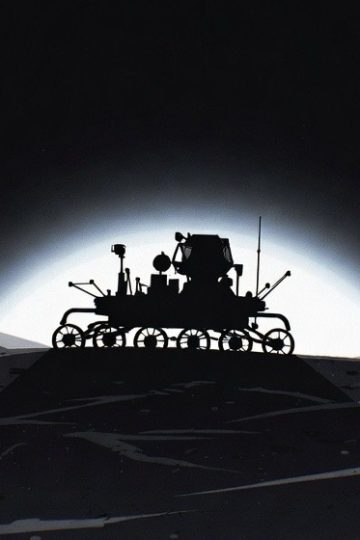
Lunokhod 1

Lunokhod 1, the Soviet Union’s groundbreaking robotic lunar rover, became the first vehicle to operate on another celestial body when it landed via Luna 17 in Mare Imbrium on November 17, 1970—exactly 55 years ago today. This eight-wheeled, bathtub-shaped rover, designed by Alexander Kemurdzhian and built by Lavochkin, weighed 840 kg and featured a solar-charged […]

Q&A

If an Alien Gave You 10 Seconds, What Big Question Would You Ask?

If an alien gave you just 10 seconds to ask one big question, what would it be? People dream of asking about faster-than-light travel, dark matter, black holes, or the meaning of life, morals, and the universe’s origin. Others want to know how aliens handle population, resources, government, religion, dreams, psychedelics, or superintelligence. Curious minds […]

Q&A

Which Unsolved Physics Mystery Still Baffles Scientists?

Physics is full of unsolved mysteries that baffle scientists. Dark matter (27% of the universe) and dark energy (68%) drive galaxies apart and speed up expansion, yet remain undetected. The cosmic microwave background supports inflation, but why the universe began so uniform is unknown. Matter dominates over antimatter due to baryon asymmetry, and the arrow […]