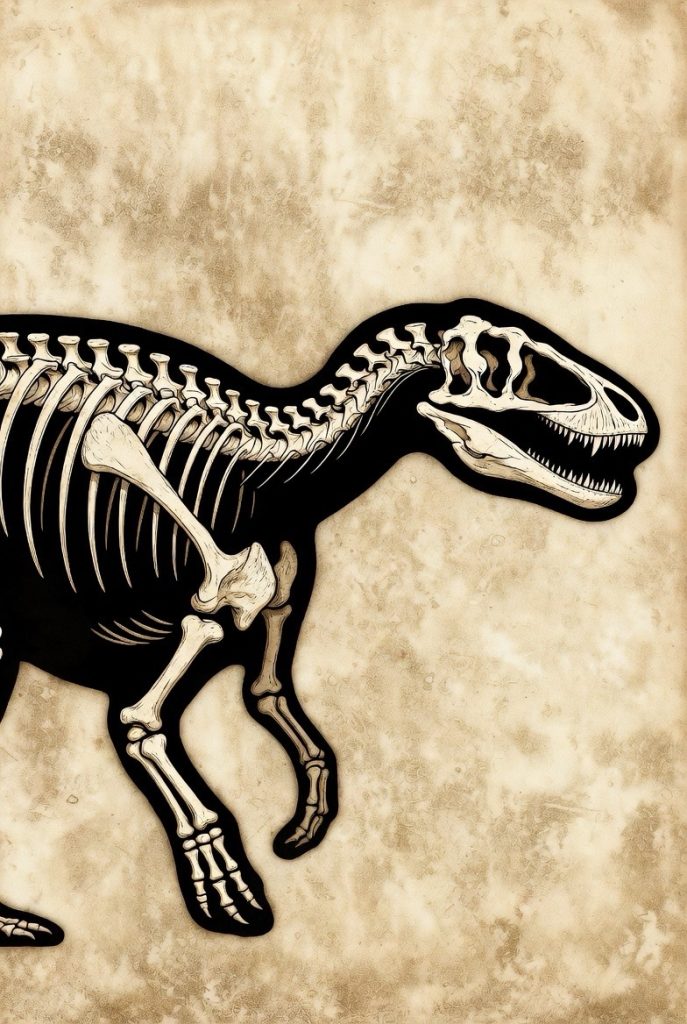
Dinosaur models are often wrong because fossils rarely preserve soft tissues, colors, or full anatomy, forcing scientists and artists to make educated guesses. Early reconstructions relied on limited fossils and comparisons to modern reptiles, leading to errors like dragging tails, upright postures, shrink-wrapped bodies, and missing feathers. New evidence from better fossils, CT scans, biomechanical studies, and comparisons with birds shows dinosaurs were bulkier, more dynamic, often feathered, and held their bodies differently. Features like lips, keratin coverings, accurate musculature, and realistic movement are still debated. As new discoveries and technologies emerge, reconstructions continue to change, reminding us that dinosaur models are scientific hypotheses—not final truths.
Long Version
Why Dinosaur Models Might Be Totally Wrong
Dinosaurs have captivated human imagination for centuries, from the first fossil discoveries in the 19th century to the life-size statues gracing museums today. Yet, the reconstructions and models we see—whether in scientific depictions, paleoart, or popular media—often fall short of true accuracy. Paleontology, the study of prehistoric life through fossils, reveals that many inaccuracies stem from incomplete fossil evidence, evolving interpretations of anatomy, and the challenges of reconstructing extinct animals. As scientists refine our understanding of dinosaur evolution, osteology, and taphonomy—the process of how organisms decay and fossilize—it becomes clear that traditional models may misrepresent everything from posture to integument. This article delves into the reasons behind these discrepancies, offering insights into why even well-intentioned depictions can lead us astray.
The Foundations of Dinosaur Reconstructions: A History of Evolving Insights
Early paleontology relied on fragmentary fossils, often just bones scattered across geological layers. When the first dinosaurs like Megalosaurus were described in the 1820s, reconstructions were speculative, drawing parallels with living reptiles. For instance, initial models portrayed sauropods like Cetiosaurus as semi-aquatic behemoths with dragging tails, a view now debunked by evidence of air-filled bones unsuitable for waterlogged environments. Similarly, Iguanodon was once shown in a kangaroo-like upright pose with a horizontal spine incorrectly oriented, ignoring fossil tracks that indicate a more balanced, quadrupedal stance with the tail elevated for counterbalance.
These early inaccuracies arose from limited phylogenetic relationships—understanding how dinosaurs relate evolutionarily to birds and other archosaurs. Without advanced tools like CT-scanning, which allows non-invasive examination of internal bone structures, scientists underestimated musculature and soft tissue. Museums, eager to display dramatic life-size statues, perpetuated these errors, influencing public perceptions of prehistoric life for generations. As fossil evidence accumulated, particularly from sites in China, Patagonia, Mongolia, and Africa, our grasp of dinosaur anatomy improved, highlighting how evolution shaped diverse forms among theropods, sauropods, and ornithischians. Recent finds, such as the Triassic long-necked Huayracursor jaguensis from South America and the oldest ankylosaur Spicomellus from Morocco’s Atlas Mountains, further illustrate how new discoveries continually reshape our views of early dinosaur sizes and distributions, suggesting the first dinosaurs may have been larger than previously thought.
Common Inaccuracies in Models and Paleoart
One pervasive issue in dinosaur models is “shrink-wrapping,” where artists depict skin tightly clinging to the skeleton, exaggerating skull openings and bone contours. This results in gaunt, monster-like figures that overlook layers of fat, muscle, and integument—the outer covering including skin, scales, or feathers. In reality, taphonomy shows that soft tissue rarely preserves, leading to reconstructions that appear emaciated compared to living animals. For example, modern paleoart now incorporates bulkier musculature, as seen in revised depictions of theropods like Tyrannosaurus, where facial fat and lips likely covered dentition, hiding teeth when the mouth was closed rather than exposing them in a perpetual grin.
Feathers represent another major correction. Once thought scaly like reptiles, many theropods—carnivorous dinosaurs including Velociraptor and Tyrannosaurus—possessed feathers for insulation, display, or even flight in bird-like relatives. Fossil evidence from impressions in fine-grained sediments reveals quill knobs and filamentous structures, challenging old models that ignored this integument. Adult Tyrannosaurus might have had sparse feathering for thermoregulation, akin to elephant hair, rather than full plumage, but pop culture often omits this entirely. Ornithischians like Psittacosaurus also show evidence of primitive feathers or bristle-like structures, expanding our view beyond theropods. Recent analyses of fossilized melanosomes—organelles that produce melanin—have enabled reconstructions of color patterns in sauropods, revealing camouflage or display hues that add vibrancy to once-drab models.
Posture errors abound in older reconstructions. Dinosaurs were once shown with dragging tails and pronated hands—palms facing down—as if clapping, which would require unnatural wrist bending. Finite element analysis (FEA), a computational method modeling stress on bones, confirms that theropod posture involved inward-facing palms and upright tails for balance. Sauropods, with their long necks and massive bodies, are now understood to have held heads horizontally rather than vertically, based on musculature studies and phylogenetic comparisons to birds. Movement depictions also falter; dinosaurs exhibited rigid, methodical locomotion, not the fluid, mammalian gaits often portrayed in media. New visualizations of theropod tracks from sites in China demonstrate more dynamic, agile movements than previously assumed, correcting static poses in models.
Keratin structures, such as horns and claws, add complexity. Ornithischians like Triceratops featured rugosity—rough bone textures—indicating keratin sheaths that extended features beyond the fossilized core. Vestigial arms in theropods like Carnotaurus, reduced through evolution, were likely more functional than depicted, possibly aiding in mating displays. Pigmentation and camouflage patterns remain speculative, inferred from melanosomes in rare preserved integument, suggesting colors ranged from earthy tones for blending to vibrant hues for signaling. Dinosaur “mummies”—exceptionally preserved specimens with skin impressions—have recently unlocked detailed fleshy appearances, such as tall crests over necks, transforming how we visualize species like Edmontosaurus with lifelike profiles.
Commercial models exacerbate these issues, often serving as caricatures rather than accurate representations. Studies comparing them to rigorous skeletal restorations reveal inflated volumes—up to 130% in some sauropod trunks—due to exaggerated chests and ignored proportions. These distortions mislead both the public and scientific studies, producing unreliable mass estimates and perpetuating myths about dinosaur sizes. Toy inaccuracies, such as featherless Velociraptors or scaled Iguanodons mismatched to evidence, stem from outdated science, though modern efforts aim to align with current findings.
Advances in Paleontological Methods
Modern paleontology employs sophisticated tools to enhance accuracy. CT-scanning reveals internal pneumaticity—air sacs in bones—that lightened dinosaur skeletons, informing reconstructions of sauropods and theropods. Taphonomy helps explain why soft tissue fossils are rare, guiding inferences from living analogs. Osteology, the study of bones, combined with FEA, simulates how musculature attached, correcting errors in posture and locomotion.
Phylogenetic relationships have revolutionized views, linking dinosaurs to birds and revealing shared traits like feathers and rapid growth. Recent discoveries, such as preserved proteins in non-avian dinosaur bones, suggest potential for molecular insights that could refine biological understandings. Digital reconstructions, using 3D modeling from fossils, allow for virtual assembly of incomplete specimens, as seen in the unveiling of Enigmacursor mollyborthwickae, a small theropod from the western USA that highlights gaps in our knowledge of regional diversity. The confirmation of Nanotyrannus lancensis as a distinct tyrannosaurid species, separate from juvenile Tyrannosaurus rex, resolves long-standing debates and alters family trees, while the “dragon prince” from Mongolia provides new ancestral links to tyrannosaurs.
In paleoart, artists now collaborate with scientists to avoid pitfalls like incorrect feathering—misplaced or overly uniform—or missing skin flaps that alter profiles. Depictions incorporate ontogeny, showing how juveniles differed from adults, with exaggerated features maturing over time. Museums update exhibits accordingly, replacing outdated life-size statues with evidence-based scientific depictions.
Insights from Specific Dinosaur Clades
Theropods, including agile predators, suffer from feather omissions and hand posture errors. Their dentition, often shown exposed, likely featured lips, while rugosity on skulls indicates keratin crests for display. New species like the dog-sized theropod from the Late Jurassic USA emphasize the range of sizes, challenging assumptions of uniform gigantism.
Sauropods like Brachiosaurus are misrepresented with bloated trunks in models, ignoring precise volumetric calculations from fossils. Their pneumatic bones and long necks reflect adaptations for reaching high vegetation, not aquatic lifestyles. Recent color pattern reconstructions from melanosomes add layers to their ecological roles.
Ornithischians, such as armored ankylosaurs and horned ceratopsians, show evidence of scales and bristles. Reconstructions once neglected their diverse integument, but new finds like Kulindadromeus reveal filamentous structures, challenging scaly stereotypes. The dome-headed B. harmoni from Montana exemplifies how multiple specimens refine our understanding of pachycephalosaur anatomy and behavior.
The Future of Dinosaur Reconstructions
As of late 2025, advances like soft tissue analysis in fossils promise further refinements, potentially uncovering pigmentation details or even molecular data for more precise models. Discoveries continue at a rapid pace, with around 50 new species named annually, expanding our knowledge of prehistoric ecosystems. Mind-blowing finds from the past decade, including bizarre forms that rewrite evolutionary timelines, underscore the field’s dynamism. These insights highlight that dinosaur models are hypotheses, subject to revision as fossil evidence emerges.
In summary, the inaccuracies in dinosaur reconstructions highlight the dynamic nature of paleontology. By integrating taphonomy, osteology, and modern tools like CT-scanning and FEA, we move closer to accurate portrayals of these extinct animals. This not only enriches our understanding of evolution and anatomy but also reminds us that science thrives on questioning what we think we know about prehistoric life.