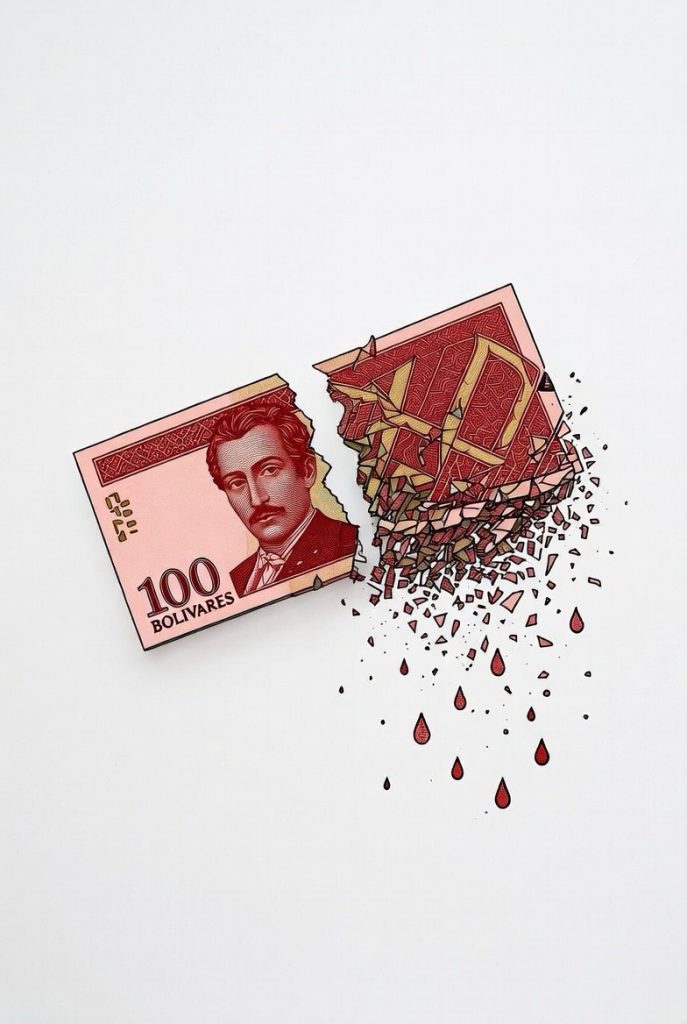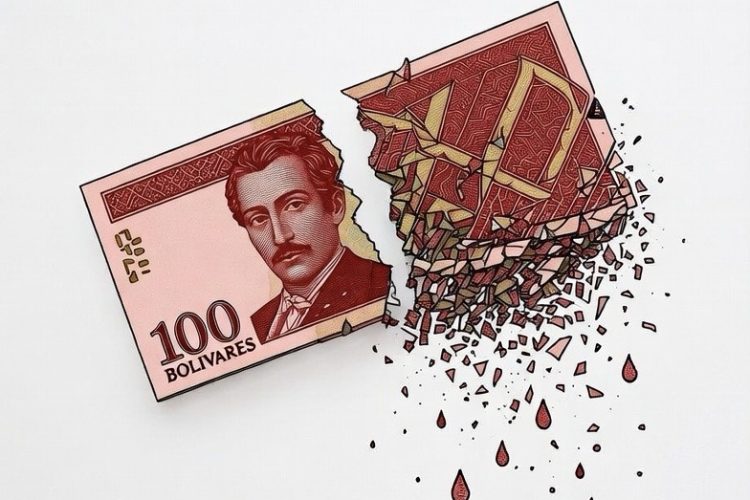
Venezuela’s economy has suffered one of the worst peacetime collapses in history. Since 2013, the bolívar has lost over 99.99% of its value due to hyperinflation, leading to multiple currency redenominations that removed 14 zeros total, creating the bolívar soberano and later the bolívar digital. GDP has shrunk by about 75-80%, mainly from oil mismanagement at state-owned PDVSA, heavy oil dependency, price controls, and excessive money printing under Chavismo and Maduro’s leadership. Oil production plummeted from over 3 million to under 500,000 barrels per day. U.S. sanctions worsened the crisis starting in 2017, though problems began earlier. This triggered severe shortages of food and medicine, widespread poverty affecting over 90% of people at its peak, malnutrition, and a massive exodus of nearly 8 million Venezuelans. Informal dollarization has brought some stability recently, with modest growth in 2024, but deep challenges like high poverty and fragile oil output remain.
Long Version
Venezuela’s Economic Collapse: A Decade of Hyperinflation, Currency Devaluation, and Humanitarian Crisis
Venezuela’s economy, once buoyed by vast oil reserves as a classic petrostate, has endured one of the most severe peacetime contractions in modern history. Since 2013, the Venezuelan bolívar has lost over 99.99% of its value, prompting multiple rounds of reconversión monetaria—monetary reconversion—where authorities have cut a total of 14 zeros from the currency through processes like removing zeros or slicing zeros. This redenomination effort led to the introduction of the bolívar soberano in 2018 and later the bolívar digital in 2021, yet these measures failed to stem the tide of economic crisis. Gross domestic product (GDP) has contracted by approximately 75-80%, largely due to oil mismanagement, transforming what was Latin America’s wealthiest nation into a landscape of widespread poverty, shortages, and a massive migration crisis. This article explores the roots, progression, and enduring impacts of this economic collapse, providing a detailed examination of the factors that turned abundance into despair.
The Roots: Chavismo, Oil Dependency, and the Bolivarian Revolution
The crisis traces back to the policies of Chavismo under Hugo Chávez, who spearheaded the Bolivarian Revolution from 1999 to 2013. Chávez’s socialist agenda relied heavily on oil revenues from Petróleos de Venezuela, S.A. (PDVSA), the state-owned oil company, to fund social programs known as Bolivarian missions. These initiatives reduced poverty initially, but the economy’s oil dependency—accounting for over 95% of exports—created vulnerabilities. As a petrostate, Venezuela suffered from “Dutch disease,” where oil booms inflated the currency, making non-oil sectors uncompetitive. Price controls, implemented to curb inflation, instead distorted markets and discouraged production, laying the groundwork for future shortages of food and medicine.
By Chávez’s death in 2013, the economy was already showing cracks. Nicolás Maduro’s ascension exacerbated these issues through continued mismanagement. Oil production, once peaking at over 3 million barrels per day, began declining due to underinvestment, corruption, and politicization at PDVSA. Falling global oil prices during the 2010s oil glut compounded the problem, but domestic policies like excessive printing money—or seigniorage—to finance deficits were the primary culprits. The Central Bank of Venezuela (BCV) ramped up money supply, igniting hyperinflation that economist Steve Hanke later measured at over a million percent in 2018, one of the highest rates in history. This peacetime contraction, unprecedented outside of war, saw GDP plummet from $482 billion in 2014 to around $44 billion by 2025, marking an 80% drop in real terms.
Escalating Economic Crisis: Hyperinflation and Currency Devaluation
The mid-2010s marked the onset of full-blown hyperinflation, with rates soaring to 130,060% in 2018 according to independent estimates, far exceeding official BCV figures. Currency devaluation became rampant; the bolívar’s official exchange rate diverged wildly from reality, spawning a parallel exchange rate known as the dólar paralelo. Platforms like DolarToday emerged to track these black market rates, where dollars traded at premiums thousands of times higher than official levels, reflecting the bolívar’s collapse. By 2018, the government introduced the bolívar soberano, cutting five zeros in a redenomination effort, but hyperinflation persisted, rendering savings worthless. What could buy groceries in 2013 purchased virtually nothing by the late 2010s, as Hanke’s analyses underscored the role of unchecked money printing in this spiral.
Further reconversión monetaria followed: in 2021, six more zeros were removed, birthing the bolívar digital to facilitate digital transactions amid physical cash shortages. Yet, these steps were bandaids on a hemorrhaging economy. GDP contraction accelerated, with the IMF estimating a 75% drop from 2013 to 2021, driven by PDVSA’s mismanagement—production fell to under 500,000 barrels per day by 2020 due to lack of maintenance and worker exodus. Price controls fueled a thriving black market, where essentials like food and medicine were smuggled or sold at inflated prices, often controlled by military networks. This economic collapse, far from a natural downturn, stemmed from policy choices that prioritized political patronage over sustainable growth.
The Role of Sanctions and External Pressures
While domestic mismanagement was the core driver, U.S. sanctions—often referred to as US sanctions—intensified the crisis from 2017 onward. Imposed in response to authoritarianism, electoral fraud, and human rights abuses, these measures targeted PDVSA and officials, restricting oil exports and access to finance. Sanctions contributed to a deeper GDP contraction, with estimates suggesting they worsened the decline by 30-35% beyond what over-indebtedness and low oil prices would have caused alone. Critics argue they fueled the humanitarian crisis, but evidence shows the economic crisis predated broad sanctions; inflation and shortages were already severe by 2014.
By 2023-2024, partial sanctions relief allowed modest growth of 4-5%, but this rebound was from a devastated base—indexing 2013 GDP at 100, full recovery would require decades of sustained expansion. Dollarization emerged informally, with over 60% of transactions in U.S. dollars by 2022, stabilizing some sectors but highlighting the bolívar’s irrelevance. As of early 2026, inflation lingers around 300%, and the economy remains fragile, with projections of contraction if oil sanctions tighten further.
Humanitarian and Social Impacts: Poverty, Shortages, and the Venezuelan Exodus
The economic crisis morphed into a profound humanitarian crisis, with 94% of Venezuelans living in poverty by 2019 and over 50% in extreme poverty by 2021. Shortages of food and medicine became chronic; by 2017, the average Venezuelan lost 11 kilograms due to malnutrition, and diseases like malaria surged amid collapsing healthcare. The black market filled voids left by price controls, but at exorbitant costs, exacerbating inequality—the Gini coefficient hit 0.603, the highest in the Americas.
This desperation triggered the Venezuelan exodus, one of the largest migration crises in history. Over 7.9 million fled by 2025, seeking refuge in neighboring countries like Colombia and Brazil, driven by hyperinflation, GDP contraction, and repression. The migration crisis strained regional resources, with host nations facing challenges in providing aid. Domestically, 80% of households reported nutritional insecurity, and education coverage dropped to two-thirds of eligible children. Extrajudicial killings and protests further deepened the humanitarian toll, with UN reports documenting thousands of deaths.
Current Status and Pathways Forward
As of January 2026, Venezuela’s economy shows tentative signs of stabilization through de facto dollarization and limited liberalization, with 2024 growth exceeding 5% under Maduro. However, this follows an 80% GDP contraction, and challenges persist: poverty affects 80%, water access eludes 70%, and oil production remains hampered. Recent U.S. tensions, including revoked oil concessions in late 2025, threaten renewed downturns. Experts like Hanke emphasize that without dismantling price controls and restoring PDVSA’s independence, true recovery is elusive.
Venezuela’s story serves as a cautionary tale of oil dependency and policy mismanagement. Addressing the crisis requires political dialogue, transparent governance, and diversified economic strategies to rebuild trust and attract investment. For now, the nation grapples with the scars of a lost decade, but targeted reforms could pave the way for resilience.