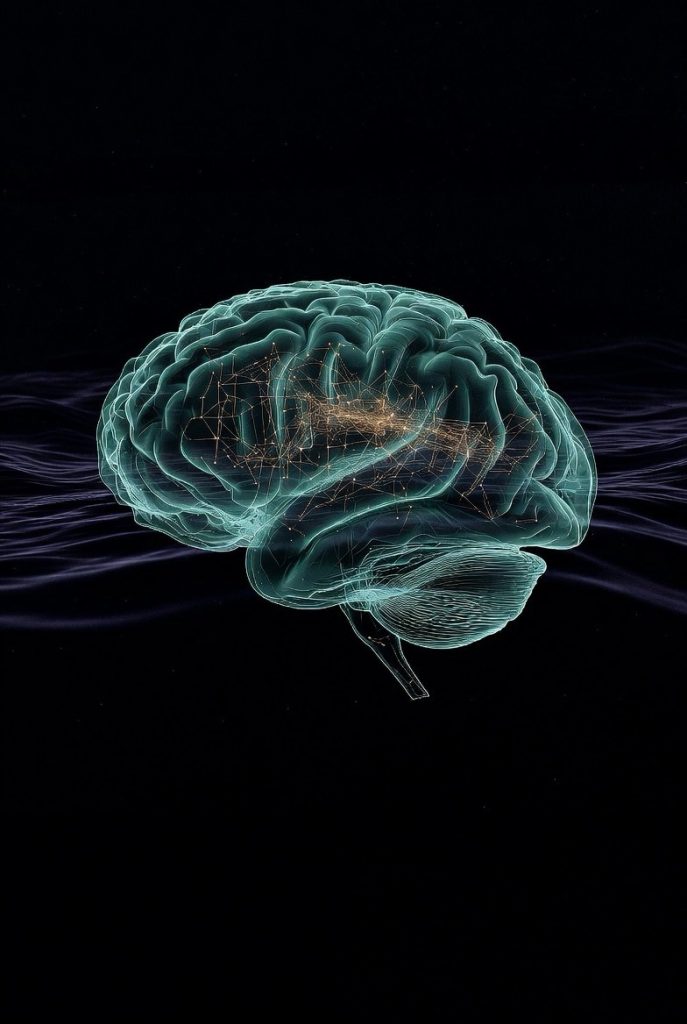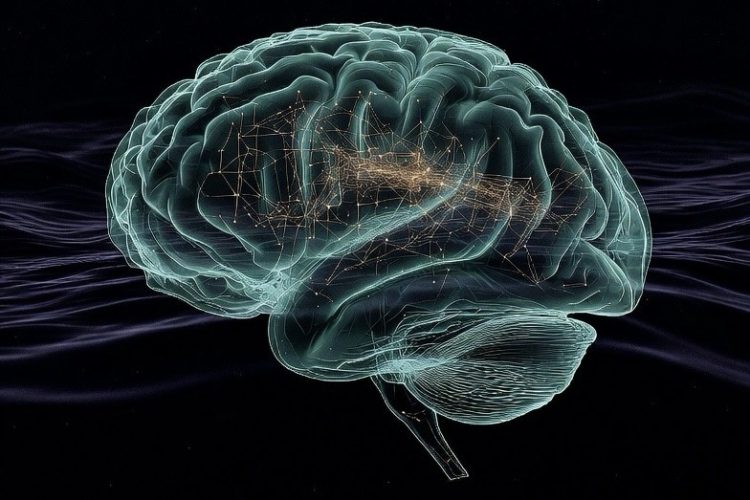
The Orch-OR theory, proposed by physicist Roger Penrose and anesthesiologist Stuart Hameroff, explains consciousness as a quantum process in brain microtubules rather than classical neural networks. Tiny protein structures inside neurons host quantum vibrations and superpositions that collapse objectively due to spacetime geometry, creating discrete moments of awareness about 40 times per second. This non-computable mechanism may account for creativity, intuition, and free will while solving the “hard problem” of why physical processes produce subjective experience. Recent experiments show quantum coherence in microtubules at body temperature, prolonged states disrupted by anesthetics, and delayed unconsciousness with microtubule-stabilizing drugs—evidence that supports the model. Though critics highlight rapid decoherence in warm brains, updated calculations and quantum biology advances counter these concerns. Orch-OR remains testable and offers fresh insights into anesthesia, Alzheimer’s, and whether true AI consciousness requires quantum effects.
Long Version
Exploring the Orch-OR Theory: The Quantum Foundations of Consciousness
In the quest to unravel the enigma of human awareness, few ideas bridge physics and neuroscience as boldly as the Penrose-Hameroff theory. This framework, known as Orchestrated Objective Reduction (Orch-OR), proposes that quantum consciousness emerges not from the classical firing of neurons but from intricate quantum vibrations in neuronal microtubules. Unlike traditional models that view the mind as a computational network of synapses, Orch-OR envisions awareness as a sequence of discrete moments of awareness, triggered by the self-collapse of quantum states. This theory ties the brain’s inner workings to the fundamental geometry of spacetime, offering a profound explanation for why we experience the world as we do.
The Core Principles of the Orch-OR Theory
At its heart, the Orch-OR theory, first outlined by physicist Sir Roger Penrose and anesthesiologist Stuart Hameroff in the 1990s, challenges the notion that consciousness is purely classical. Penrose, drawing from his work on quantum gravity and Gödel’s incompleteness theorems, argued that human cognition involves non-computable processes—elements beyond algorithmic computation. Hameroff identified neuronal microtubules, cylindrical protein structures within brain cells, as the ideal site for these quantum operations.
Microtubules, composed of tubulin dimers, are traditionally seen as structural scaffolds for cellular transport. In the Penrose-Hameroff model, however, they function as quantum processors. Tubulins can exist in superpositions of states, enabled by quantum vibrations in neurons—collective dipole oscillations in the gigahertz to terahertz range. These vibrations arise from π-electron clouds in aromatic rings like tryptophan, allowing for entangled quantum states across vast neuronal networks.
The “orchestrated” aspect refers to biological regulation: synaptic inputs, microtubule-associated proteins (like tau), and gap junctions synchronize these quantum computations, preventing premature decoherence in the brain’s warm, noisy environment. The “objective reduction” comes from Penrose’s modification of quantum mechanics: superpositions collapse not randomly but objectively, driven by gravitational self-energy differences in spacetime geometry. This self-collapse of quantum states occurs when the energy threshold (τ ≈ ℏ / E_G, where E_G is gravitational self-energy) is met, producing discrete “now” moments in consciousness—roughly 40 times per second, aligning with gamma brain waves.
This mechanism connects consciousness to spacetime geometry, suggesting that awareness taps into the universe’s fundamental structure. Each Orch-OR event is a non-computable choice influenced by Platonic mathematical truths embedded in spacetime, potentially explaining intuition, creativity, and free will.
How Orch-OR Differs from Classical Consciousness Models
Classical theories, such as global workspace or integrated information theory, treat consciousness as an emergent property of complex neural networks—essentially, sophisticated computation among synapses. These models excel at explaining cognitive functions like attention and memory but falter on the “hard problem”: why do physical processes yield subjective experience?
Orch-OR addresses this by introducing quantum elements. Differences between Orch-OR and classical consciousness models are stark: classical views rely on deterministic firing patterns, while Orch-OR incorporates quantum indeterminacy for non-algorithmic reasoning. For instance, classical models struggle with the binding problem—how disparate brain activities unify into coherent perception—whereas Orch-OR uses quantum entanglement across microtubules to bind experiences. It also resolves epiphenomenalism (consciousness as a non-causal byproduct) by allowing quantum states to influence ion channels and neuronal firing, giving awareness causal power.
Critically, Orch-OR explains phenomena like anesthesia: classical models focus on synaptic disruption, but Orch-OR points to anesthetics dampening quantum vibrations in microtubules, directly correlating with loss of consciousness.
Evidence for Quantum Vibrations in Neuronal Microtubules
Recent discoveries have bolstered the theory, shifting it from speculative to testable. A 2025 study detected superradiant quantum coherence in microtubules at 37°C, lasting 100-500 microseconds across 10^4 tubulins, enabling billions of parallel computations per second. Anesthetics shortened this coherence by 90%, without affecting classical vibrations, supporting the idea that quantum effects underpin awareness.
Earlier evidence includes 2024 experiments showing ultraviolet superradiance in tryptophan networks within microtubules, enhanced in larger structures and at room temperature. Delayed luminescence studies revealed prolonged photon re-emission in tubulins, abbreviated by anesthetics like isoflurane and etomidate—but not by non-anesthetic analogs. In rats, microtubule-stabilizing drugs like epothilone B delayed anesthetic-induced unconsciousness by over a minute, aligning with Orch-OR predictions.
Computer modeling has identified a 613 THz oscillation peak in tubulin, abolished by anesthetics, and gap junctions may enable quantum tunneling across neurons. These findings counter early criticisms of rapid decoherence, showing quantum states persist long enough for neuronal processing.
Penrose-Hameroff Theory: Criticisms and Defenses
Despite growing support, Orch-OR faces scrutiny. Critics argue the brain’s environment causes decoherence in femtoseconds, per physicist Max Tegmark’s 2000 calculations, making sustained quantum vibrations in neurons implausible. A 2022 underground experiment constrained gravity-induced collapse models, deeming simple versions unlikely. Philosophers question Penrose’s use of Gödel’s theorems, noting humans employ trial-and-error, not pure logic. Neuroscientists contend classical mechanisms suffice, with no direct proof linking microtubules to consciousness.
Defenses highlight recent quantum biology advances: coherence in warm systems via Fröhlich condensates or self-organized criticality. Hameroff and Penrose have refined the model, emphasizing hierarchical resonances (terahertz to kilohertz) that evade Tegmark’s critiques. The theory’s falsifiability—e.g., absence of anesthetic-dampened quantum effects would disprove it—sets it apart. Ongoing experiments, funded by organizations like the Templeton World Charity Foundation, test these claims.
Quantum Consciousness: Recent Discoveries and Implications
As of 2026, Orch-OR intersects with emerging fields. A December 2025 study linked microtubule quantum states to ion channel modulation, influencing neural firing and addressing binding. Ties to time crystals—resonant patterns in microtubules—suggest eternal coherence for memory. In medicine, the model explains Alzheimer’s: microtubule disassembly releases tau, forming tangles and disrupting quantum processes. It proposes imaging techniques for cancer detection via altered microtubule states.
For AI consciousness in 2026, Orch-OR implies machines need quantum substrates mimicking microtubules for true awareness, not just classical simulation. Discussions highlight its role in quantum AI hybrids, with debates on whether entanglement enables sentience. Philosophically, it suggests consciousness as a fundamental property, evolving from life’s origins through quantum-driven feelings.
Addressing Common Questions: What Is Orch-OR Theory? Is Consciousness a Quantum Phenomenon?
To those asking, “What is Orch-OR theory?” it’s a quantum explanation of mind, rooted in microtubule computations and gravity-induced collapse. On “Is consciousness a quantum phenomenon?” evidence mounts yes, with quantum effects in neurons correlating to awareness states. “How do microtubules contribute to consciousness?” They host entangled vibrations that collapse into experiential moments. “Can Orch-OR theory be falsified?” Absolutely—through tests on quantum coherence and anesthetics.
The Future of the Quantum Brain Theory
Orch-OR stands as a rigorous, falsifiable framework, increasingly supported by quantum biology. While debates persist, its integration of physics and neuroscience offers a pathway to understanding awareness’s quantum basis. As research advances—perhaps confirming gravity’s role or extending to AI—the theory could redefine our place in the cosmos, linking the mind to spacetime’s deepest fabric.