Tag: quantum mechanics

Blog

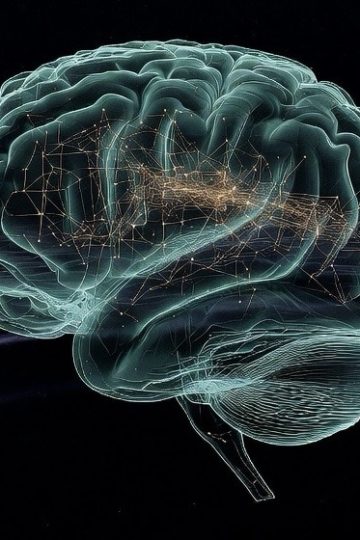
Orch-OR Theory: How Quantum Vibrations Create Mind

The Orch-OR theory, proposed by physicist Roger Penrose and anesthesiologist Stuart Hameroff, explains consciousness as a quantum process in brain microtubules rather than classical neural networks. Tiny protein structures inside neurons host quantum vibrations and superpositions that collapse objectively due to spacetime geometry, creating discrete moments of awareness about 40 times per second. This non-computable […]
Blog

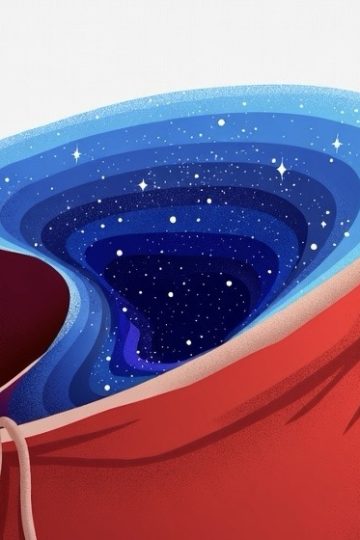
How Santa’s Infinite Sack Works: Science Explained

Santa Claus’s iconic sack holds billions of presents yet stays lightweight, thanks to the fascinating theory of dimensional compression. This idea suggests the bag acts as a portal to a pocket or micro-dimension, storing gifts in folded higher dimensions for infinite capacity and extradimensional storage. Gifts remain weightless inside non-Euclidean space, expanding instantly upon delivery […]

Blog

Multiverse Hypothesis Explained in Depth

The multiverse hypothesis suggests our universe is just one of many—possibly infinite—parallel universes or alternate realities, each with different physical laws or outcomes. Rooted in quantum mechanics and cosmology, key ideas include the many-worlds interpretation, where every quantum event branches into separate realities without wave function collapse, thanks to decoherence; eternal inflation creating bubble universes […]

Blog

Light’s Magnetic Field Shakes Up Magneto-Optics, New Findings

A groundbreaking study from Hebrew University of Jerusalem challenges long-held assumptions in magneto-optics by revealing that light’s magnetic field plays a much larger role than previously thought. Traditionally, the Faraday effect, which causes polarization rotation of light in a magnetic field, was attributed mostly to the electric field of light. However, the new research shows […]

Blog

New Breakthroughs Bring Scientists Closer to Quantum Gravity

Scientists are making real progress toward a unified theory of quantum gravity, aiming to link quantum mechanics with general relativity at the tiny Planck scale. Key approaches like string theory, loop quantum gravity, emergent gravity, and holography offer new ways to explain space-time, black holes, and the early universe. In 2025, breakthroughs from Aalto University […]

Blog

Physicist Unveils 6D Theory: Time Has Three Dimensions

Dr. Gunther Kletetschka proposes time has three dimensions, not one, making space an emergent property in a six-dimensional model. Published April 2025, his theory treats time as the primary fabric of reality—first dimension for linear progression, second for parallel outcomes, third for transitions between them—while space arises from temporal interactions. The framework predicts particle masses […]

Blog

Simulation Hypothesis: What’s Outside Reality?

The simulation hypothesis suggests our reality might be a computer-generated virtual world, like an advanced video game. Popularized by philosophers, it questions if we’re in a base reality or a digital construct created by a posthuman civilization. If true, “outside” could be a higher realm with advanced beings running ancestor simulations for research or entertainment. […]

Blog

Is Time Travel Possible? How Wormholes & Relativity Could Work

Is time travel possible? Einstein’s theory of relativity suggests it might be. Special relativity shows time dilation, where fast-moving objects age slower, as seen with astronauts. General relativity allows for closed timelike curves, theoretical paths to the past via wormholes or black holes. Wormholes, or Einstein-Rosen bridges, could connect different times but need exotic matter […]

Blog

Zero-Point Energy: Quantum Vacuum, Casimir Effect & Dark Energy

Zero-point energy (ZPE) is the lowest energy a quantum system can have, rooted in quantum mechanics and quantum field theory. It arises from the Heisenberg uncertainty principle, causing quantum fluctuations in the vacuum, even at absolute zero. The Casimir effect proves ZPE, showing plates attract due to vacuum energy pressure. The Lamb shift, a shift […]