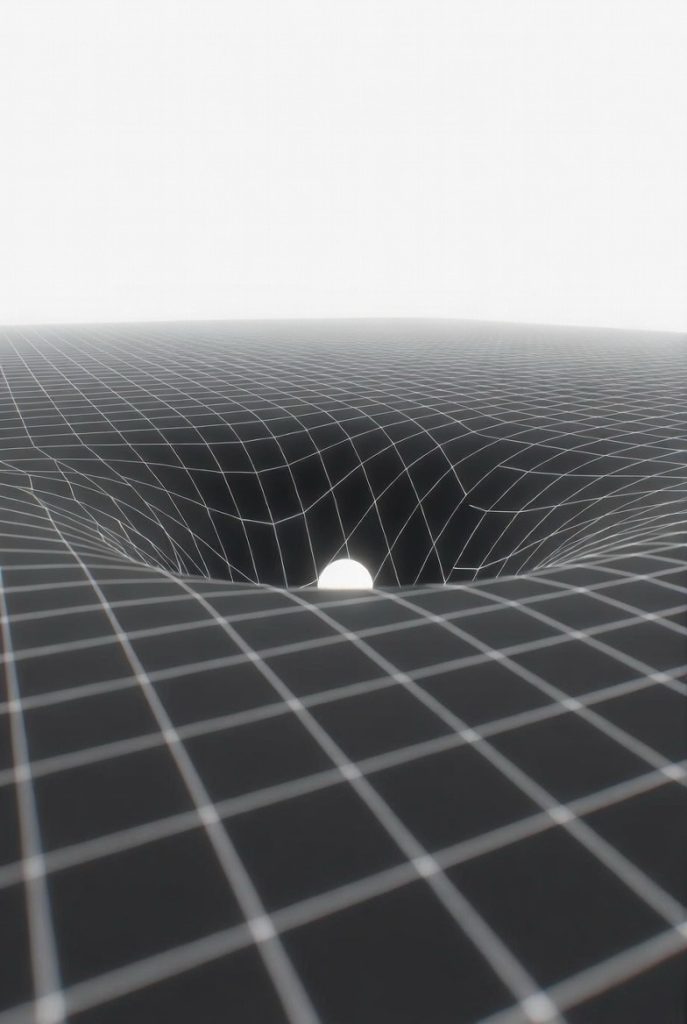
Scientists are making real progress toward a unified theory of quantum gravity, aiming to link quantum mechanics with general relativity at the tiny Planck scale. Key approaches like string theory, loop quantum gravity, emergent gravity, and holography offer new ways to explain space-time, black holes, and the early universe. In 2025, breakthroughs from Aalto University and MIT introduced models and experiments that probe whether gravity must be quantum. Advances in simulations, black hole studies, and cosmology continue to push the field forward, bringing a complete theory closer than ever.
Long Version
In the ever-evolving field of physics, scientists have long grappled with the profound challenge of unifying quantum mechanics and general relativity into a cohesive theory of quantum gravity. This pursuit, aimed at understanding the fundamental forces shaping the universe, has seen remarkable progress in 2025, bringing us one step closer to a breakthrough discovery. Recent advancements, such as the resurgence of old “ghost” theories and novel frameworks suggesting gravity emerges from quantum electromagnetic interactions, highlight how researchers are inching toward reconciling the microscopic realm of particle physics with the macroscopic curvature of space-time.
The Core Challenge of Quantum Gravity
At its core, quantum gravity seeks to explain how gravity operates at the Planck scale, where the Planck length—approximately 1.6 × 10^-35 meters—marks the boundary beyond which classical notions of space and time break down. Here, quantum field theory, which successfully describes the strong, weak, and electromagnetic forces through particles like quarks and bosons, clashes with Einstein’s general relativity, which portrays gravity as the warping of space-time by mass and energy. The incompatibility arises because general relativity treats gravity as a smooth, continuous phenomenon, while quantum mechanics introduces discreteness, uncertainty, and phenomena like quantum entanglement, where particles remain correlated regardless of distance.
One of the primary obstacles is the prediction of gravitons, hypothetical massless particles that would mediate gravity in a quantum framework, analogous to photons for electromagnetism. However, detecting gravitons remains elusive due to their extraordinarily weak interactions at everyday scales. This has led theorists to explore diverse approaches, pushing the boundaries of our understanding of the universe’s fabric.
Key Theoretical Approaches
String theory posits that fundamental particles are one-dimensional “strings” vibrating in extra dimensions, giving rise to gravitons and potentially resolving singularities—points of infinite density, like those inside black holes—through higher-dimensional geometry. M-theory extends this by unifying various string theories under an 11-dimensional umbrella, incorporating supersymmetry to pair bosons with fermions and stabilize the model against quantum fluctuations.
Alternatively, loop quantum gravity (LQG) quantizes space-time itself into discrete loops or networks, avoiding the infinities that plague canonical quantization methods like the Wheeler-DeWitt equation, which attempts to apply quantum rules directly to the metric of general relativity. In LQG, space-time emerges from these loops at larger scales, offering insights into the Big Bang and black hole interiors, where singularities might be replaced by “bounces” or finite-density regions. Asymptotic safety suggests that quantum gravity becomes well-behaved at high energies through a fixed point in the renormalization group flow, rendering the theory predictive without new particles.
Other innovative paths include emergent gravity, where gravity arises not as a fundamental force but from underlying quantum processes, such as thermodynamic or entropic effects in quantum field theory. Non-commutative geometry reimagines space-time coordinates as non-commuting operators, potentially smoothing out ultraviolet divergences, while causal dynamical triangulation (CDT) simulates space-time as triangulated manifolds evolving causally, revealing emergent de Sitter-like universes in computer models. The holographic principle, exemplified by the AdS/CFT correspondence, bridges these ideas by mapping gravitational physics in anti-de Sitter (AdS) space to a conformal field theory (CFT) on its boundary, providing a duality that has illuminated black hole entropy and quantum information paradoxes.
Recent Advancements in 2025
In 2025, these theoretical foundations have been bolstered by tangible progress. Researchers at Aalto University introduced a new quantum theory of gravity that integrates seamlessly with the standard model of particle physics, describing gravity through four one-dimensional unitary gauge symmetries. This framework clears a path toward a long-sought theory of everything by addressing quantum inconsistencies in cosmology and the early universe. Meanwhile, a technique developed at MIT enables new experiments to test whether gravity requires a quantum description, using advanced setups to probe gravitational effects at quantum scales.
Further discoveries suggest that gravitational fields can enable quantum entanglement in matter, deepening the mystery of whether quantum gravity exists. A novel paper proposes that the universe itself might be fundamentally simple, with complexity arising from observers, offering an exhilarating perspective on quantum gravity. The International Year of Quantum Science and Technology in 2025 has amplified these efforts, with conferences like Quantum Gravity 2025 at Penn State fostering discussions on topics from de Sitter holography to observer-dependent complexity. Additional theories reenvision Einstein’s general relativity to unite it with quantum mechanics, exploring new physics at the quantum-gravity frontier and emphasizing the need for precise understandings of quantum localization to achieve unification.
Black Holes as a Testing Ground
Black holes remain a pivotal arena for these ideas. Hawking radiation, the theoretical emission of particles from the event horizon due to quantum effects, implies that black holes evaporate over time, raising the information paradox: does quantum information survive or vanish into singularities? The holographic principle suggests it’s preserved on the horizon’s surface, while emergent gravity models propose that the interior geometry arises from quantum entanglement across the boundary. Recent simulations, including those using quantum computers to model lattice gauge theories, have visualized string dynamics and phase transitions, offering glimpses into how quantum gravity might resolve these enigmas.
Cosmological Implications
Cosmology benefits immensely from these developments. Quantum gravity could explain the universe’s initial conditions, replacing the Big Bang singularity with a quantum bounce in LQG or inflationary scenarios in string theory. It might also account for dark energy and dark matter through extra dimensions or modified gravitons, influencing the large-scale structure observed today. By addressing early universe inconsistencies, these theories provide a more complete picture of cosmic evolution.
Experimental Challenges and Future Prospects
Despite these strides, challenges persist. Experiments at the Planck scale are impractical with current technology, as energies required dwarf those of particle accelerators like the LHC. However, indirect probes—such as gravitational wave detections, cosmic microwave background analysis, and quantum gravity gradiometry for Earth observation—offer promising avenues. Innovations in quantum computing reduce errors in simulations of complex systems, paving the way for deeper insights.
Looking ahead, the collaborative spirit in the field promises continued progress. As scientists refine these theories, incorporating insights from supersymmetry and beyond, the dream of a complete quantum gravity framework inches closer, transforming our understanding of the universe’s deepest secrets.