
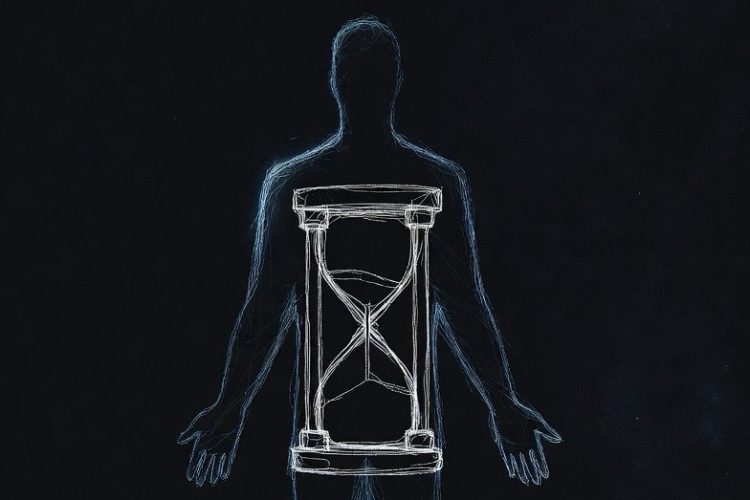
A 2023 FitCoal DNA study revealed a profound human population bottleneck between 800,000 and 900,000 years ago, when early human ancestors dwindled to roughly 1,280 breeding individuals enduring severe conditions for about 117,000 years during the Pleistocene era. Likely triggered by intense climatic shifts, including droughts and glacial advances, this ancient near-extinction event caused substantial genetic diversity loss, potentially accelerating evolutionary changes like speciation events that separated lines leading to Neanderthals, Denisovans, and modern humans, alongside ancestral chromosome fusion. While the findings align with fossil record gaps and paleoclimate evidence, ongoing debates question whether the signal reflects a true prehistoric crisis or methodological artifacts in genomic inference. This remarkable story of survival underscores humanity’s resilience, offering timeless insights into adaptation amid environmental pressures.
Long Version
The Ancient Human Population Bottleneck: Unraveling a Pivotal Chapter in Our Evolutionary Saga
Picture this: a world gripped by relentless climatic shifts, where early human ancestors teetered on the edge of oblivion, their numbers dwindling to a fragile few. This isn’t mere speculation but a narrative emerging from advanced genomic analysis, spotlighting a profound crisis between 800,000 and 900,000 years ago. The 2023 FitCoal DNA study ignited global interest by suggesting our forebears endured a severe population bottleneck, potentially reducing breeding individuals to about 1,280 for roughly 117,000 years. While debates rage over its validity, this event—if confirmed—offers invaluable clues to human resilience, genetic legacies, and evolutionary turning points.
In this comprehensive exploration, we’ll dissect the science, scrutinize the evidence, weigh controversies, and draw meaningful connections to contemporary issues. Aimed at curious minds from beginners to experts, our journey through this prehistoric human crisis promises fresh perspectives on how such bottlenecks forged the path to modern humanity.
Decoding Population Bottlenecks in Evolutionary Biology
At its core, a population bottleneck represents a sharp decline in a species’ numbers, often triggered by environmental stressors, resulting in diminished genetic diversity. This evolutionary pinch point acts as a crucible: survivors pass on a limited gene pool, which can spur rapid adaptations but also amplify risks like inbreeding or reduced adaptability.
Human history features several such episodes. The more recent out-of-Africa dispersal around 70,000 years ago created genetic constrictions in non-African lineages, evident in today’s lower diversity outside the continent. Yet, the Pleistocene human bottleneck under scrutiny here delves deeper, into the Early to Middle Pleistocene transition—a turbulent epoch of glacial expansions and habitat disruptions.
Spanning approximately 930,000 to 813,000 years ago, this aligns with Marine Isotope Stage 22, characterized by plummeting sea levels and intensified aridity. These conditions likely fragmented populations, isolating groups and exacerbating demographic contractions. The outcome? A genetic near-collapse that echoes in modern genomes, underscoring how ancient threats shaped our species’ trajectory.
The Innovation Behind FitCoal: A Leap in Genomic Inference
Central to this discovery is the fast infinitesimal time coalescent process, or FitCoal, a computational breakthrough designed to peer into deep evolutionary history. Unlike earlier tools hampered by fading genetic signals over millennia, FitCoal leverages the site frequency spectrum—a distribution of mutation frequencies across genomes—to reconstruct past demographics with enhanced accuracy.
By modeling coalescent processes in minute time increments, it computes composite likelihoods from vast datasets, sidestepping limitations of methods like the pairwise sequentially Markovian coalescent. In the landmark study, researchers applied it to sequences from 3,154 individuals across diverse populations, unveiling patterns indicative of an ancestral breeding decline.
This approach excels in detecting subtle, ancient signals, but its reliance on assumptions like random mating has sparked scrutiny. Nonetheless, FitCoal’s efficiency in handling large-scale data marks a stride forward in understanding human ancestors’ bottlenecks, blending computational prowess with biological insights.
Core Discoveries: Timeline, Magnitude, and Lasting Effects
Delving into the findings reveals a multifaceted story of survival and transformation.
Chronology and Persistence of the Crisis
The event’s window—930,000 to 813,000 years ago—coincides with a fossil gap in African and Eurasian records, hinting at widespread scarcity. This wasn’t a fleeting ordeal but a protracted struggle, enduring 117,000 years amid recurring glacial pressures and ecological upheavals.
The Extent: A Razor-Thin Survival Margin
Estimates peg the effective population at around 1,280 breeding individuals—a threshold teetering near minimal viability. From pre-crisis levels in the tens of thousands, this drop signifies a human lineage threat of staggering proportions, with survivors forming the genetic foundation for future expansions.
Genetically, it precipitated a substantial diversity wipeout, potentially erasing 65% to 98% of ancestral variations. This founder effect explains modern humans’ relative homogeneity compared to other primates, influencing everything from immune system robustness to susceptibility to certain ailments.
Evolutionary Ripples: Speciation and Adaptations
The bottleneck may have catalyzed pivotal changes, including a speciation event separating lines leading to Neanderthals, Denisovans, and Homo sapiens. Intriguingly, it correlates with ancestral chromosome fusion, merging pairs to yield our 23-chromosome structure—a possible adaptation amid genetic stress.
Post-bottleneck, hominins exhibited accelerated brain enlargement and tool sophistication, suggesting intensified selection in small groups favored innovative traits. These dynamics highlight how demographic squeezes can propel evolutionary leaps.
Probable Triggers: Environmental Forces and Adaptive Responses
Pinpointing causes requires piecing together paleoclimate and archaeological clues.
- Climatic Instigators: Severe droughts and glacial advances during the Middle Pleistocene likely desiccated habitats, curtailing resources and forcing migrations into refugia—isolated havens where pockets of life persisted.
- Compounding Elements: While supervolcanic eruptions or pandemics are less evidenced here, habitat fragmentation amplified isolation, heightening extinction risks.
Amid adversity, early homo survival hinged on behavioral flexibility: enhanced social bonds, resource sharing, and rudimentary technologies. This resilience narrative underscores humanity’s adaptive prowess, turning peril into progress.
Navigating the Debate: Artifact or Authentic Event?
The FitCoal revelations have fueled intense scholarly discourse, with critiques questioning if the inferred ancient human extinction threat stems from data artifacts rather than history.
Early challenges, emerging in 2024, highlighted discrepancies: alternative models like mushi—a penalized likelihood tool—failed to replicate the severe dip, attributing it to mishandled site frequency spectra. Issues with allele polarization (distinguishing ancestral from derived mutations) were flagged, as errors inflate high-frequency signals, mimicking bottlenecks in unpolarized data.
A 2024 Genetics publication amplified this, deeming FitCoal overly simplistic for complex dynamics, prone to false positives in simulations assuming mild declines. It argued processed datasets, especially polarized ones, exacerbate distortions, leading to illusory crises.
Counterarguments surfaced in 2025 preprints, defending FitCoal’s precision. Simulations showed it accurately recovering bottlenecks where mushi faltered, particularly in deep time frames. Proponents tied the event to independent corroborations: fossil scarcities, paleoclimate shifts indicating aridity spikes, and post-crisis surges in brain volume and dispersals.
As of 2026, consensus remains elusive. The debate emphasizes methodological refinements—integrating structured population models and multi-omics data—to resolve whether this was a true prehistoric extinction event or a statistical mirage. This iterative process exemplifies science’s self-correcting ethos, enriching our grasp of genomic inference bottlenecks.
Contemporary Echoes: Insights for Today’s World
This ancestral saga resonates beyond academia, offering actionable wisdom.
- Health and Genetics: The diversity loss informs modern vulnerabilities, guiding research into inherited diseases and personalized medicine.
- Sustainability Parallels: Mirroring 2026’s climate dialogues, it warns of bottleneck risks from environmental degradation, urging proactive conservation and global cooperation.
- AI-Enhanced Explorations: Advances in AI-simulated bottlenecks build on FitCoal, modeling alternate histories to predict future demographic shifts.
Ultimately, contemplating this evolutionary near-extinction fosters humility and hope, reminding us that survival stems from unity and ingenuity.
Reflecting on Our Shared Heritage: Endurance Through Epochs
The FitCoal DNA study’s portrayal of a human evolution bottleneck—reducing ancestors to 1,280 amid 117,000 years of trial—illuminates a defining ordeal. From genetic impacts to speciation sparks, it weaves a tapestry of peril and perseverance. Yet, ongoing controversies remind us that science thrives on scrutiny, blending genomic evidence with fossils and climate data for fuller truths.
In essence, this Pleistocene population crash affirms our species’ indomitable spirit. By synthesizing these threads, we not only honor our past but equip ourselves for tomorrow’s challenges, embracing a legacy of adaptation that defines humanity.
and we still made it.


