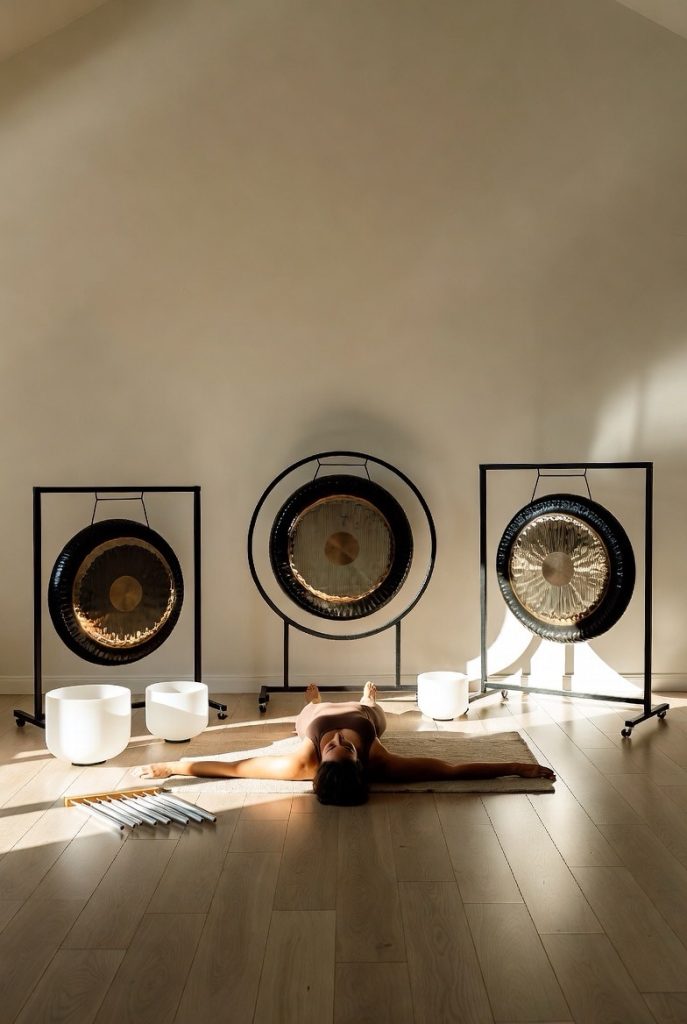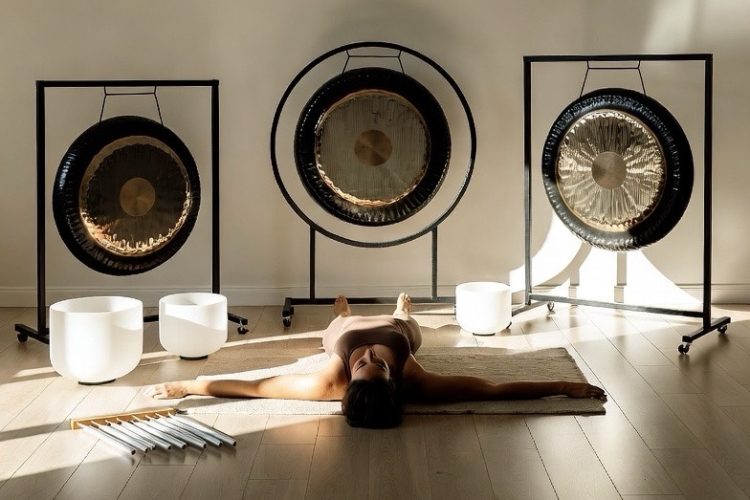
Immersive sound baths offer a powerful path to deep relaxation and wellness by enveloping participants in resonant frequencies from gongs, singing bowls, and chimes, creating a gentle “molecular massage” that vibrates through the body to ease tension and quiet the mind. Rooted in ancient traditions across Asia and beyond, this sound healing therapy uses vibrational relaxation to guide effortless shifts into deep meditation states, syncing brainwaves through resonance and entrainment while stimulating the vagus nerve for reduced stress and better nervous system balance. Emerging research supports benefits like lower anxiety, improved sleep, pain relief, enhanced mood, and greater emotional clarity, making it a safe, accessible complement to modern wellness routines. Whether experienced in group sessions, private settings, virtual formats, or at home with simple instruments, sound baths provide a timeless, inclusive way to restore harmony and achieve profound physical and mental rejuvenation.
Long Version
Unlocking Deep Relaxation: The Power of Immersive Sound Baths
Imagine lying in a serene space, surrounded by waves of harmonious tones that seem to vibrate through every cell in your body. This is the essence of an immersive sound bath—a practice where resonant frequencies from instruments like gongs, singing bowls, and chimes deliver a gentle “molecular massage,” guiding you toward deep meditation states and profound physical relaxation. In a world filled with constant noise and demands, sound meditation emerges as a soothing antidote, blending timeless traditions with contemporary wellness needs. Whether you’re a beginner exploring relaxation techniques or an experienced practitioner seeking deeper insights, this comprehensive guide covers every angle, from historical roots to scientific underpinnings, practical tips, and beyond, empowering you to integrate this transformative experience into your life.
Defining the Immersive Sound Bath Experience
An immersive sound bath is more than passive listening; it’s a full-sensory journey into sonic relaxation. Participants typically recline comfortably, often with eyes closed, as a facilitator plays a curated selection of instruments to create an enveloping acoustic immersion. The session might unfold in a group setting at a wellness center, a private one-on-one sound healing therapy, or even virtually through apps that simulate frequency meditation.
At its heart, the practice leverages vibrational therapy to harmonize the body’s energies. The sounds aren’t melodic in a traditional sense but rather a tapestry of overtones and harmonics that resonate deeply. Sessions vary in length, from brief 20-minute introductions for beginners to extended hour-long explorations for those pursuing advanced deep meditation states. What sets it apart from other forms of meditation is its effortless nature—the vibrations do the work, making it accessible for anyone, regardless of prior experience.
Tracing the Ancient Roots of Sound Healing Practices
Sound has been a cornerstone of human wellness for millennia, with diverse cultures harnessing its power for healing and spiritual connection. The origins of these practices reveal a rich global tapestry, predating modern interpretations by thousands of years.
Gongs, for instance, trace back to around 3500 BCE in Central Asia, where early bronze versions served in rituals, signaling events, and fostering communal harmony. By the 6th century BCE, they had spread to China and Southeast Asia, integrated into Buddhist and shamanic ceremonies to clear energies and induce trance-like states. In Himalayan regions, resonant gongs became tools for monastic practices, their deep tones believed to align with the universe’s rhythms.
Singing bowls, often linked to Asian traditions, likely emerged over 5,000 years ago in Mesopotamia as copper vessels that evolved into resonant instruments. Traveling along trade routes like the Silk Road, they reached Nepal, India, and surrounding areas by the 11th-12th centuries CE. While commonly called Tibetan singing bowls today, historical evidence points more to Nepalese and Indian craftsmanship, where they doubled as everyday bowls and healing aids in shamanic rituals. Their adoption in Buddhist contexts emphasized vibrational meditation for balancing energies.
Chimes and bells add another layer, with ancient Egyptian temples using them in acoustic designs for rituals, and Aboriginal Australians employing didgeridoos for over 40,000 years to facilitate healing through rhythmic vibrations. Greek philosopher Pythagoras explored harmonic frequencies in the 6th century BCE, theorizing their role in restoring bodily and cosmic equilibrium.
These historical threads converge in today’s sound baths, honoring ancient wisdom while adapting to modern needs. This evolution underscores sound’s enduring appeal as a bridge between the physical and spiritual realms.
The Mechanisms Behind Resonant Frequencies and Molecular Massage
How do these sounds create such profound effects? The answer lies in the science of resonance and entrainment, where external vibrations influence the body’s internal rhythms.
Every cell, organ, and system vibrates at natural frequencies. Stress, illness, or emotional turmoil can disrupt this harmony, leading to imbalance. During a sound bath, instruments produce resonant frequencies that interact with the body—composed largely of water—through cymatics, the visible patterns sound creates in matter. This “molecular massage” refers to how low-frequency waves (often 40-150 Hz) ripple through tissues, potentially reorganizing cellular structures and promoting equilibrium.
Entrainment plays a pivotal role: Brainwaves sync with the dominant rhythms of the sounds. Everyday alertness operates in beta waves (12-30 Hz), but gong baths or singing bowls meditation can shift you to alpha (8-12 Hz) for relaxation, theta (4-8 Hz) for creativity and deep trance, or delta (<4 Hz) for restorative rest. This effortless transition fosters deep meditation states without active focus.
Additionally, these frequencies stimulate the vagus nerve, enhancing parasympathetic activity—the “rest and digest” mode. This reduces cortisol levels, lowers heart rate, and boosts endorphins, explaining the sense of physical relaxation and emotional uplift many experience.
Spotlight on Key Instruments: Gongs, Singing Bowls, and Chimes
The choice of instruments defines the sound bath’s character, each offering unique contributions to the vibrational relaxation.
- Gongs: These large, metallic discs produce expansive, multi-layered tones that build and recede like ocean waves. Ideal for gong bath sessions, their low-frequency overtones penetrate deeply, aiding in energy release and nervous system regulation.
- Singing Bowls: Available in metal (alloy-based for rich harmonics) or crystal (quartz for pure, sustained notes), these bowls are struck or rimmed to emit healing frequencies. Singing bowls meditation targets specific areas, such as chakras, delivering a focused frequency healing sounds experience.
- Chimes: Lighter and more ethereal, chimes introduce sparkling highs that clear mental clutter. Wind or koshi chimes enhance the meditative flow, blending seamlessly with deeper instruments for a balanced acoustic massage.
Facilitators intuitively layer these, starting softly to ease participants in, crescendoing for intensity, and tapering for integration, ensuring a holistic sonic massage.
Comprehensive Benefits for Body, Mind, and Spirit
Sound baths offer multifaceted advantages, supported by emerging research and countless personal accounts.
Physically, the vibrations promote muscle loosening, pain relief, and improved circulation. Studies indicate reductions in blood pressure and heart rate variability, benefiting those with chronic conditions like fibromyalgia or insomnia. By activating the body’s natural healing responses, they enhance immune function and aid recovery.
Mentally, they alleviate anxiety, fatigue, and depressive moods by quieting overactive thoughts. Participants often report heightened focus, creativity, and clarity post-session, as theta states unlock subconscious insights.
Emotionally and spiritually, sound baths facilitate release—pent-up emotions surface gently, leading to greater peace and connection. Many experience elevated spiritual well-being, making it a tool for personal growth.
Overall, these benefits position sound baths as a complementary practice for holistic health, particularly in managing stress in our high-pressure lives.
Examining the Scientific Evidence and Balanced Perspectives
While anecdotal praise abounds, scientific inquiry is building a case for sound healing therapy. Small-scale studies show that sessions with singing bowls or gongs reduce tension, anger, and depression while increasing positive affect and spiritual well-being. Heart rate monitoring reveals physiological relaxation, with effects lasting beyond the session.
Brainwave research confirms entrainment, linking specific frequencies to alpha and theta states. Vibroacoustic therapy, akin to sound baths, demonstrates pain reduction and mood improvement in clinical settings. However, larger, controlled trials are needed to solidify claims, as current evidence is preliminary and varies by individual.
A balanced view acknowledges that while not a cure-all, sound baths complement conventional care, offering low-risk support for wellness. Skeptics note potential placebo effects, but the consistent reports of benefits suggest real physiological impacts.
Practical Guidance for Beginners: Preparing and Participating
Embarking on your first sound meditation? Here’s how to maximize the experience.
- Set Clear Intentions: Reflect on goals like stress relief or emotional clarity to guide your session.
- Create Comfort: Wear loose clothing, bring a mat or blanket, and consider an eye mask to minimize distractions.
- Nourish Your Body: Hydrate well and eat lightly beforehand to avoid discomfort.
- Choose Mindfully: Seek experienced facilitators through reputable studios or apps for virtual options.
During the bath, breathe deeply if thoughts arise, allowing sounds to wash over you. Afterward, hydrate, rest, and journal to process insights.
For home practice, start with simple tools like a small singing bowl or recorded frequency healing sounds.
Addressing Potential Considerations and Minimal Risks
Sound baths are generally safe and inclusive, but awareness ensures suitability.
Temporary effects might include lightheadedness, mild headaches, or emotional surges as energies shift—these typically resolve quickly, signaling positive release. Sensitive individuals can use earplugs for volume control.
Contraindications are rare but include sound-sensitive conditions like epilepsy, pacemakers, recent concussions, or first-trimester pregnancy—consult a healthcare provider. Those with trauma histories may benefit from guided sessions to navigate any triggers gently.
With mindful participation, the practice remains a low-risk avenue for relaxation.
Diverse Ways to Incorporate Sound Baths into Daily Life
Accessibility makes sound baths versatile. Join group classes for communal energy, or book private sessions for tailored vibrational therapy. Virtual platforms, evolving with AI integrations by 2026, offer on-demand resonant frequencies meditation.
For self-guided exploration, build a home setup with basic instruments and guided audios. Integrate into routines like yoga with sound bath elements or breathwork and sounds for enhanced effects.
Seasonal variations, such as holiday sound relaxation, add timely relevance, while retreats provide immersive escapes.
Cultural sensitivity is key—honor origins by supporting ethical sources and avoiding appropriation, ensuring respectful engagement.
Harmonizing Your Wellness Journey: Key Takeaways
Immersive sound baths harness the resonant frequencies of gongs, singing bowls, and chimes to provide a molecular massage that unlocks deep meditation states and physical relaxation. Rooted in ancient practices and validated by emerging science, they offer a pathway to balance amid modern chaos.
From stress reduction to spiritual enrichment, the benefits invite exploration. Approach with openness, and let the vibrations realign your essence—discovering harmony within could transform how you navigate the world.