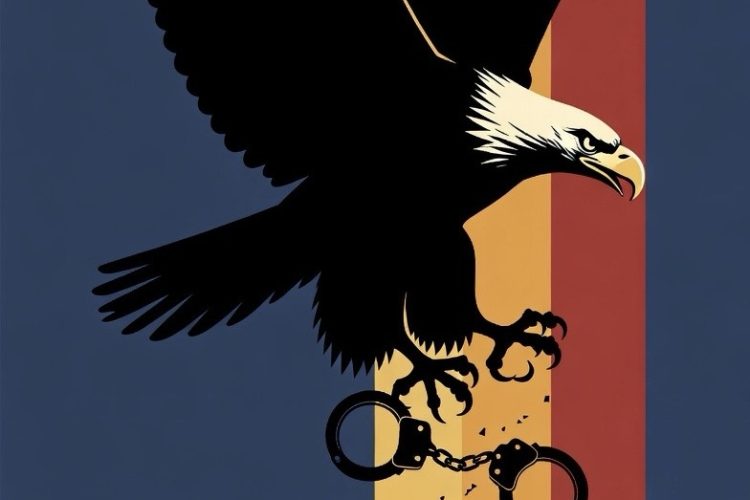
On January 3, 2026, U.S. forces under President Donald Trump captured Venezuelan leader Nicolás Maduro and his wife Cilia Flores in a swift, precise military raid in Caracas. The operation used special forces, airstrikes, and naval support to extract the couple with no casualties, then flew them to New York to face long-standing U.S. charges of narco-terrorism, drug trafficking, and ties to the Cartel de los Soles. Building on 2020 indictments, a multimillion-dollar bounty, and years of sanctions, the action targeted a regime accused of fueling drug flows, migration crises, and regional instability. Trump announced temporary U.S. oversight to guide Venezuela toward stable elections and rebuild its vital oil sector. While many Venezuelans celebrated the end of authoritarian rule, global reactions remain mixed, with some praising the decisive stand against transnational threats and others questioning unilateral intervention.
Long Version
The Capture of Nicolás Maduro: A Turning Point in U.S.-Venezuela Relations
In a stunning escalation of long-standing tensions, the United States under President Donald Trump executed a military raid that led to the capture of Venezuelan leader Nicolás Maduro and his wife, Cilia Flores, in the early hours of January 3, 2026. This operation, marked by large-scale strikes including airstrikes and boat strikes on key targets in Caracas, represents a dramatic intervention in the ongoing conflict between the two nations. Maduro, long viewed as a fugitive by the U.S. administration, was flown to New York to face indictment on charges of narco-terrorism, drug trafficking, and conspiracy to import cocaine, underscoring America’s first policy of prioritizing pressure on regimes tied to drugs and terrorism.
Historical Context: From Sanctions to Bounty
The roots of this armed conflict trace back to Trump’s first administration, when the United States imposed severe sanctions on Venezuela’s regime in response to Maduro’s disputed leadership and alleged involvement in narco-trafficking. In March 2020, the Department of Justice indicted Maduro and 14 other officials, including high-profile figures like Delcy Rodríguez, for their roles in the Cartel de los Soles—a Venezuelan gang accused of facilitating drug shipments in collaboration with Mexican cartels such as the Sinaloa Cartel and the Zetas. These charges painted Maduro’s government as a foreign terrorist organization, blending ideology with criminal enterprise to flood the U.S. with illicit drugs.
To intensify the pressure, a $15 million bounty was placed on Maduro’s head, later increased amid escalating migration crises as millions of Venezuelan migrants sought temporary protected status in the United States. This move invoked echoes of the Monroe Doctrine, with some analysts dubbing it the “Trump Corollary”—a modern assertion of U.S. influence in the Western Hemisphere to combat threats like terrorism and unlawful combatants. Venezuela’s oil-rich economy, crippled by sanctions targeting oil tankers and exports, became a focal point, as the regime’s reliance on petroleum revenues fueled its survival amid global condemnation.
Throughout the Biden years, the bounty persisted, but no direct arrest occurred. Trump’s return to office in 2025 reignited the operation, with reports of covert CIA tracking and ultimatums demanding Maduro’s resignation. By late 2025, U.S. forces, including Delta Force units, were mobilized alongside naval assets, signaling a shift from diplomatic escalation to military action.
The Raid: Execution and Details
The capture unfolded as a precision military strike, authorized by Trump days prior without notifying Congress due to concerns over leaks. Explosions rocked Caracas as U.S. special forces, supported by DEA intelligence, raided Maduro’s residence, extracting him and Flores under cover of night. This zero-casualty operation, likened to the 1989 arrest of Panama’s Manuel Noriega, involved no large troop deployments but relied on elite teams to secure proof of life and transport the pair to a U.S. naval vessel before their flight to New York.
Maduro, often labeled a bounty hunter’s prime target, was apprehended amid reports of ties to groups like Tren de Aragua, a Venezuelan gang expanding into U.S. territory through migration routes. The strike targeted infrastructure linked to drug operations, including potential airstrikes on facilities associated with narco-terrorism, ensuring minimal collateral damage while neutralizing key regime elements. Intelligence gathering prior to the raid involved advanced surveillance techniques, including satellite imagery and human intelligence networks, to pinpoint Maduro’s location and movements accurately.
Legal and Ideological Underpinnings
At its core, the indictment frames Maduro as the head of a narco-trafficking syndicate, conspiring with terrorist entities to undermine U.S. security. Charges include possession of machine guns and destructive devices in furtherance of drug crimes, elevating the case to one of national security. The legality of the intervention draws on precedents like designating cartels as foreign terrorist organizations, allowing for extraterritorial arrests of unlawful combatants. International law experts debate the operation’s compliance with treaties, but U.S. officials maintain it falls under self-defense provisions against transnational threats.
Trump’s America First ideology drove the action, viewing Maduro’s regime as a direct threat through drugs, migration, and ideological subversion. Critics question the neutrality of such unilateral moves, but supporters argue it addresses a humanitarian crisis that has displaced millions, exacerbating global migration pressures. The operation also highlights evolving U.S. strategies in countering hybrid threats, where state actors blend governance with criminal activities, challenging traditional diplomatic norms.
Immediate Implications: U.S. Oversight and Oil Dynamics
In a post-capture address, Trump announced that the United States would temporarily run Venezuela to facilitate a “safe, proper, and judicious transition.” This includes rebuilding oil infrastructure, with U.S. companies potentially compensating for seized assets while tapping into Venezuela’s vast reserves. The move aims to stabilize the region, curb drug flows, and stem Venezuelan migrants’ influx, but it raises concerns about prolonged nation-building akin to past interventions. Economic plans involve revitalizing the petroleum sector through partnerships, potentially lowering global oil prices and bolstering U.S. energy independence.
Venezuelans worldwide celebrated the news, seeing it as liberation from a regime plagued by corruption and conflict. However, leaders in neighboring countries and global forums have issued mixed responses, with some condemning the strike as an overreach while others remain neutral, awaiting details on the transition. Transitional governance structures are being established, including interim councils to oversee elections and reforms, ensuring a path toward democratic stability.
Global Reactions and Future Outlook
The international community is divided. Allies praise the decisive action against terrorism, while adversaries decry it as imperialistic. Trump’s extension of warnings to Mexico, citing cartel influence, hints at broader regional escalation. Domestically, debates rage over the operation’s legality and ideology, with figures like former CIA officials drawing parallels to historical regime changes. Long-term effects may include strengthened alliances in Latin America and a reevaluation of U.S. foreign policy toward authoritarian regimes.
As Maduro faces trial, the focus shifts to Venezuela’s reconstruction. Will this mark the end of a tumultuous era, or ignite new conflicts? The administration’s success in navigating this transition will define its legacy, balancing intervention with sustainable peace. Key challenges ahead include managing internal resistance, addressing economic disparities, and fostering international cooperation to prevent power vacuums that could lead to further instability.