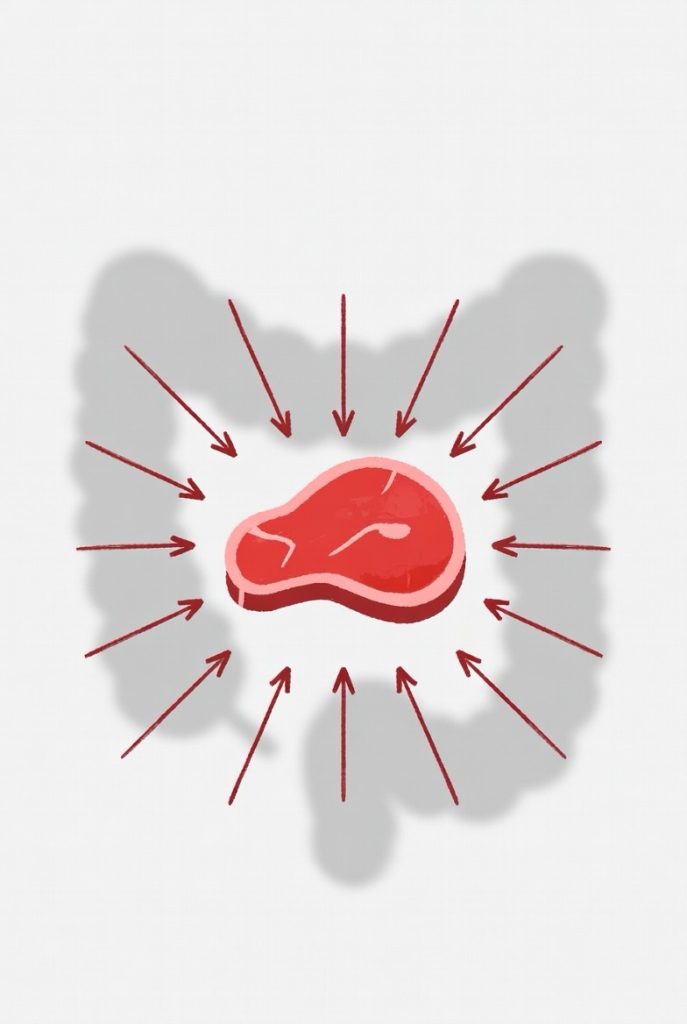
Red meat like beef, lamb, and pork contains heme iron, which gives it its red color and raises colorectal cancer risk when consumed in large amounts. Excess heme promotes harmful N-nitroso compounds and lipid peroxidation in the gut, causing oxidative stress, inflammation, and DNA damage that can lead to mutations in genes like APC, TP53, and KRAS. Studies show high intake (over 18 ounces weekly) increases risk by about 17-18%, with processed meat linked to even higher chances. Poultry and fish have much less heme and show no significant risk. To lower your risk, limit red meat to under 18 ounces per week and choose more plant-based proteins, poultry, or fish—these simple changes can significantly reduce colorectal cancer danger while keeping meals enjoyable.
Long Version
The Link Between Red Meat Consumption and Colorectal Cancer Risk: Understanding the Role of Heme Iron
Red meat, including beef, lamb, and pork, is a common dietary staple, but substantial evidence links high consumption to an increased risk of colorectal cancer. Central to this association is heme iron, the iron-containing compound that gives red meat its characteristic red color. Unlike non-heme iron from plant sources, heme iron is highly absorbable, yet excess intake can trigger harmful processes in the digestive tract. Major health organizations classify red meat as probably carcinogenic to humans and processed meat as definitively carcinogenic, based on extensive research showing elevated risk with regular high intake.
Sources and Forms of Heme Iron in the Diet
Heme iron comes primarily from hemoglobin and myoglobin in animal muscle tissues, with red meats containing significantly higher amounts than poultry or fish. Beef, lamb, and pork are the richest sources, while processed products like sausages, bacon, and cured meats often contain additional compounds that can intensify risks. The heme-related concerns exist regardless of whether the meat is raw, grilled, or otherwise cooked, though high-heat methods can introduce additional carcinogens such as heterocyclic amines and polycyclic aromatic hydrocarbons. In contrast, poultry and fish provide protein with far lower heme content and minimal associated cancer risk.
Biological Mechanisms Driving the Cancer Risk
Excess heme iron promotes colorectal cancer through several interconnected pathways that damage colon cells and create an environment favorable to tumor development. A key mechanism involves the formation of N-nitroso compounds through reactions in the gut, where heme acts as a catalyst. These compounds are genotoxic, forming DNA adducts that can lead to mutations.
Another major pathway is lipid peroxidation, in which heme triggers the breakdown of fats into reactive byproducts such as 4-hydroxynonenal and malondialdehyde. This process generates oxidative stress, causing cytotoxicity and chronic inflammation in the colon lining. The resulting damage promotes epithelial hyperplasia and the development of early precancerous changes, including aberrant crypt foci and mucin-depleted foci.
Heme also alters the gut microbiota, leading to dysbiosis that further amplifies toxicity. Certain microbial shifts increase the production of harmful substances in fecal water, enhancing genotoxicity and cytotoxicity. These changes disrupt normal cellular signaling, particularly the WNT pathway, and contribute to mutations in critical genes such as APC, TP53, and KRAS—common drivers of colon and rectal cancer progression. Collectively, these mechanisms explain how heme iron initiates and promotes colorectal carcinogenesis.
Evidence from Research
Large-scale prospective cohort studies and comprehensive meta-analyses consistently demonstrate that higher red and processed meat consumption correlates with greater colorectal cancer incidence. Risk estimates typically show a 10–22% increase for colorectal cancer and slightly higher for colon cancer specifically among those with the highest intake levels. Processed meat tends to carry an even stronger association, with risk rising approximately 18% for every additional 50 grams consumed daily. The evidence is particularly robust for colorectal cancer compared to other cancer types, with thousands of studies contributing to current understanding.
Quantifying the Risks
Heavy consumption—generally defined as more than 18 ounces of red meat per week—is associated with roughly 17–18% higher colorectal cancer risk. At a population level, this dietary pattern contributes to tens of thousands of cases annually worldwide, especially as red meat intake increases in many regions. Genetic factors can further amplify individual susceptibility in high consumers. While the absolute risk increase for any one person remains relatively modest, the widespread consumption makes it a significant public health concern.
Contrasts with Poultry and Fish
Poultry and fish contain substantially less heme iron, and extensive research shows no meaningful increase in colorectal cancer risk from regular consumption of these foods. This clear difference underscores heme iron’s specific role in the cancer-promoting effects observed with red meat, as white meats and seafood lack the same capacity to drive N-nitroso compound formation and lipid peroxidation.
Strategies to Minimize Risk
Limiting red meat to no more than 18 ounces per week is a widely recommended guideline for reducing colorectal cancer risk. Choosing poultry, fish, or plant-based proteins as primary sources offers nutritious alternatives with lower associated risks. Diets high in fiber from fruits, vegetables, and whole grains may help counteract some harmful effects by supporting healthier gut microbiota and reducing oxidative stress, though moderation of red meat remains the most direct protective step.
In summary, strong scientific evidence links high intake of red and processed meat to elevated colorectal cancer risk, primarily through the actions of heme iron in promoting genotoxic and cytotoxic processes in the gut. Understanding these mechanisms empowers informed dietary choices that can meaningfully lower risk while maintaining a balanced and enjoyable eating pattern.