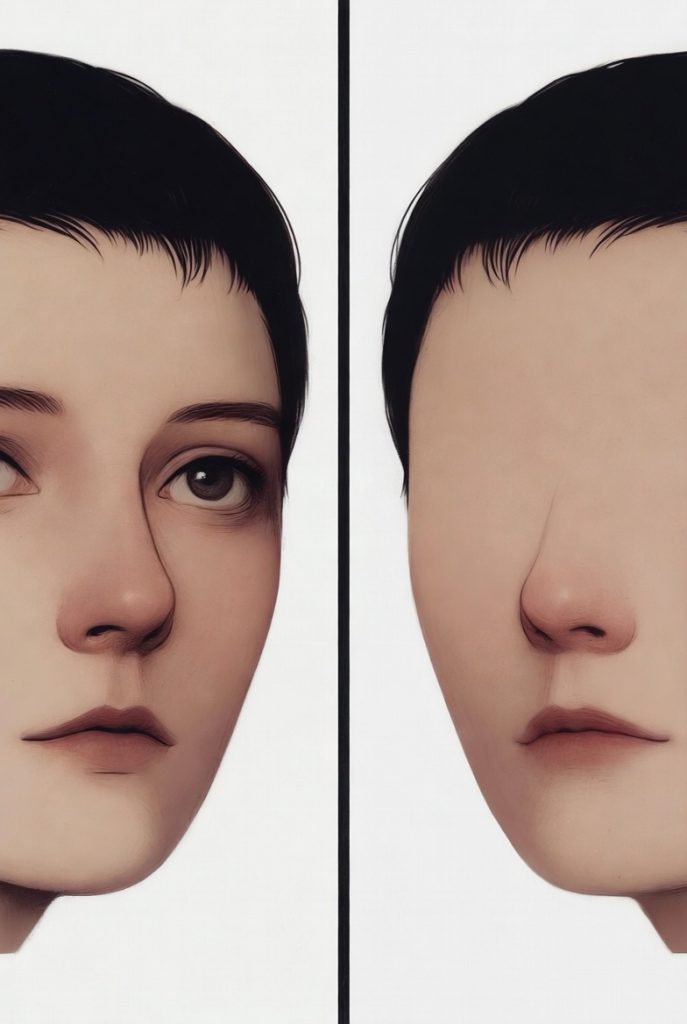
Change blindness is a fascinating psychology phenomenon where people fail to notice big changes in a visual scene, revealing limits in perception, attention, and memory. Unlike inattentional blindness (missing unexpected events like a gorilla in a crowd), change blindness happens when obvious alterations—like objects vanishing or people swapping—go undetected despite looking directly at them. Classic experiments include the “door study,” where a conversation partner is replaced during a brief interruption, yet half the participants don’t notice, and the flicker paradigm, alternating similar images to hide changes. Facial changes are especially hard to spot due to effects like face inversion and contrast negation, while emotional or meaningful details are detected faster. This ties to prosopagnosia (face blindness) and even magic tricks that exploit these perceptual gaps. In real life, it explains missed hazards while driving, unreliable eyewitness testimony, and security oversights. Understanding change blindness highlights how our brain constructs reality selectively, offering insights for improving attention and safety.
Long Version
Change Blindness Experiment: The Mystery of the Vanishing Face – How Good Is Your Memory?
In the realm of psychology, few phenomena highlight the quirks of perception, attention, and memory as strikingly as change blindness. This intriguing aspect of visual cognition reveals how our awareness can falter, even when significant alterations occur right before our eyes, challenging our understanding of cognitive science and human behavior. Often mistaken for an illusion, change blindness underscores limitations in how we process visual information, influencing everything from everyday decision-making to eyewitness reliability.
Understanding Change Blindness and Related Concepts
At its core, change blindness describes the failure to detect substantial changes in a visual scene, such as an object appearing, disappearing, or transforming. Closely related yet distinct is inattentional blindness, where unexpected events go unnoticed because attention is diverted elsewhere, like missing a gorilla in a crowd during a focused task. Both stem from the brain’s selective filtering, but change blindness specifically involves overlooking modifications despite repeated exposure.
This phenomenon emphasizes how our visual system prioritizes certain details while ignoring others, often due to limited cognitive resources. It demonstrates that perception is not a passive process but an active construction shaped by attention and expectations.
Pioneering Experiments and Real-World Demonstrations
Pioneering work by researchers like Daniel Simons and Daniel Levin brought this to light through real-world interaction experiments, such as the door study. In this setup, a participant engages in conversation with a stranger asking for directions; momentarily obscured by a door carried between them, the stranger is replaced by a different person—a classic person swap. Astonishingly, about half the participants fail to notice the switch, demonstrating how transient signals and visual disruptions can mask changes in dynamic environments. This highlights the role of saccadic eye movements—rapid shifts in gaze that suppress visual input briefly—creating windows where changes evade detection.
Other classic setups include the flicker paradigm, which alternates two nearly identical images with a brief blank screen, forcing reliance on memory to spot differences; observers often take seconds or minutes to identify even glaring alterations, like a building vanishing from a skyline. Similarly, the mudsplash technique overlays fleeting high-contrast patterns, mimicking real-life obstructions and impairing scene detection. Gradual change experiments introduce slow modifications without interruptions, leading to slow change blindness where shifts accumulate unnoticed, as the brain prioritizes continuity over detail.
The Role of Faces in Change Blindness Studies
The mystery of the vanishing face adds a compelling layer, particularly in studies focusing on facial processing. In one notable experiment using the flicker paradigm, faces serve as the scene, with changes to features like eyes or mouth—such as translations or rotations—testing attention allocation. Here, the “vanishing” aspect emerges when elements subtly disappear or alter, evoking a phantom vanish where the brain fills in gaps based on expectations.
Face inversion—rotating the image upside down—exacerbates this, invoking the face inversion effect, where configural processing (spatial relations between features) breaks down, making changes harder to spot. The negation effect, achieved by reversing contrast, further disrupts shading cues, equalizing attention between features like eyes and mouth that are typically prioritized.
Semantic relevance plays a key role; changes to meaningful elements, such as emotional faces conveying joy or anger, are detected faster due to their social significance, though still prone to oversight if attention is divided. Fixation duration—the time eyes linger on a spot—influences detection; longer fixations on localizable changes, like a motion direction change in a moving object, can aid awareness, but abrupt shifts often induce blindness by overwhelming processing capacity.
Connections to Neurological Conditions and Illusions
This ties into prosopagnosia, or face blindness, a neurological condition impairing face recognition despite intact vision. While change blindness affects everyone, prosopagnosia amplifies difficulties with facial changes, lacking the holistic processing that normally facilitates detection in upright, positive-contrast faces.
In magic illusions, performers exploit these vulnerabilities; a phantom vanish trick, for instance, uses motion direction changes to make an object “disappear” unnoticed, mirroring psychological experiments and underscoring how magicians intuitively harness cognitive limits.
Practical Implications and Applications
Beyond the lab, change blindness has profound implications. In real-world interactions, it explains why drivers miss cyclists during turns or why security personnel overlook threats in monitored feeds. It questions the reliability of memory in legal contexts, where eyewitnesses might fail to note person swaps or scene alterations, affecting decision-making in courts.
Training and awareness can mitigate effects; for example, directing attention to potential change sites improves detection rates. Emerging research explores technological aids, such as augmented reality systems that highlight changes, to enhance safety in fields like aviation and healthcare.
Enhancing Awareness and Future Directions
Ultimately, the mystery of the vanishing face serves as a window into our perceptual world, reminding us that what we see—or fail to see—shapes our reality. By understanding these mechanisms, we gain valuable insights into enhancing attention and memory, turning cognitive science’s revelations into practical tools for better human behavior and safer environments.
Ongoing studies continue to refine our knowledge, incorporating advanced neuroimaging to map brain activity during change detection tasks and exploring individual differences influenced by factors like age, expertise, or cultural background. This evolving field promises to deepen our grasp of visual cognition, offering strategies to overcome these inherent perceptual limitations in an increasingly complex world.