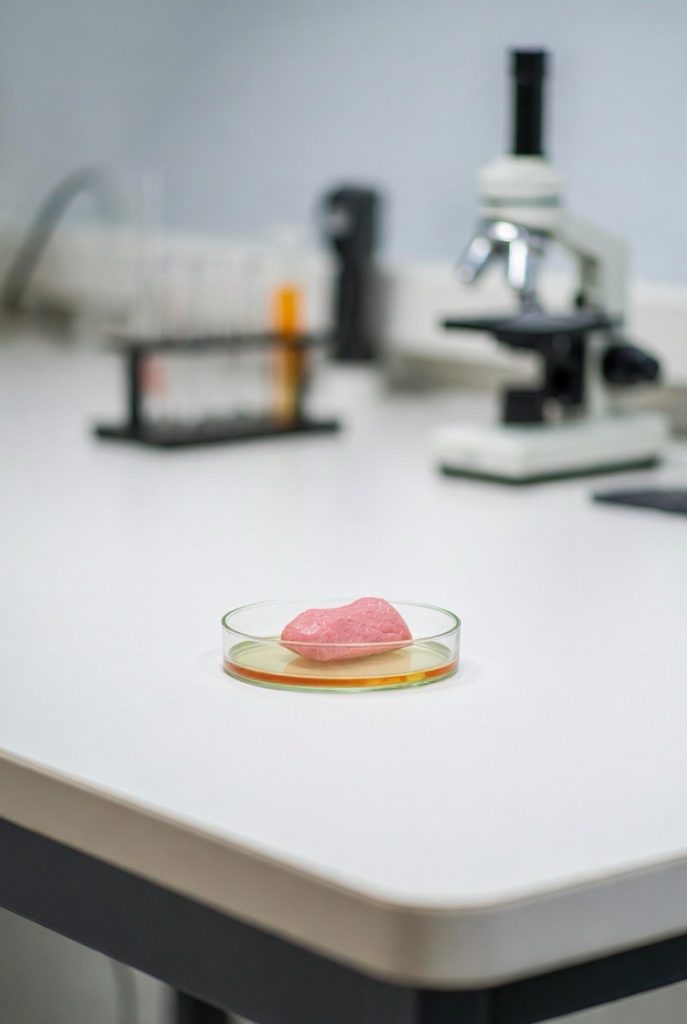
Lab-grown meat, produced from animal cells in labs, is marketed as a sustainable alternative to traditional farming. However, concerns about its safety, nutrition, and environmental impact persist. The use of immortalized cells, which replicate endlessly like tumor cells, raises fears about cancer risks and long-term health effects. Lab-grown meat often lacks essential nutrients like collagen, creatine, and vitamins, making it less nutritious than natural meat. The production process is energy-intensive and may have a higher carbon footprint than conventional meat. Ethical issues, such as the use of animal-derived ingredients, further fuel criticism. With growing bans and regulatory hurdles, the future of lab-grown meat remains uncertain, with many questioning its viability and safety.
Long Version
The Controversial World of Lab-Grown Meat: Examining the “Tumor Burgers” Claims
The food tech industry has pushed lab-grown meat, also known as cultured meat, cell-based meat, or cultivated meat, as a supposed alternative to traditional farming. This synthetic meat, sometimes called clean meat or in vitro meat, is produced from animal cells in labs rather than from animals. However, the term “tumor burgers” has gained traction, pointing to the use of immortalized cells—cells altered to divide endlessly, similar to cancer cells or tumor cells. Detractors describe it as lacking key nutrients like collagen, creatine, carnosine, and natural vitamins, reducing it to processed protein mush with no proven long-term safety. This narrative raises serious questions about whether this technology is as viable as claimed, revealing significant drawbacks in nutrition, safety, and environmental impact.
The Basics of Cell-Cultured Food Production
Lab-grown meat relies on cell culture technology, where animal cells are extracted from biopsies and grown in nutrient media. Typically, muscle cells like myoblasts or stem cells from animals such as cows or chickens are used, proliferating into tissue resembling meat, including adipocytes for fat. Terms like fake meat highlight its artificial nature, though it’s promoted as cell-cultured food.
Scaling production requires immortalized cell lines, achieved through the immortalization process, often involving genetic engineering or oncogenes to enable enhanced proliferation. These cells offer stable, predictable, and controllable growth in cell banks, drawing comparisons to HeLa cells from Henrietta Lacks, known for their indefinite division. However, this trait mirrors pre-cancerous cells or cancerous cells, as they bypass normal cell death mechanisms, sparking valid concerns about their safety in food.
The process uses scaffolds for structure and fetal bovine serum (FBS) or alternatives to promote growth in bioreactors. Bioreactor cultivation demands precise control, but it’s energy-heavy and expensive, limiting widespread adoption. Despite claims of efficiency, the reliance on such modified cells underscores potential risks in this food tech approach.
Nutritional Shortcomings Compared to Traditional Meat
A major flaw in lab-grown meat is its incomplete nutritional profile. Conventional meat provides essential compounds like collagen for joints, creatine for muscles, and carnosine as an antioxidant, along with bioavailable vitamins such as B12. In contrast, cultivated meat often lacks these, appearing as processed protein mush that requires artificial fortification to approach equivalence. Studies indicate differences in micronutrients and bioactive elements due to the sterile lab environment, potentially leading to deficiencies without additives.
While some suggest genetic engineering could tweak fats or proteins, real-world products fall short, with lower levels of certain fatty acids and microbial diversity. Theoretical enrichments, like adding omega-3s, remain unproven at scale, and the absence of whole-animal complexity means it may never fully replicate the health benefits of natural meat. As of 2025, comparisons show cultivated meat as similar in basics but inferior in overall nutrient density, raising doubts about its role as a true sustainable protein substitute.
Persistent Safety Issues and Regulatory Hurdles
Safety remains a core concern with “tumor burgers” and “cancer burgers” labels, stemming from immortalized cells’ resemblance to tumor cells. These cells’ indefinite replication echoes cancer contagion fears, with risks of human cancer if not strictly managed. Additional worries include contamination, allergens, chemical residues, and infections from culturing. The lack of decades-long data amplifies uncertainties, as immortalized cell lines could introduce unforeseen hazards like nutritional imbalances or microbial issues.
Regulatory bodies have approved some products, but approvals come with caveats, emphasizing rigorous controls. However, the absence of comprehensive long-term studies leaves gaps, with experts noting potential for enhanced proliferation to go awry. In 2025, ongoing debates highlight that while cells aren’t explicitly cancerous, their modifications pose questions about predictability and stability. Critics argue the industry rushes ahead without sufficient evidence, potentially endangering consumers.
Questionable Environmental and Ethical Claims
Proponents claim lab-grown meat reduces emissions, water, and land use, but criticisms reveal a more nuanced, often worse picture. Production is highly energy-intensive, especially in bioreactors, and if reliant on fossil fuels, its carbon footprint could exceed that of beef. Studies show emissions might range from slightly lower to 26% higher than traditional meat, undermining sustainability promises. Land efficiency is debated, as feedstock crops don’t significantly outperform conventional systems.
Ethically, it avoids direct slaughter but still uses animal-derived FBS initially, raising welfare issues. The “unnatural” aspect, involving genetic engineering, draws backlash, and corporate control over production adds to skepticism. Overall, the environmental benefits are theoretical and unproven at scale, with high energy demands potentially worsening climate impacts.
Widespread Criticisms and Public Doubts
The “glorified tumor” view persists due to fears of turbo cancers from modified cells, alongside hidden risks like veterinary residues. Nutritional deficiencies and safety gaps fuel rejection, with the product seen as overhyped and potentially harmful. Polarized opinions reflect deep mistrust, from ethical qualms to outright dismissal.
Current Status and Growing Restrictions in 2025
By late 2025, only a handful of approvals exist, with limited availability like chicken in select areas. However, bans proliferate: Florida, Alabama, Mississippi, Nebraska, Montana, Texas, South Dakota, and others prohibit sales or production. Texas imposed a two-year ban starting September 2025, and states like Indiana and Arizona mandate strict labeling or restrictions. These measures, enacted amid 2025 legislative sessions, signal resistance, with more states considering similar actions. Global variance exists, but U.S. trends show increasing scrutiny, stalling the industry’s progress.
In summary, lab-grown meat faces substantial hurdles, from its reliance on immortalized cells raising cancer-like concerns to nutritional gaps, unproven safety, and dubious environmental gains. As regulations tighten and bans expand, consumers should approach this cell-based innovation with caution, prioritizing established facts over unfulfilled claims.