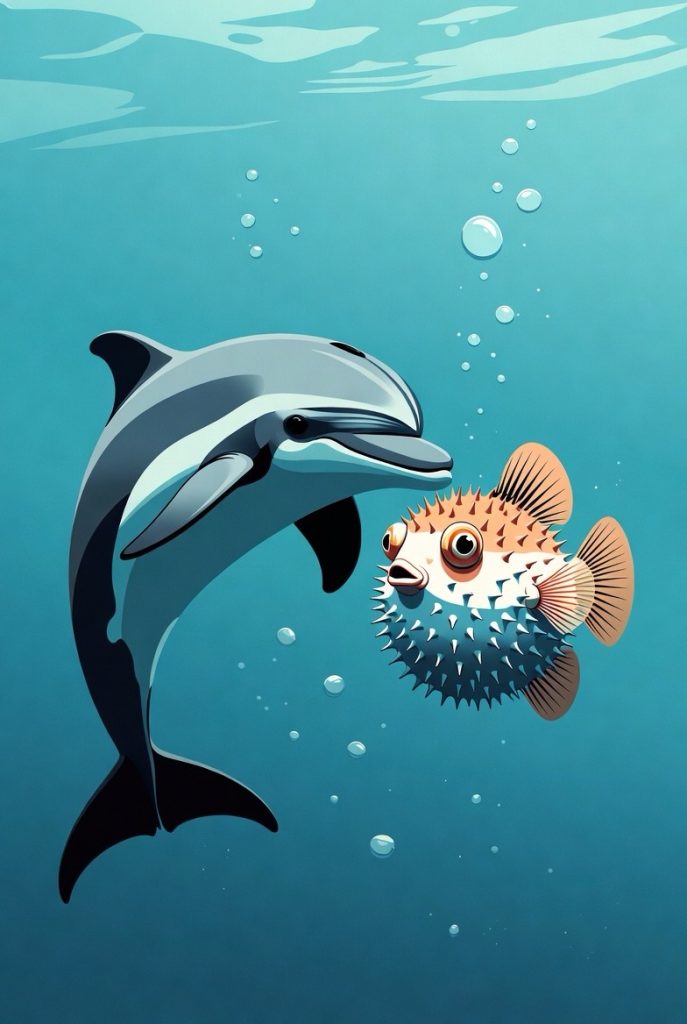
The popular idea that dolphins get high on pufferfish stems from a 2013 documentary showing young bottlenose dolphins gently chewing and passing around a pufferfish, then appearing dazed and trance-like. The fish releases tetrodotoxin (TTX), a powerful nerve toxin that can cause numbness or lightheadedness in small doses. While viral videos fuel headlines about dolphins using pufferfish like drugs, experts say the behavior is likely just playful curiosity rather than intentional intoxication. Dolphins are highly intelligent and often manipulate objects for fun or social bonding; the dazed look may come from mouth numbness or a natural play-induced trance, not euphoria. Scientific evidence for deliberate “getting high” remains weak and anecdotal, with no studies proving intent. This enduring myth highlights dolphins’ cleverness while reminding us to avoid projecting human motives onto animal behavior.
Long Version
The Intriguing Case of Dolphins and Pufferfish: Myth, Behavior, and Science
In the vast expanse of ocean mysteries, few tales capture the imagination quite like the notion of dolphins getting high on pufferfish. This popular theory, sparked by captivating footage from a 2013 documentary, suggests that these intelligent marine mammals might deliberately seek out a euphoric state by interacting with toxic pufferfish. While videos of dolphins passing pufferfish around like a shared toy have gone viral, drawing millions of views and sparking endless debates, the reality is far more nuanced. Is it true that dolphins chew on pufferfish to achieve a trance-like high, or is this behavior rooted in play, curiosity, or something else entirely? Let’s dive deep into the facts, exploring every angle from the original observations to expert analyses and recent discussions as of 2026.
Origins of the Dolphins Pufferfish Phenomenon
The story begins with a groundbreaking series that used innovative spy cameras to capture intimate glimpses of dolphin life. In one memorable segment, a pod of young bottlenose dolphins off the coast of Western Australia is seen gently nipping at a pufferfish, inflating it slightly, and then passing it among themselves in what appears to be a coordinated game. The dolphins exhibit dazed behaviors afterward—floating vertically, staring at their reflections on the water’s surface, and moving in slow, trance-like patterns. Narrators and initial reports speculated that this could be dolphins using pufferfish like drugs, drawing parallels to human recreational substance use.
This footage quickly exploded in popularity, inspiring headlines like “Dolphins ‘Deliberately Get High’ on Puffer Fish Nerve Toxins” and fueling online trends. By 2026, clips of the video of dolphins passing pufferfish continue to circulate, often captioned with questions like “Do dolphins really get high on pufferfish?” The appeal lies in anthropomorphism—projecting human-like motivations onto animals—making it a staple in lists of quirky wildlife facts.
Understanding the Behavior: Dolphins Chewing Pufferfish
At the heart of this intrigue is the dolphins’ interaction with pufferfish, also known as blowfish. These fish defend themselves by inflating and releasing tetrodotoxin (TTX), a potent neurotoxin produced by symbiotic bacteria in their bodies. TTX is infamous for its role in fugu cuisine, where improper preparation can lead to paralysis or death in humans. In dolphins, observations show them carefully handling the pufferfish to release controlled, small amounts of the toxin without killing the fish or themselves. They chew gently, pass it around the pod, and repeat, sometimes for extended periods.
Why do dolphins play with pufferfish toxin in this way? Dolphin play behavior is well-documented as a sign of their high intelligence and social complexity. Juveniles, in particular, engage in object manipulation, bubble ring creation, and interspecies interactions for entertainment, learning, or social bonding. In the case of pufferfish, this could simply be exploratory play, with the toxin-induced effects being an unintended byproduct rather than the goal. Dolphins are known for their curiosity, often harassing other marine life like birds or turtles without predatory intent, further supporting this view.
The Science of Tetrodotoxin Dolphin Effects
Tetrodotoxin blocks sodium channels in nerve cells, disrupting signal transmission and causing numbness, tingling, and lightheadedness in low doses. In higher amounts, it leads to paralysis and respiratory failure—up to 1,200 times more potent than cyanide. For dolphins, the pufferfish toxin dolphins encounter might induce a mild narcotic-like state, explaining the observed dolphin trance pufferfish behaviors such as reduced activity and altered postures.
However, scientific studies on dolphins pufferfish tetrodotoxin effects remain limited. No controlled experiments have confirmed intentional intoxication, and much of the evidence is anecdotal from field observations. Marine biologists note that dolphins’ large body size and possible physiological adaptations might allow them to tolerate low TTX levels without harm, but this doesn’t prove they’re seeking a “high.” Instead, the dazed appearance could stem from numbness in their sensitive mouths or a play-induced trance, similar to how humans enter flow states during games. Comparisons to other animals, like lemurs chewing millipedes for insect-repelling toxins or reindeer eating hallucinogenic mushrooms, highlight that self-induced altered states occur in nature, but intent is hard to prove.
Expert Opinions and Debunking the “Dolphins Getting High” Myth
While the idea of dolphins using pufferfish like drugs has viral potential—evident in 2025 online posts likening it to “passing a joint underwater”—experts urge caution. A mammal curator at a natural history museum emphasized in a 2025 interview that the behavior might not be about euphoria but rather sensory exploration or even self-medication against parasites. Skeptics point out that the “high” theory anthropomorphizes dolphins, assuming human-like motivations without evidence.
Alternative explanations abound. Some researchers suggest the numbness from TTX could mimic a therapeutic effect, dulling pain or deterring skin irritants. Others frame it within dolphin intelligence: these cetaceans have spindle neurons associated with emotions and social cognition, enabling complex play that might incidentally involve toxins. As of 2026, new research on dolphins high on pufferfish remains scarce, with most articles recycling the footage rather than presenting fresh data. Trending discussions often blend humor with facts, such as posts noting dolphins’ “party” behavior, but they reinforce that it’s unproven speculation.
Broader Context: Dolphin Intelligence and Animal Intoxication
This phenomenon underscores dolphins’ remarkable cognitive abilities. With brain-to-body ratios second only to humans in some species, they exhibit self-awareness (passing mirror tests), cultural transmission (teaching tool use), and lifelong social bonds. Play with pufferfish fits into a pattern of innovative behaviors, like using sponges for foraging or creating bubble nets for hunting.
In the animal kingdom, similar toxin interactions exist—cats with catnip, birds with fermented berries—but dolphins stand out for their social sharing. Yet, ethical considerations arise: portraying dolphins as “stoned” risks trivializing their conservation needs, such as habitat loss and pollution.
Recent Developments and Ongoing Debates
As of January 2026, dolphins high on pufferfish 2026 searches yield no groundbreaking studies, but seasonal variations like summer viral dolphins chewing pufferfish clips keep the topic alive. Expert critiques, such as those debunking the myth in favor of numbness vs. high interpretations, continue to emerge in wildlife forums. For instance, a 2024 piece revisited the behavior amid broader animal facts, stressing the toxin’s lethality over recreational appeal.
In conclusion, while the sight of dolphins interacting with pufferfish is mesmerizing and raises fascinating questions about animal consciousness, the “getting high” theory lacks robust scientific backing. It’s more accurately a display of playful ingenuity, with toxin effects likely causing temporary numbness or trance rather than deliberate euphoria. This enduring mystery reminds us of the ocean’s complexities and the importance of evidence-based inquiry in understanding wildlife. For those intrigued, exploring reputable sources like marine biology journals or documentaries offers the best path to deeper insights, ensuring we appreciate dolphins for their true brilliance rather than sensational myths.