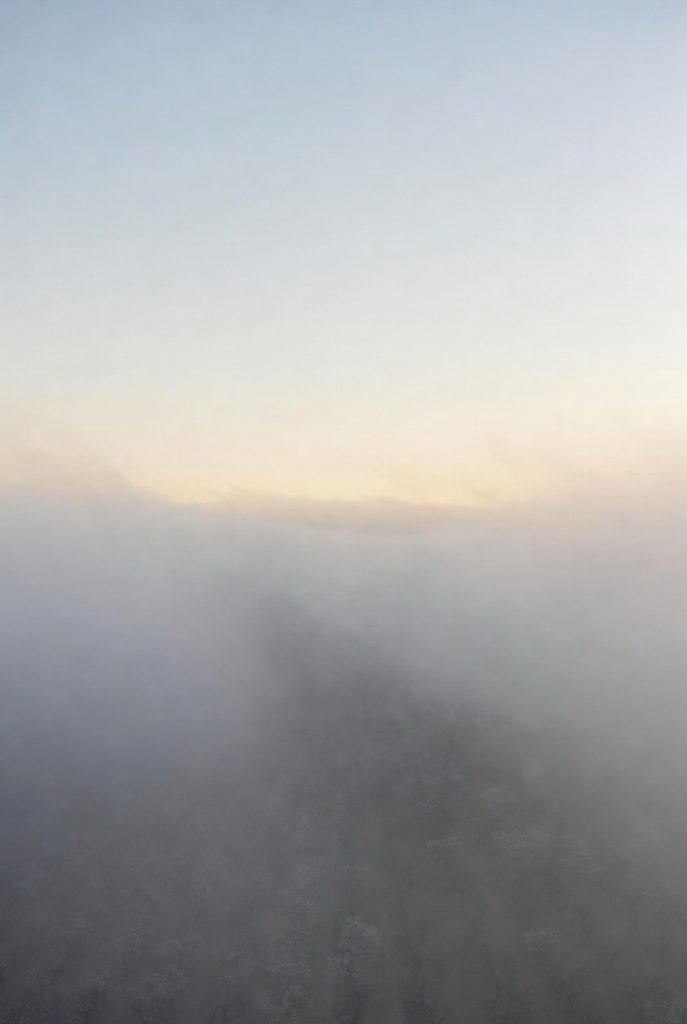
California’s Central Valley has been shrouded in thick tule fog since late November 2025, creating a persistent 400-mile fog bank from the Sacramento to San Joaquin Valley. This dense radiation fog forms from super moist soils after a record-wet fall, calm winds, and a high-pressure ridge causing temperature inversion that traps cold air and low visibility. Days stay chilly and gray, with fog often lifting into low stratus clouds before reforming at night, sometimes as freezing fog. Named after historic tule grass wetlands, it provides vital chill hours for crops like almonds and pistachios, though foggy days have declined due to cleaner air and warming trends. Low visibility raises highway safety risks, like pileups on Interstate 5, and contributes to a damp chill affecting daily life. Incoming atmospheric rivers this week should bring rain, disrupt the inversion, and clear the fog from north to south, ending weeks of clammy conditions.
Long Version
The Persistent Tule Fog of Late 2025: A Deep Dive into Central Valley’s Iconic Weather Phenomenon
As of December 15, 2025, California’s Central Valley remains enveloped in a thick blanket of tule fog, a persistent fog that has dominated the region since late November. This dense fog, stretching like a 400-mile fog bank from the Sacramento Valley in the north to the San Joaquin Valley in the south, has created days of low visibility and chilly, gray skies. Satellite imagery has captured this vast stratus layer, highlighting its unyielding presence over hundreds of miles. What began after a record-wet fall has turned into one of the longest stretches of tule fog in recent memory, with some areas experiencing over 21 consecutive days of radiation fog. This event underscores the unique meteorological conditions that foster such ground fog, while also raising questions about its future amid broader trends.
How Tule Fog Forms: The Science Behind the Mist
Tule fog, a type of radiation fog, emerges under specific conditions that are quintessential to the Central Valley’s winter climate. It typically forms on calm winds following heavy precipitation, when super moist soils release water vapor into the cool air near the ground. As nighttime temperatures drop, the Earth radiates heat upward, cooling the surface air to its dew point and causing condensation into low-lying fog. A stubborn high-pressure ridge overhead creates subsidence—downward air motion that compresses and warms the air aloft, forming a temperature inversion. This inversion acts like a lid, trapping the cold, dense fog below while preventing it from dissipating.
In the 2025 episode, the wet autumn provided the ideal precursor: September through November marked the wettest on record in parts of Central California, saturating the soils and fueling the fog’s persistence. Calm winds and the absence of strong storms allowed the fog to linger, often lifting slightly during the day into a tule stratus layer before reforming as ground fog at night. Freezing fog has also occurred in spots, where sub-freezing temperatures turn the mist into ice crystals, adding to the clammy conditions and damp chill felt by residents. The inversion magnitude—extreme temperature differences between the foggy surface (highs barely reaching 46°F in places like Sacramento) and warmer air above—has kept the fog locked in, sometimes spilling westward through the Carquinez Strait toward the San Francisco Bay Area.
The name “tule fog” derives from the tule grass, or tulares, the reed-like plants that once dominated the region’s wetlands. These marshy areas historically amplified fog formation by contributing extra moisture, though much of that landscape has been altered by agriculture and development. To enhance understanding, consider that the fog’s formation is also influenced by diurnal cycles: cooler nights promote denser fog, while even mild daytime warming can thin it temporarily, only for it to rebuild after sunset.
Historical Patterns and the Declining Fog Trend
Tule fog has long been a hallmark of Central Valley winters, with records dating back to the late 1800s. Past events, like the 1985 stretch of 16-17 consecutive foggy days in Fresno and Sacramento, were notorious for their intensity. However, research shows a declining fog trend over recent decades. From 1981 to 2014, foggy days decreased by 46%, linked to improved air quality from pollution controls, which reduce the condensation nuclei (like soot and exhaust) needed for fog droplets to form. Climate change exacerbates this by warming overnight lows and reducing chill hours, while urban heat islands in growing cities like Fresno further disrupt the cooling needed for fog.
This decline isn’t just a meteorological curiosity; it has real implications. Tule fog provides essential chill hours—periods of cold exposure below 45°F—for fruit and nut trees like almonds, pistachios, cherries, apricots, and peaches, which dominate the Central Valley’s multi-billion-dollar agricultural economy. These crops, supplying 95% of U.S. fruit and nut production, rely on winter dormancy to ensure robust spring growth. Fewer foggy days mean fewer chill hours, potentially lowering yields and stressing an industry already facing water and labor challenges. Enhancing this point, some farmers have begun experimenting with artificial chilling methods, such as overhead sprinklers or reflective ground covers, to compensate for reduced natural fog events.
Impacts on Daily Life, Safety, and the Environment
While beneficial for agriculture, tule fog’s low visibility—often dropping below a quarter-mile—poses significant hazards. Dense fog advisories have been issued multiple times this season, warning of sudden visibility drops on highways like Interstate 5, which slices through the valley. Freeway pileups and accidents are common in such conditions, with historical events underscoring the risks: in the 20th century, fog-related crashes were far more deadly due to higher pollution levels amplifying the mist. Today, drivers in areas like Kern County face similar threats, compounded by the fog’s persistence. To mitigate these, transportation authorities recommend using low-beam headlights, maintaining greater following distances, and leveraging vehicle technologies like fog lights and adaptive cruise control.
Beyond safety, the fog creates clammy conditions that affect mental and physical health. Residents report seasonal affective disorder symptoms amid the unrelenting gray, with temperatures staying in the 30s to 40s°F and a pervasive damp chill. In urban centers, the fog can trap pollutants, though cleaner air has mitigated this compared to decades past. Ecologically, the fog’s moisture supports local wetlands, but its composition—often including ammonia, nitrates, and sulfates from agricultural sources—can contribute to air quality issues. On a positive note, the fog aids in soil moisture retention, reducing irrigation needs during winter and supporting biodiversity in remnant wetland habitats.
This 2025 event has even sparked misinformation, like false claims of “radiation fog” being radioactive—a misnomer for the cooling process, not nuclear fallout. Clarifying such myths is crucial for public awareness and preparedness.
Looking Ahead: Clearance on the Horizon
Relief is imminent. Incoming atmospheric rivers—moisture-laden storms from the Pacific—are set to bring rain starting this week, scouring the fog from north to south. These systems will disrupt the high-pressure ridge, introducing winds and warmer air to break the inversion. While they may cause flash flooding in already saturated areas, they promise to end the prolonged chill and restore visibility. Forecasts indicate a pattern shift, with periods of rain potentially alleviating the fog’s hold. However, as climate patterns evolve, events like this may become rarer, prompting farmers to adapt through chill-enhancing techniques or crop shifts.
In summary, the 2025 tule fog episode exemplifies the Central Valley’s dynamic weather, blending natural beauty with practical challenges. From its roots in tule grass wetlands to its role in sustaining agriculture, this fog remains a vital, if fleeting, part of California’s winter rhythm. As the atmospheric rivers approach, residents can anticipate clearer skies, but the event serves as a reminder of how interconnected weather, environment, and human activity truly are.