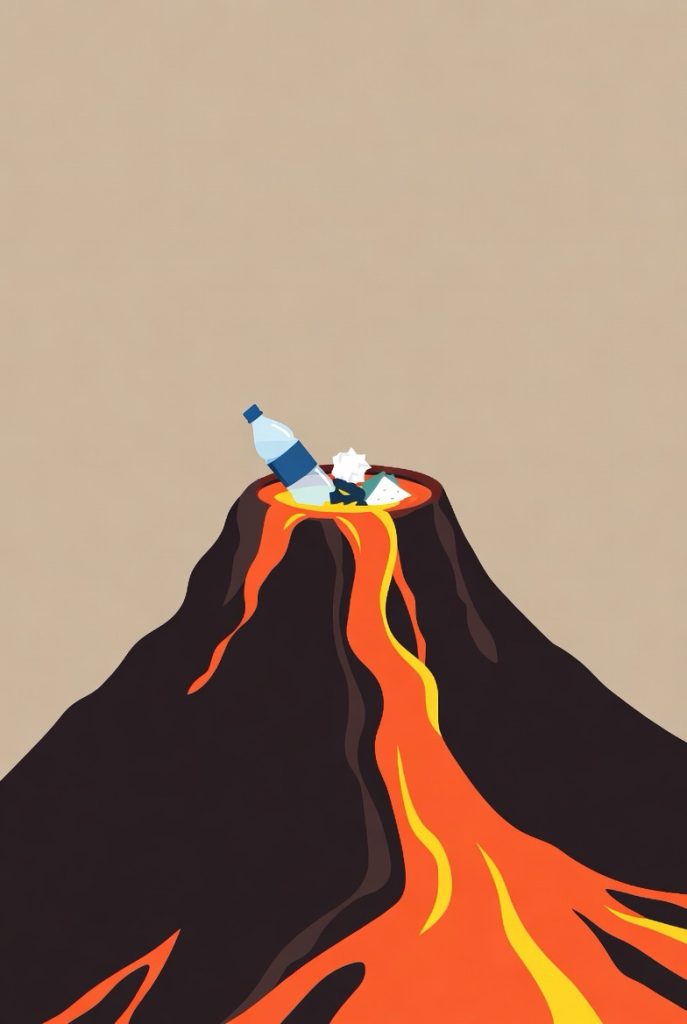
Dumping garbage into volcanoes may sound clever, but it’s dangerous, impractical, and harmful. Lava temperatures vary, and many volcanoes aren’t hot enough to fully destroy metals, hazardous waste, or industrial materials. Adding trash can trigger steam explosions, lava fountains, and eruptions, as seen when small disturbances caused violent reactions at volcanoes like Kilauea and Nyiragongo. Burning waste would release toxic gases that mix with volcanic emissions, worsening air pollution, acid rain, and health risks. Transporting waste to remote volcanoes is costly, carbon-intensive, and unsafe for workers. Many volcanoes are also culturally sacred, making dumping unethical. Safer alternatives—recycling, modern incineration, landfills, and waste reduction—are far more effective and responsible solutions.
Long Version
Why Dumping Garbage Into Volcanoes Is a Bad Idea
The notion of using volcanoes as a natural incinerator for garbage disposal has intrigued many, given the intense heat of lava that seems capable of reducing trash to nothingness. However, this idea overlooks critical scientific, environmental, logistical, cultural, and safety factors that make it not only impractical but also highly dangerous. Far from solving our waste management woes, dumping municipal solid waste or hazardous waste into a volcano could trigger explosions, exacerbate pollution, and disrespect sacred places. This article delves into the multifaceted reasons why this approach is fundamentally flawed, drawing on geological insights and real-world examples from volcanoes like Kilauea, Nyiragongo, Mount St. Helens, and Mount Erebus.
The Appeal and the Reality of Volcanic Waste Disposal
At first glance, volcanoes appear ideal for trash disposal. Lava, the molten rock expelled during an eruption, reaches temperatures that could theoretically burn organic materials in garbage. Shield volcanoes, characterized by fluid lava flows of basalt, often feature persistent lava lakes where waste might be introduced. For instance, Kilauea’s Halema’uma’u crater in Hawaii has hosted a lava lake, drawing speculation about its potential as a disposal site. Similarly, Nyiragongo in the Democratic Republic of Congo boasts one of the world’s most active lava lakes, with fluid lava that flows readily. Yet, the reality is starkly different: volcanoes are not designed for human waste, and attempting to use them as such ignores the complex interplay of magma, pressurized gases, and environmental sensitivities.
Most volcanoes are not shield types but stratovolcanoes, like Mount St. Helens or Cumbre Vieja, which build up pressure and erupt explosively with dacite lava that is thicker and cooler. Dumping trash here would not result in clean incineration but could lead to chain reactions, rockfalls, and lava splatter, turning a bad idea into a catastrophic one. The geological diversity of volcanoes means that what works in theory for one type fails spectacularly for others, emphasizing the need for a nuanced understanding of volcanic behavior.
Scientific Limitations: Temperature, Burn Efficiency, and Material Breakdown
One core issue lies in lava’s temperature variability and its inability to fully destroy all waste. Basalt lava from shield volcanoes like Kilauea can exceed 2,000°F (1,100°C), sufficient to burn food scraps, paper, plastics, glass, and some metals in municipal solid waste. However, dacite lava from stratovolcanoes such as Mount St. Helens hovers below 1,300°F (704°C), too cool to melt tougher materials like steel, nickel, or iron. Even in hotter scenarios, not all garbage would burn completely; remnants could float on the lava surface or sink partially, only to be ejected later during an eruption.
Hazardous waste poses even greater challenges. Nuclear materials or medical refuse require far higher temperatures for safe disposal, and volcanoes fall short compared to controlled incinerators. In Mount Erebus, Antarctica’s persistently active volcano with a lava lake, the extreme cold environment would complicate any attempt, as cold trash introduced to hot magma could cause immediate thermal shocks. Furthermore, the chemical composition of waste interacts unpredictably with magma, potentially altering its viscosity and leading to unforeseen volcanic activity.
Risks of Explosions and Volcanic Hazards
Dumping waste into a volcano isn’t just inefficient—it’s explosive. Lava lakes often have a thin, cooling crust over molten material. Introducing garbage, especially if it contains water or organics, can pierce this crust and trigger violent reactions. The result? Pressurized steam explosions, fire fountains spewing lava blebs and volcanic bombs, and chain reactions that propel debris skyward.
Historical incidents underscore these dangers. At Kilauea in 2015, simple rockfalls into the lava lake caused explosions that ejected lava up to 280 feet. In Ethiopia’s Erta Ale volcano in 2002, a 66-pound bag of organic waste dumped into the lava triggered an eruption. Scaling this up to tons of trash could devastate surrounding areas, with lava flows and rockfalls endangering lives. Nyiragongo’s fluid lava, while seemingly accessible, has led to rapid, destructive eruptions, as seen in 2021 when lava flows overwhelmed nearby communities. These examples highlight how even small disturbances can escalate into major hazards, making volcanic disposal a high-risk gamble.
Environmental Pollution and Health Impacts
Environmentally, volcanic disposal would amplify pollution rather than mitigate it. Burning trash releases toxic gases from plastics and metals, which mingle with natural volcanic emissions like sulfur dioxide, chlorine, and carbon dioxide. This cocktail creates vog—volcanic fog—or acidic fog that damages vegetation, contaminates soil, and causes breathing problems for humans. Nyiragongo alone emits thousands of tons of sulfur dioxide daily, already impacting local air quality and water sources in nearby villages like Rusayo and Sake, where volcanic fallout has contaminated drinking water.
Unlike modern incinerators with filters to capture pollutants, volcanoes vent directly into the atmosphere, worsening air quality and increasing the carbon footprint through incomplete combustion. Erupted remnants could spread hazardous waste across landscapes, turning a localized disposal attempt into widespread environmental harm. For instance, Mount St. Helens’ 1980 eruption blanketed regions with ash; adding trash pollutants would compound such events. Long-term effects include acid rain formation, ecosystem disruption, and bioaccumulation of toxins in food chains, posing risks to wildlife and human health far beyond the volcano’s vicinity.
Logistical and Economic Challenges
Practically, the idea crumbles under logistical scrutiny. Only about eight volcanoes globally maintain active lava lakes suitable for dumping, limiting options drastically. Transporting billions of tons of garbage to remote sites like Kilauea or Mount Erebus would demand enormous resources, including fuel for ships, planes, or trucks, skyrocketing costs and the overall carbon footprint. Few populations live near these volcanoes, so disposal would involve long-haul transportation, making it more expensive and polluting than landfills or incinerators.
Workers would face lethal risks from flaming debris and unstable terrain, rendering the process uninsurable and unethical. Uneven distribution of waste in lava flows means incomplete destruction, with remnants potentially resurfacing during future eruptions. Economic analyses show that the initial setup for safe access points, protective gear, and monitoring systems would add prohibitive costs, far outweighing benefits compared to established waste management technologies.
Cultural and Ethical Considerations
Beyond science and logistics, cultural dimensions cannot be ignored. Many volcanoes hold profound significance for indigenous communities. Kilauea’s Halema’uma’u crater is revered as the abode of Pele, the Hawaiian goddess of fire and volcanoes; dumping trash there would be a grave desecration. Similarly, Nyiragongo and other sites are integral to local traditions, where such interference could erode cultural heritage and spark conflicts.
Ethical concerns extend to equity: imposing waste on remote, often vulnerable communities ignores their rights and exacerbates environmental injustices. This approach could lead to international disputes over shared natural resources and violate principles of environmental stewardship, prompting calls for global regulations against such practices.
Alternatives to Volcanic Disposal
Instead of volcanoes, proven methods like advanced incinerators offer controlled burn environments with emission filters, far safer for waste disposal. Recycling, composting, and reducing municipal solid waste at the source minimize the need for disposal altogether. Landfills, when managed properly, contain trash without the explosion risks or toxic gas releases associated with volcanic methods. Emerging technologies, such as plasma gasification, provide even more efficient ways to convert waste into energy, promoting a circular economy.
Conclusion
Dumping garbage into volcanoes is a misguided solution that fails on every front—from scientific inefficiencies and explosion hazards to environmental pollution, logistical nightmares, and cultural insensitivities. Examples from Kilauea, Nyiragongo, Mount St. Helens, Mount Erebus, and Cumbre Vieja illustrate the perils, emphasizing that nature’s forces are not ours to exploit for waste management. By prioritizing sustainable practices, we can address our trash problem without courting disaster, ensuring a healthier environment for all.