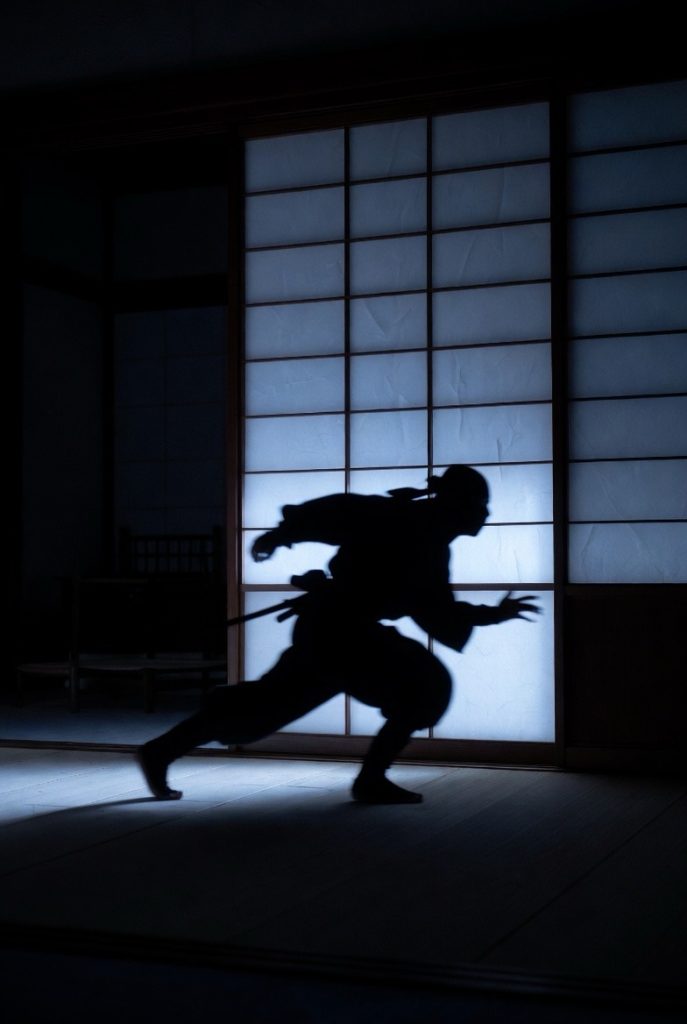
Ninjas did not literally walk like rabbits, despite popular myths. Historical manuals like the Bansenshukai and Shinobi Hiden describe shinobi aruki, practical stealth walking methods focused on silence, balance, and adaptability. Techniques included sliding steps (suriyashi), tiptoe movement, low crouching, and weight control using the ball of the foot. The so-called “rabbit step” likely comes from mistranslated kanji and later folklore, not real hopping or bunny-like movement. Some methods used low, compact gaits or hands and feet for extreme silence, which may have inspired the myth. In reality, ninja movement prioritized efficiency, terrain awareness, and quiet infiltration—not animal imitation—making their stealth skill practical, disciplined, and highly effective.
Long Version
Did Ninjas Walk Like Rabbits? The Truth Explained
The enigmatic world of ninjas, or shinobi, has long captivated imaginations with tales of unparalleled stealth, silent movement, and cunning techniques designed to outwit enemies. One persistent question that arises in discussions of ninja history is whether these shadowy figures truly adopted a gait resembling that of rabbits—hopping or crouching low to achieve the ultimate in quiet footwork. This notion, often depicted in films and folklore, ties into broader concepts of ninja walking, known as shinobi aruki, and draws from ancient manuals like the Bansenshukai and Shinobi Hiden. But is there truth to the “rabbit step,” or is it a product of transcription error, kanji mistranslation, and modern myth-making? In this exploration, we’ll delve into the historical roots, dissect the techniques, and separate fact from fiction to provide a complete understanding of how ninjas mastered the art of invisibility through their unique movements.
The Historical Context of Ninja Movement and Stealth
Ninjas emerged during Japan’s feudal era, particularly in regions like Iga and Koga, where clans specialized in espionage, sabotage, and guerrilla warfare. Schools such as Togakure Ryu emphasized flexibility, surprise attacks, and the element of surprise, often conducted under the cover of nighttime. Unlike samurai, who focused on honorable combat, ninjas prioritized survival and mission success through stealth and deception. Their training, detailed in secret scrolls like the Bansenshukai—a comprehensive 17th-century ninja manual—and the Shinobi Hiden, another historical ninja scroll, included rigorous practices for silent walking, crouching, and adapting to various terrains.
Central to ninja prowess was shinobi aruki, a collection of walking techniques designed to minimize noise and visibility. These methods allowed ninjas to approach a target undetected, avoiding twigs snapping underfoot or alerting guards with audible footsteps. History shows that ninjas trained from childhood to distribute weight evenly, using the ball of the foot for initial contact and rolling smoothly to maintain balance and silence. This focus on gait and footwork was not mere theatrics but a practical necessity for operations in deep grass, corridors, or urban environments, where any sound could spell failure. To enhance effectiveness, ninjas incorporated environmental awareness, such as timing steps with natural sounds like wind or rain, further blending into their surroundings.
Unpacking the Myth of the Rabbit Step
The idea that ninjas walked like rabbits often conjures images of a low, bounding movement akin to a bunny’s hop—compact, springy, and elusive. Terms like “rabbit step,” “deep grass bunny walk,” “makeshift steps,” and “temporary rabbit steps” appear in popular accounts, suggesting a technique for traversing tall vegetation or confined spaces without disturbance. However, scholarly analysis reveals this as a blend of authentic practices and misunderstandings stemming from kanji mistranslation and transcription errors in historical texts.
In the Bansenshukai, references to “formal” or “temporary” rabbit steps (using kanji for “true” or “grass” combined with “rabbit” and “walk”) describe a sliding walk, or suriyashi, where the ninja glides one foot alongside the other, mimicking a leaf on water. This gliding metaphor emphasizes smoothness and minimal friction, ideal for corridor creep or navigating polished floors without the aid of silent sandals—special footwear designed to muffle steps. The “rabbit” element may derive from phonetic similarities to “uho,” or emperor’s step, a ritualistic Chinese-influenced method involving foot sliding and sometimes magical words for added psychological focus. Far from a literal bunny hop, this was a practical tool for maintaining the art of invisibility during infiltration. Additionally, the technique could be adapted for varying speeds, allowing ninjas to transition seamlessly from slow, deliberate advances to quicker evasions when needed.
A common misconception links the rabbit step to the “deep grass” variant, often described as a hand-foot technique (te ashi) where the ninja crouches low, places palms down, and steps the ball of the foot onto the back of the hand for forward propulsion. This hand standing or foot sliding method, detailed in the Shinobi Hiden, allows for ultra-silent movement in low-clearance areas, distributing weight across hands and feet to prevent ground compression and noise. However, the original kanji for “deep grass” (shinso) aligns more closely with “new” or “temporary grass,” indicating an ad hoc adaptation rather than literal vegetation traversal. The association with rabbits likely arose in the mid-20th century from flawed interpretations of these scrolls, turning a subtle sliding gait into a dramatic, animal-inspired crawl. Over time, this myth has been perpetuated through cultural adaptations, but core historical evidence points to efficiency over imitation.
A Comprehensive Look at Ninja Walking Techniques
To fully appreciate the rabbit myth, it’s essential to examine the broader arsenal of shinobi aruki techniques, each tailored for specific scenarios. These methods highlight the ninja’s emphasis on flexibility, weight distribution, and environmental adaptation, ensuring silent progression toward a target. Training often involved simulating real-world conditions, such as practicing on creaky wooden floors or uneven forest paths, to build instinctive responses.
- Shinobi-ashi (Quiet Feet): Starting with the outer edges or small toes, the ninja gradually lowers weight to the floor, rolling to the heel for controlled, noiseless steps. This basic technique forms the foundation for all silent walking, preventing abrupt impacts that could cause twigs snapping. It was particularly useful in indoor settings, where even slight vibrations could echo.
- Uki-ashi (Floating Feet): Performed entirely on tiptoes, this elevates the body slightly, reducing ground contact and ideal for short bursts near enemies. It demands strong calves and balance, embodying the ninja’s pursuit of ethereal movement, and could be sustained for extended periods with proper conditioning.
- Inu-bashiri (Dog Running): A quadrupedal gait on all fours, with knees bent and back angled forward, this low-profile method suits tight spaces where standing is impossible, enhancing stability on uneven terrain. Ninjas might use this for prolonged crawls, conserving energy while remaining hidden.
- Kitsune-bashiri (Fox Running): Similar to the dog walk but on the tips of fingers and toes, this faster variant keeps the ninja low while allowing quicker traversal, perfect for nighttime pursuits. Its agility made it suitable for evading pursuit in open areas.
- Yoko-bashiri (Sideways Walk): Pressing against a wall, the ninja extends limbs in a star position and crosses them sideways, facilitating lateral movement along barriers without turning the body. This was invaluable for navigating narrow alleys or castle walls undetected.
These techniques, combined with practices like palm down crawling or hand standing for extreme silence, underscore the ninja’s holistic approach to stealth. In deep grass or bushy areas, the makeshift steps—temporary adaptations of standard footwork—prevented rustling, while in corridors, suriyashi ensured no creaks. Even the emperor’s step, with its ritualistic sliding, added a layer of mental discipline, sometimes invoking magical words to bolster focus amid high-stakes missions. Furthermore, ninjas integrated breath control and muscle relaxation to minimize involuntary noises, elevating these walks to a form of meditative art.
Debunking Misconceptions and the Role of Mistranslation
The proliferation of the rabbit walk myth can be traced to post-war popularizations of ninja lore, where kanji mistranslation amplified exotic elements. For instance, the kanji for “rabbit” (兎) shares phonetic ties with older terms for imperial rituals, leading to confusion in translations. Transcription errors in adaptations further muddled details, transforming a subtle suriyashi into a “deep grass bunny walk” involving exaggerated crouching and hopping. Historical ninja manuals like the Bansenshukai and Shinobi Hiden prioritize practical stealth over fantastical animal mimicry, with no direct evidence of ninjas emulating rabbits for anything beyond metaphorical efficiency. To clarify, comparative studies of East Asian martial arts reveal similar low-gait techniques in other traditions, suggesting a shared emphasis on biomechanics rather than specific animal inspirations.
In reality, ninja movement was about functionality: achieving surprise through silent, flexible gaits that adapted to any environment. Training involved endless repetition to perfect weight distribution, ball of the foot placement, and low crouching, ensuring the ninja could strike without warning. While films portray dramatic hops, authentic shinobi aruki focused on the element of surprise via imperceptible advance, turning the ninja into a ghost-like figure. This practical mindset extended to tool usage, where silent sandals or padded tabi enhanced natural techniques without relying on gimmicks.
Insights into Ninja Mastery and Legacy
Understanding whether ninjas walked like rabbits reveals deeper truths about their ingenuity. These warriors were not superhuman but highly trained operatives who leveraged history, technique, and psychology to excel. The art of invisibility wasn’t magic but the culmination of silent sandals, corridor creep, and adaptive foot sliding. By debunking myths rooted in kanji mistranslation, we appreciate the real prowess of schools like Togakure Ryu, where flexibility and stealth defined success. Modern applications of these principles appear in contemporary special forces training, highlighting the timeless value of ninja methods in espionage and survival scenarios.
In conclusion, ninjas did not literally walk like rabbits in the whimsical sense, but certain techniques bore superficial resemblances through low gaits and springy readiness. The truth, drawn from the Bansenshukai and Shinobi Hiden, points to practical methods like suriyashi and te ashi, refined for silent, effective operations. This demystifies the legend while honoring the ninja’s enduring legacy as masters of movement and deception.