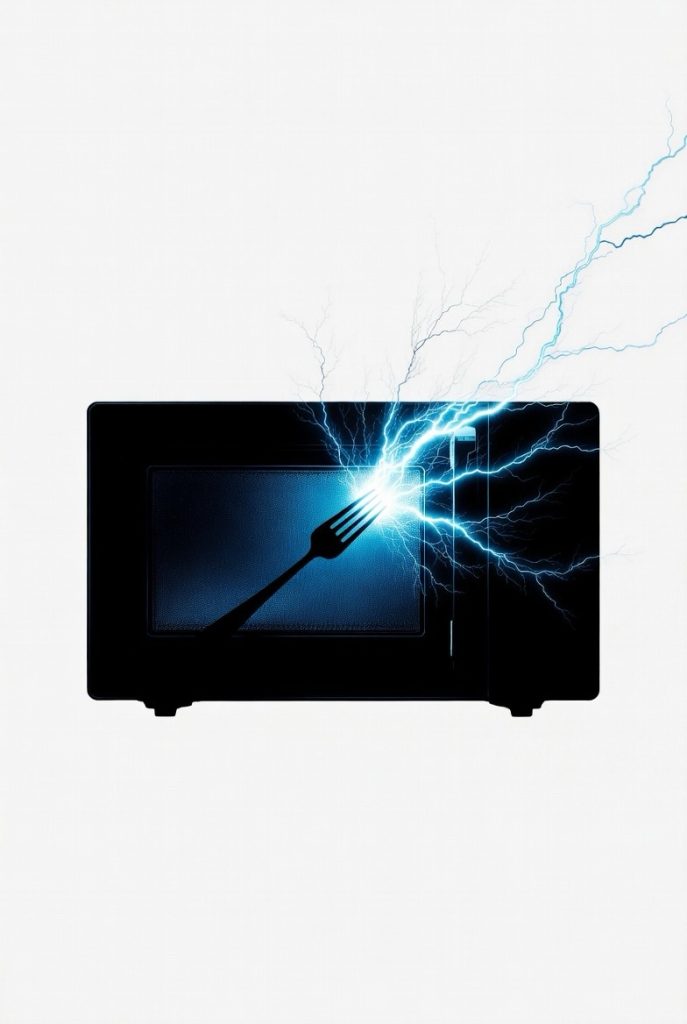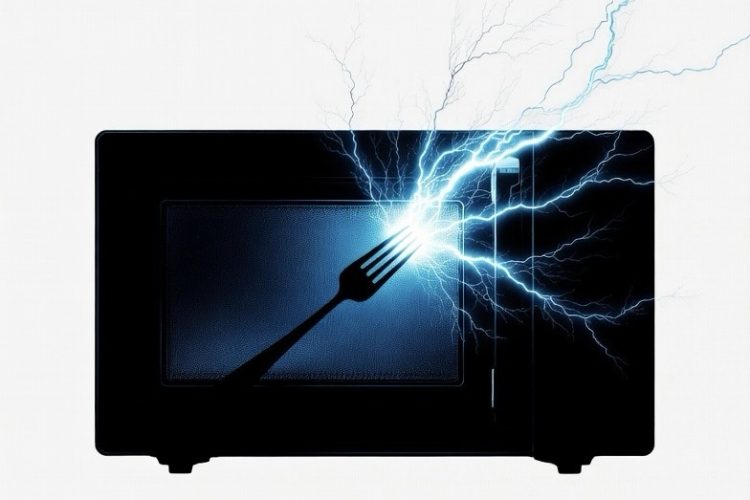
Microwaves heat food using electromagnetic waves at about 2.45 GHz that make water molecules vibrate, creating friction and warmth. Metal, being a good conductor, reflects these waves instead of absorbing them, causing the energy to bounce around inside the oven. This reflection builds up strong electric fields, especially at sharp edges or points on items like forks or foil, leading to arcing—visible sparks that can damage the microwave’s interior, melt plastic parts, or even start a fire if they ignite nearby food or paper. Smooth, thick metal might not arc as easily, but it’s still risky because the reflected waves can overload the magnetron, the component generating the microwaves, shortening the appliance’s lifespan. Manufacturers warn against it to prevent hazards, though some modern microwaves handle small metal amounts better, like in susceptors on frozen food packaging that help crisp items. Always check your model’s manual, but the safest rule is to avoid metal altogether and use microwave-safe glass, ceramic, or plastic instead for even heating without dangers.