Microwaves heat food using electromagnetic waves at about 2.45 GHz that make water molecules vibrate, creating friction and warmth. Metal, being a good conductor, reflects these waves instead of absorbing them, causing the energy to bounce around inside the oven. This reflection builds up strong electric fields, especially at sharp edges or points on items […]

Tag: physics
Can a Trampoline Catch You from a Plane Fall?
Jumping from a plane and landing safely on a trampoline sounds exciting, but physics shows it’s nearly impossible. In free fall from typical skydiving heights, you reach terminal velocity around 120 mph due to gravity and air resistance, building massive kinetic energy. Hitting a trampoline at that speed creates extreme impact forces and g-forces far […]
Does Earth’s Rotation Affect Water Drainage? Myth vs. Science
The Coriolis effect, caused by Earth’s rotation, does not influence water drainage direction in sinks or toilets. While the myth suggests that water spins clockwise in the Southern Hemisphere and counterclockwise in the Northern Hemisphere, this is not true. The Coriolis force is too weak to affect small-scale water flow, with factors like basin shape, […]
China Achieves Quantum Supremacy With Breakthrough 2025 Chips
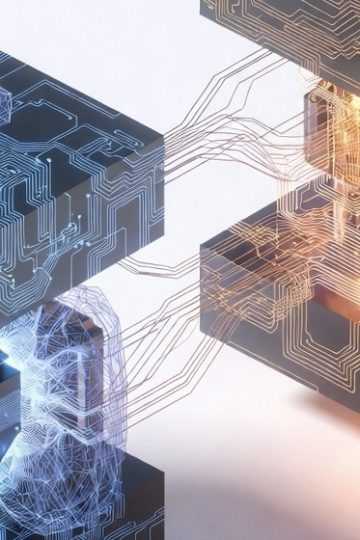
China’s latest quantum computers, Zuchongzhi 3.0 and Jiuzhang 4.0, have achieved massive quantum advantage. The 105-qubit superconducting Zuchongzhi 3.0 finished a random circuit sampling task in seconds that would take the fastest classical supercomputers billions of years, outperforming Google’s latest chips by millions of times. Jiuzhang 4.0, a photonic system using over 2,000 photons, solved […]
Why Does Time Stretch? Unraveling Einstein’s Time Dilation Mystery
Time dilation, a key concept in Einstein’s relativity, explains why time stretches for objects moving fast or in strong gravitational fields. In special relativity, time slows for a moving observer relative to a stationary one, as shown by the Lorentz factor, where higher speeds near the speed of light stretch time more. For example, muons […]