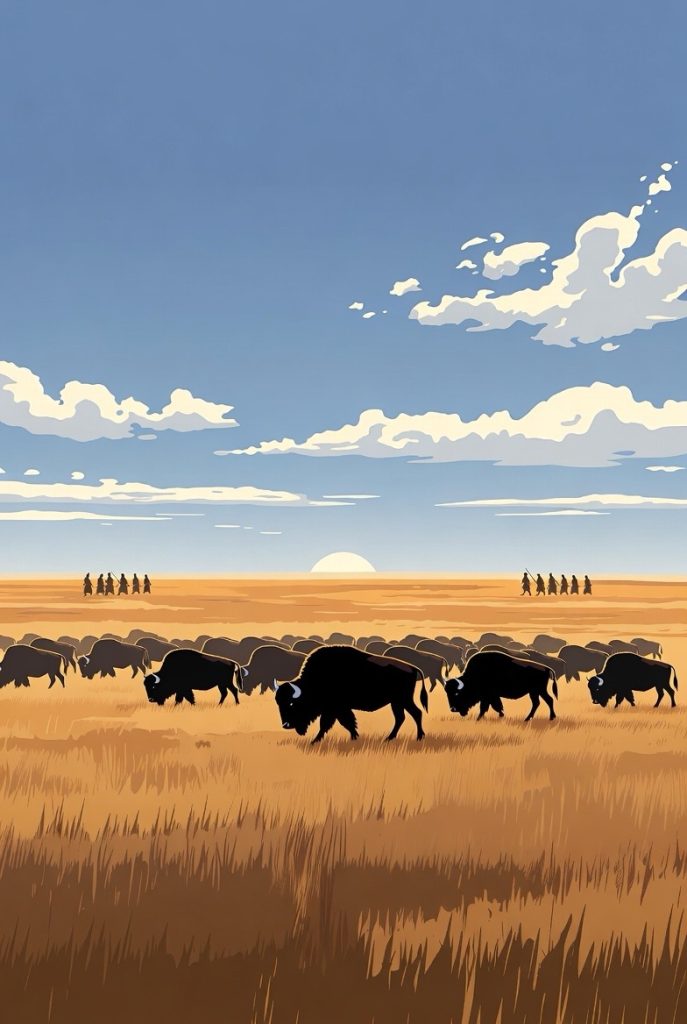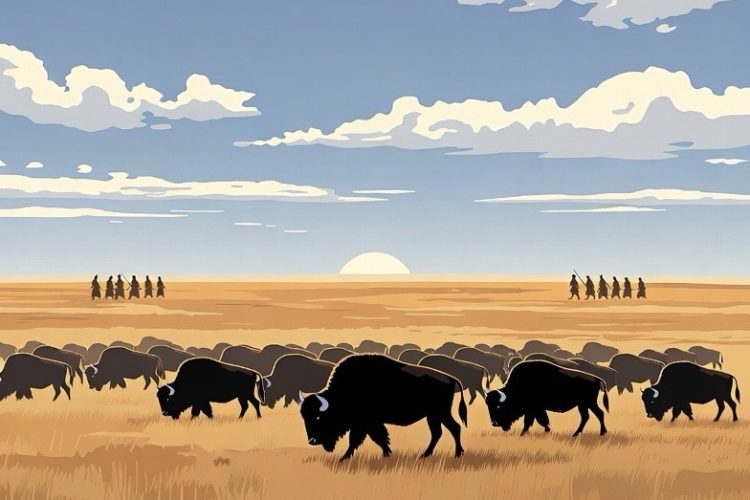
Before European contact, the Great Plains were home to diverse Native American tribes like the Sioux (Lakota), Cheyenne, Kiowa, Comanche, Pawnee, Crow, Blackfoot, Apache, Arapaho, Hidatsa, Mandan, and Arikara. These Indigenous peoples, both nomadic hunters and village farmers, frequently engaged in intertribal warfare driven by competition for hunting grounds, buffalo herds, and territory. Environmental stresses like droughts and shifting bison migrations intensified territorial disputes, leading to displacement, raids, and occasional large-scale violence, as evidenced by archaeological sites showing massacres and scalping. Warfare emphasized bravery through practices like counting coup, small raiding parties, ambushes, and mourning wars to avenge losses or adopt captives. Alliances shifted often, with power dynamics changing as stronger nomadic groups pushed others aside. This complex history of resource-driven conflicts, recorded in winter counts and oral traditions, highlights the resilience and adaptability of Plains Indians in a challenging landscape.
Long Version
Intertribal Conflicts Among Native American Tribes of the Great Plains in the Pre-Colonial Era
The vast expanse of the Great Plains, stretching from the Rocky Mountains to the Missouri River and beyond, was a dynamic landscape inhabited by diverse Indigenous peoples long before European contact. These Native American communities, often referred to as Plains Indians, included nomadic tribes and settled farmers whose lives revolved around survival strategies tied to the land’s resources. Intertribal warfare and tribal conflicts were integral to their existence, driven by resource competition over hunting grounds and territorial disputes amid shifting environmental conditions. Far from the romanticized notions of perpetual peace, archaeological data reveals a history marked by internecine conflicts, where power dynamics, alliances, and enemies shaped the region’s human geography.
Historical Context: Life Before the Horse and Early Settlements
In the pre-colonial era, spanning from the Woodland Period (around 250 B.C. to A.D. 900) through the thirteenth century, Indigenous peoples of the Great Plains lived in a pre-horse life characterized by pedestrian existence. Family-based groups, typically no more than a few dozen individuals, foraged across the landscape as hunter-gatherers, relying on dogs for limited mobility via travois to transport goods. By around 850 CE, some transitioned to farming along river valleys, establishing substantial villages with earth-berm homes occupied by groups like the Hidatsa, Mandan, Arikara, Wichita, Kaw, and Caddo. These Plains Village cultures cultivated crops while hunting buffalo herds, but their settled lifestyle made them vulnerable to raids from nomadic tribes.
Archeological data from sites like Crow Creek in South Dakota, dated to 1325, provide stark evidence of thirteenth century conflict. This ancestral Arikara town revealed a mass grave of 486 individuals—men, women, and children—showing marks of violence, including scalping, dismemberment, and mutilations. Severe malnutrition among the victims suggests drought-induced failure exacerbated resource competition, leading to violent displacement and the destruction of fortified villages with ditches and palisades. Such episodes highlight how environmental stresses, like climatic deterioration and bison migration patterns dispersing buffalo herds, intensified territorial disputes and survival strategies among both farmers and nomads.
Nomadic tribes, including early ancestors of the Sioux (Lakota, Dakota, Nakota), Cheyenne, Arapaho, Crow, Blackfoot, and Assiniboine, maintained higher mobility even without horses, focusing on hunting grounds where bison migration dictated seasonal movements. Conflicts were infrequent and rarely deadly in earlier periods, but they escalated as populations grew and resources like prime hunting territories became contested. Epidemics, though more devastating post-contact, may have indirectly influenced pre-colonial dynamics through population pressures, while fur trade influence began subtly pre-direct contact via indirect exchanges that altered power dynamics.
Reasons for Conflicts: Resource Competition and Territorial Dynamics
At the heart of tribal conflicts lay resource competition over essential hunting grounds and buffalo herds, which provided food, clothing, and tools. Nomadic tribes like the Comanche, Kiowa, Apache, and Jumanos on the southern Plains clashed with settled groups such as the Coahuiltecans and Pawnee, as bison migration forced groups to encroach on others’ territories. Territorial disputes often resulted in displacement, with stronger tribes pushing weaker ones aside—for instance, the Lakota migrating westward from northern woodlands, displacing the Omaha and challenging the Pawnee for control of the Republican River Valley’s rich lands.
Power dynamics shifted with environmental factors, such as drought-induced failure in the fourteenth century, mirroring collapses in the Southwest and leading to amalgamation of groups for survival. Alliances formed strategically, like the Mandan, Hidatsa, and Arikara banding together in the 1860s—though post-contact, this reflects earlier patterns of internecine conflicts resolving through unification against common enemies. Enemies were defined by ongoing rivalries; the Crow allied with outsiders later but pre-colonially feuded with the Sioux and Apache, while the Blackfoot raided for horses against the Assiniboine.
Survival strategies intertwined with these conflicts, as tribes balanced hunting, farming, and raiding to secure resources. Mobility was key for nomads, allowing them to follow bison migration and evade threats, while settled groups fortified villages to deter attacks. These adaptations not only ensured immediate survival but also fostered intricate social structures, where leadership emerged from proven warriors who could navigate both peace and conflict effectively.
Warfare Practices: Tactics, Honors, and Cultural Integration
Plains Indians’ warfare emphasized individual bravery over conquest, with practices like counting coup—touching a live enemy with the hand or a coup stick—earning the highest war honors and prestige, often signified by eagle feathers. Small war parties conducted raiding parties and ambushes, targeting horses or captives at dawn with clubs, bows, and arrows, aiming for minimal casualties to preserve band strength. Large-scale battles were rarer, involving matched forces taunting behind shield lines, but could turn destructive, as seen in massacres like Crow Creek.
Scalping was widespread, with scalps stretched on hoops, displayed in dances, or added to war bundles—sacred collections of charms and medicines invoking spiritual powers for protection and success. Mourning wars drove many raids, avenging lost kin to quiet spirits, often leading to captives adoption to replace deceased members and restore tribal numbers, rather than enslavement. Purification rituals preceded raids, involving feasts, dances, and offerings to war gods, while cultural beliefs tied bravery to rituals like tattooing for totem alliances or scarification to demonstrate endurance.
Tribes recorded these events through winter counts—pictorial calendars on hides marking significant occurrences like battles—along with hide paintings and later ledger drawings that depicted raids, ambushes, and war honors. Spiritual powers were central, with shamans using visions to guide war leaders, and attire like war shirts decorated with beadwork invoking protection from the Great Spirit. This integration of warfare with daily life reinforced community bonds, turning conflicts into opportunities for personal growth and tribal cohesion.
Specific Tribes and Notable Conflicts
The Sioux, particularly the Lakota, exemplified nomadic prowess, clashing with the Cheyenne and Arapaho over northern Plains territories before allying against common foes like the Crow. The Cheyenne, valuing stealth in horse captures, engaged in mourning wars with the Kiowa and Comanche, whose exceptional horsemanship allowed them to displace Apache and Jumanos groups southward.
The Pawnee, as village dwellers, defended against Sioux raids but suffered displacement, later allying with outsiders. Comanche dominance reshaped southern power dynamics, overwhelming neighbors lacking horses. The Apache resisted rivals like the Pawnee and Crow, while the Blackfoot and Assiniboine focused on raiding for prestige in the north. Settled tribes like the Hidatsa, Mandan, and Arikara fortified against nomad incursions, with conflicts peaking along the Missouri River. Southern groups such as the Wichita, Kaw, Coahuiltecans, and Caddo faced similar pressures from mobile enemies.
These interactions fostered amalgamation in some cases, as weakened tribes merged for survival, altering alliances and enemies over time. Such mergers often led to richer cultural exchanges, blending traditions and strengthening collective resilience against future challenges.
Legacy and Insights
Understanding these pre-colonial dynamics reveals a complex world where cultural beliefs, rituals, and spiritual powers underpinned survival amid resource scarcity. While conflicts caused suffering, they also honed strategies that later influenced interactions with Europeans. This history, preserved in archeological data, winter counts, and oral traditions, underscores the resilience of Native American societies, offering valuable insights into human adaptation on the Great Plains. It reminds us that these Indigenous peoples were not passive inhabitants but active shapers of their environment, whose legacies continue to inform contemporary discussions on land, resources, and community.