
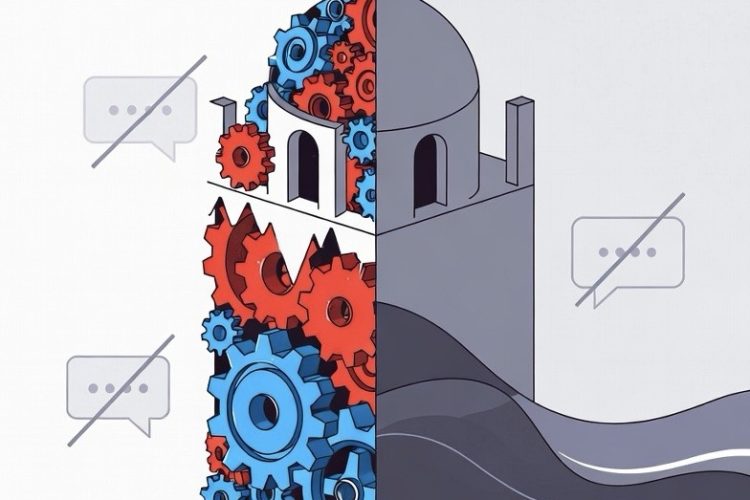
In 2025, elite universities remain ideological battlegrounds amid growing political polarization. Critics highlight overwhelming liberal faculty dominance—often over 90% in many departments—creating intellectual monocultures and echo chambers that marginalize conservative views. DEI mandates, diversity statements, and bias response teams are accused of enforcing ideological conformity, fueling indoctrination claims and high student self-censorship. Cancel culture and fear of professional retaliation further silence dissent, while student activism amplifies leftist causes. However, others argue these institutions mainly serve corporate interests through neoliberal capitalism, prioritizing employability and market-driven education over radical agendas. This tension erodes public trust, threatens academic freedom and free speech, and risks turning campuses into hostile environments lacking true intellectual diversity. Real reform requires balancing inclusion efforts with open inquiry to restore higher education’s core mission.
Long Version
Elite Universities in 2025: Ideological Battlegrounds Amid Political Polarization
In the landscape of higher education in 2025, elite universities have become hyper-polarized arenas where ideological bias clashes with calls for intellectual diversity. Critics argue that these university campuses, dominated by liberal faculty—often exceeding 90% in many departments—foster environments of indoctrination through DEI (diversity, equity, and inclusion) mandates, leading to high rates of self-censorship among students. Yet, defenders counter that these institutions primarily serve corporate interests, aligning with neoliberal capitalism to produce graduates suited for global markets rather than radical left agendas. This controversy erodes public trust, highlighting tensions between academic freedom, free speech, and the push for ideological conformity.
The Dominance of Liberal Faculty and Faculty Imbalance
At the core of the debate is the overwhelming faculty imbalance in elite institutions. Surveys from various universities indicate that over 60% of faculty identify as liberal, with some departments reaching near-total ideological homogeneity. This liberal faculty dominance is often cited as evidence of an intellectual monoculture, where conservative views are marginalized, creating echo-chambers that stifle diverse perspectives. For instance, in humanities and social sciences, critical theory and Marxist ideology frequently underpin curricula, leading to accusations of political orthodoxy that prioritizes leftist activism over balanced inquiry.
Critics point to this as a form of ideological tyranny, where radical left influences manufacture ignorance by excluding alternative viewpoints. Studies challenge simplistic narratives, showing that while a majority of faculty lean liberal, their opinions on polarizing topics vary widely, suggesting not all liberal faculty enforce uniform dogma. Nonetheless, the imbalance contributes to groupthink, where professional retaliation—such as denied promotions or funding cuts—deters dissent, turning campuses into hostile institutions for non-conforming scholars. To address this, some suggest measures like anonymous peer reviews or dedicated funds for underrepresented ideological perspectives, though implementation remains uneven.
DEI Mandates: Tools for Inclusion or Indoctrination?
DEI initiatives, including diversity statements required in hiring and bias response teams to address microaggressions, are central to the cultural wars raging on campuses. Proponents argue these measures promote equity and inclusion, countering historical exclusions and fostering a more representative academic environment. However, critics view them as mechanisms of censorship, enforcing ideological conformity and punishing deviations from academic orthodoxy. Recent investigations into universities for alleged biases in DEI practices reflect a broader backlash against what some call a fascist mutation of progressive policies.
Diversity statements, in particular, have skewed faculty recruitment, favoring candidates who align with DEI goals over those emphasizing merit alone. This has led to claims that elite universities are breeding grounds for certain ideologies, where civics centers—intended to promote civic engagement—are sometimes co-opted for activist training. Reports quantify the financial burden of DEI, estimating significant annual expenditures, which some argue diverts resources from core education to ideological pursuits. Enhancements to DEI could include transparent metrics for success and regular audits to ensure they enhance rather than restrict discourse.
Accusations of Indoctrination and the Radical Left’s Influence
Detractors assert that indoctrination is rampant, with liberal faculty using classrooms to propagate radical left ideologies, from critical theory to anti-capitalist narratives. This, they say, creates a hostile institution for conservative students, who face professional retaliation or cancel culture for expressing dissenting views. Student activism, often aligned with leftist causes, amplifies this, turning protests into demands for ideological purity. In some elite departments, faculty compositions lean heavily one way, leading to limited exposure to alternative perspectives.
However, research debunks the myth of widespread indoctrination, showing that students’ political views shift minimally during college, often due to broader life experiences rather than faculty influence. Analyses argue that claims of indoctrination arise when teaching conflicts with certain ideologies, not from deliberate bias. Moreover, efforts like affirmative action for hires from diverse viewpoints are proposed as antidotes, though they risk backfiring by politicizing academia further. A balanced approach might involve curriculum reviews that incorporate multiple theoretical frameworks, ensuring students encounter a spectrum of ideas.
Counterarguments: Serving Corporate Interests and Neoliberal Capitalism
Opponents of the indoctrination narrative argue that elite universities are more aligned with corporate interests than radical ideologies. By embracing market-driven models since the 1980s, these institutions prioritize employability, corporate partnerships, and return-on-investment metrics, often at the expense of true intellectual diversity. Neoliberal capitalism has transformed higher education into a business, with DEI serving as a branding tool to attract diverse talent pools for global corporations.
Admissions processes now favor ideological alignment and full-pay international students over merit, curating a compliant ruling class. This undermines meritocracy, conditioning students to accept opaque systems. Even critics of DEI acknowledge that banning such programs could exacerbate political interference, as seen in state-level interventions restricting curricula. To enhance this aspect, universities could integrate ethics courses on corporate influence, helping students critically evaluate the interplay between education and economic systems.
Student Self-Censorship and the Erosion of Free Speech
Amid these battles, students report alarming rates of self-censorship, fearing backlash in hyper-polarized environments. Surveys indicate that a significant portion of faculty support DEI statements, correlating with conservative students feeling silenced. This fosters echo-chambers, where disagreement is framed as harm, stifling critical thinking. Cancel culture exacerbates this, with incidents of professional retaliation against dissenting voices. Strategies to combat self-censorship include anonymous feedback systems and workshops on constructive debate, fostering a culture where diverse opinions are valued.
Efforts Toward Intellectual Diversity and Academic Freedom
To counter ideological homogeneity, some institutions are exploring viewpoint diversity initiatives, such as hiring professors from varied backgrounds or establishing civics centers for balanced discourse. However, articles present arguments against such efforts, suggesting they could create hostile learning environments for certain groups. Discussions warn that pushing viewpoint diversity misses deeper issues of academic freedom. Enhancements might involve cross-disciplinary programs that encourage collaboration across ideological lines, promoting mutual understanding.
Future Implications for Higher Education
As political polarization intensifies, elite universities risk becoming intellectual graveyards, with eroded public trust and funding cuts. The crisis demands reform: balancing DEI with free speech, reducing faculty imbalance, and prioritizing inquiry over ideology. Without this, higher education may forfeit its role as a bastion of knowledge, succumbing to cultural wars and manufactured ignorance. Yet, real progress requires intellectual courage, not enforced consensus. Looking ahead, integrating technology like AI-driven discussion platforms could facilitate unbiased exchanges, while policy changes at the institutional level might mandate regular diversity audits encompassing ideological representation.


