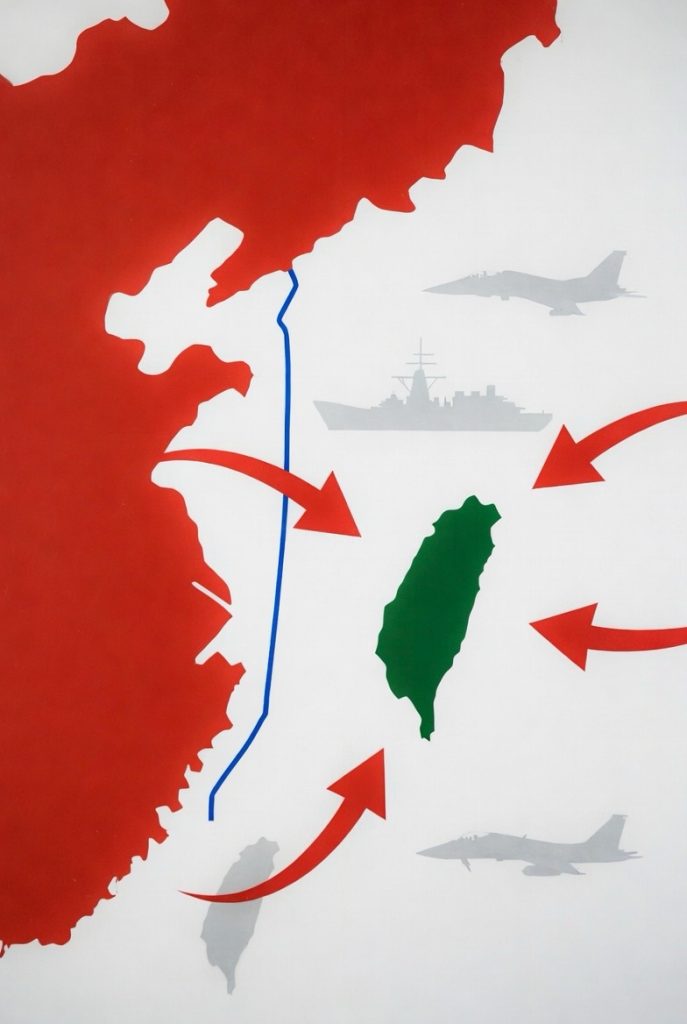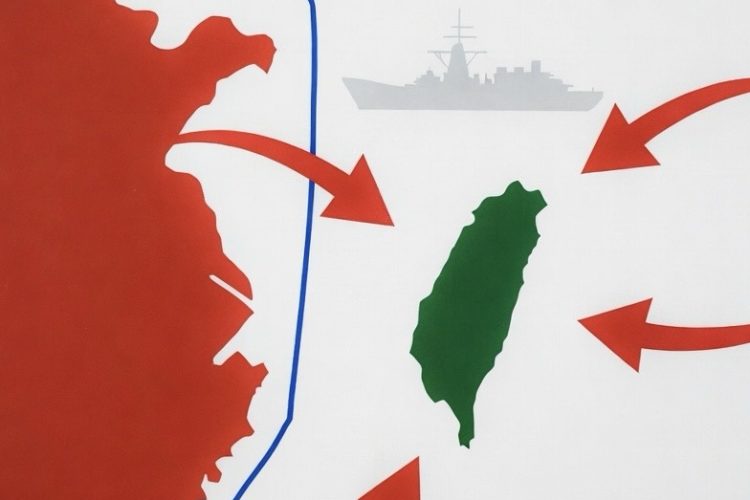
In late December 2025, China launched its largest-ever military drills around Taiwan, called “Justice Mission 2025,” in response to the Trump administration’s record $11.1 billion arms sale to the island. The exercises involved warships, fighter jets, and live-fire drills simulating a blockade of key ports to block external aid and warn against U.S. support for Taiwan. Beijing also sanctioned 20 American defense companies and 10 executives. The massive operation highlighted ongoing tensions over Taiwan’s status, with China viewing the island as part of its territory and opposing its independence movement. President Trump downplayed invasion risks, citing his strong relationship with Xi Jinping and stating he does not believe China will act during his term. The drills tested blockade tactics, air superiority, and precision strikes, underscoring rising geopolitical risks in the Taiwan Strait and the Indo-Pacific region.
Long Version
China’s “Justice Mission 2025”: Escalating Tensions in the Taiwan Strait Amid Record U.S. Arms Sale
In late December 2025, the geopolitical landscape of the Indo-Pacific region intensified dramatically as China launched its largest-ever military drills around Taiwan, codenamed “Justice Mission 2025.” This operation, involving the People’s Liberation Army (PLA) in a multifaceted display of force, came as a direct response to the Trump administration’s approval of an unprecedented $11.1 billion arms sale to the island—the biggest security assistance package in U.S.-Taiwan relations history. The exercises, which included warships, fighter jets, and live-fire drills simulating a naval blockade of key ports, underscored Beijing’s determination to prevent external intervention and assert its claims over Taiwan, which it views as a province destined for reunification.
The drills highlighted the fragile cross-strait relations, where Taiwan’s independence movement continues to clash with China’s strategic warning against separatism. As PLA Navy (PLAN) vessels and PLA Air Force (PLAAF) aircraft conducted encirclement operations, the world watched for signs of escalation on the ladder of geopolitical tensions, raising questions about invasion risks and the potential for diplomatic fallout. President Donald Trump, however, downplayed the situation, citing his strong bilateral ties with Chinese leader Xi Jinping and expressing confidence that no invasion would occur during his term.
Background: U.S.-Taiwan Relations and the Arms Sale
U.S.-Taiwan relations have long been a cornerstone of Washington’s Indo-Pacific strategy, aimed at countering China’s growing influence through security assistance and military aid. The latest package, announced on December 18, 2025, marks the second arms deal under the second Trump administration, following a smaller $330 million agreement earlier in the year. Valued at $11.1 billion, this deal includes advanced systems such as High Mobility Artillery Rocket Systems (HIMARS), ALTIUS drones, and M109A7 self-propelled howitzers, designed to bolster Taiwan’s asymmetric defense capabilities against potential amphibious assaults or anti-access/area denial (A2/AD) tactics.
Taiwan’s government welcomed the sale, with the Office of the President expressing gratitude for the Trump administration’s support in transforming the island’s military into a more agile force. This move aligns with broader U.S. efforts to enhance deterrence in the Taiwan Strait, where reconnaissance flights and Air Defense Identification Zone (ADIZ) incursions by Chinese aircraft have become routine. Experts note that such sales send a strategic signal to Beijing, emphasizing Washington’s commitment to Taiwan’s defense amid rising tensions over the island’s status. To further strengthen these capabilities, the package also incorporates upgrades to existing radar systems and munitions stockpiles, ensuring Taiwan can sustain prolonged operations in contested environments.
However, the arms transfer has exacerbated economic coercion from China, which views it as a violation of the One-China principle and an interference in its internal affairs. This has strained bilateral ties between Washington and Beijing, fueling debates on the escalation ladder and the risks of unintended conflict. Historical precedents, such as previous arms deals in the 2010s and 2020s, show that each escalation prompts a cycle of retaliatory measures, potentially leading to broader regional instability if not managed through dialogue.
China’s Retaliatory Sanctions: Targeting U.S. Defense Firms
In a swift countermeasure, Beijing imposed sanctions on 20 U.S. defense firms and 10 executives, including entities like Boeing’s defense unit, Northrop Grumman, and others involved in the arms sale. Announced on December 26, 2025, these executive sanctions freeze assets and prohibit business dealings with Chinese entities, framing the measures as a response to what China calls a “gross violation” of its sovereignty.
This is not the first instance of such actions; China has previously targeted companies like Lockheed Martin and Raytheon over similar deals. The sanctions underscore Beijing’s use of economic tools to deter U.S. involvement, adding layers to the diplomatic fallout and highlighting the interplay between military aid and trade relations. Analysts suggest these moves are largely symbolic but serve to rally domestic support and signal resolve against perceived external aid to Taiwan’s independence efforts. In practice, such sanctions often lead to increased scrutiny on supply chains, prompting affected firms to diversify operations and reduce reliance on Chinese markets, which could have long-term economic ripple effects.
The “Justice Mission 2025” Drills: A Show of Force
Launched on December 29, 2025, “Justice Mission 2025” represents China’s most extensive joint exercises to date, deploying the PLA’s army, navy, air force, and Rocket Force in coordinated operations across the Taiwan Strait and surrounding areas. The drills focused on blockade simulation, sea-air combat readiness, and the seizure of air superiority, with live-fire drills and missile tests targeting simulated high-value assets to prevent external intervention.
Warships from the PLAN formed carrier strike groups to enforce a naval blockade, while PLAAF fighter jets conducted sorties, including hypersonic weapons demonstrations and incursions into Taiwan’s ADIZ. The Rocket Force fired rockets toward Taiwan, practicing precision strikes on key ports to disrupt supply lines and demonstrate anti-access capabilities. Taiwan reported detecting over 130 Chinese aircraft, 14 naval vessels, and 8 coast guard ships in a 24-hour period, prompting its forces to scramble jets and monitor the activities closely. These maneuvers also incorporated advanced electronic warfare elements, such as jamming simulations, to test resilience against modern threats.
Beijing described the exercises as a “stern warning” to Taiwan’s “separatist forces” and a test of its ability to achieve reunification by force if necessary. Spanning areas to the north, southwest, southeast, and east of the island, the operations included multi-wave simulated strikes, emphasizing all-dimensional deterrence and the potential for an amphibious assault. This display of military prowess aligns with China’s broader strategy of encirclement operations and economic coercion to isolate Taiwan, while also serving as a platform to integrate new technologies like unmanned systems and satellite-guided munitions for enhanced operational effectiveness.
Trump’s Response: Downplaying Invasion Risks
Amid the heightened activity, President Trump addressed the drills on December 30, 2025, stating he was “not worried” and referencing his strong relationship with Xi Jinping. “I don’t believe he’s going to be doing it,” Trump remarked, alluding to a purported assurance from Xi that China would not invade Taiwan during his presidency. He noted that similar exercises have occurred for decades, though experts argue this iteration’s scale—surpassing previous ones in scope—marks a notable escalation.
Trump’s comments reflect a pattern of personal diplomacy with Xi, emphasizing fair trade deals and mutual respect while maintaining U.S. strategic ambiguity on defending Taiwan. However, they have sparked debate on whether such assurances adequately address the invasion risks, especially as China builds capabilities for potential action by 2027. Critics argue that relying on personal relationships may overlook structural tensions, suggesting a need for more institutionalized channels to manage crises and prevent miscalculations.
Broader Implications: Alliances and Regional Stability
The events underscore the volatile dynamics in the Indo-Pacific, where alliances like the Quad (U.S., Japan, India, Australia) and AUKUS pact (Australia, U.K., U.S.) play pivotal roles in countering Chinese assertiveness. Taiwan’s role in global semiconductor supply chains amplifies the stakes, as a blockade could disrupt international trade and heighten geopolitical tensions. For instance, any prolonged disruption might lead to shortages in electronics worldwide, prompting allies to bolster alternative manufacturing hubs.
For Taiwan, the drills reinforce the need for enhanced deterrence and closer ties with allies, while Beijing’s actions signal a rejection of external intervention in cross-strait affairs. As the U.S. navigates these challenges, the balance between arms sales, sanctions, and dialogue will determine the trajectory of U.S.-China relations and the risk of broader conflict. Long-term, fostering confidence-building measures, such as joint maritime exercises or hotline agreements, could mitigate risks and promote stability in this critical region.
In summary, “Justice Mission 2025” serves as a potent reminder of the enduring flashpoint in the Taiwan Strait, where military drills, sanctions, and diplomatic maneuvers intersect to shape the future of regional security. Ongoing monitoring of these developments is essential for understanding potential shifts in power dynamics and preparing for various scenarios.