The High-frequency Active Auroral Research Program (HAARP), located in Gakona, Alaska, is a scientific facility that uses high-powered radio waves to study the ionosphere—the upper atmospheric layer critical for radio communications, GPS, and space weather forecasting. Originally a military-funded project, it transitioned to University of Alaska Fairbanks management in 2015, emphasizing open academic research with public tours and hands-on experiments. Despite widespread HAARP conspiracy theories alleging weather manipulation, earthquake triggering, or mind control, the program’s effects are strictly limited to temporary, localized heating in the ionosphere, with no ability to influence lower-atmosphere weather systems or tectonic forces due to fundamental physics constraints. Claims linking HAARP to storms, floods, or seismic events lack evidence and stem from misunderstandings, while its real value lies in advancing atmospheric physics, enhancing satellite reliability, and supporting global scientific understanding of natural phenomena.
Long Version
HAARP Weather Manipulation: Science or Conspiracy?
Ever wondered if a remote facility in Alaska could summon storms, trigger quakes, or even influence minds? The High-frequency Active Auroral Research Program, or HAARP, has fueled such speculation for decades. Positioned as a hub for ionospheric research, it probes the upper atmosphere’s mysteries, yet it’s often labeled a government weather weapon or geo-weapon in HAARP conspiracy circles. This comprehensive guide unpacks every angle—from its scientific foundations to the myths of HAARP weather control and beyond—offering balanced insights to help you discern reality from rumor. Whether you’re delving into atmospheric modification for the first time or seeking deeper understanding, we’ll navigate the facts, controversies, and implications with clarity and depth.
HAARP’s Foundations: History, Setup, and Operational Shift
HAARP’s story begins in the early 1990s, born from a collaboration between the U.S. Air Force, Navy, and the Defense Advanced Research Projects Agency. Designed to explore the ionosphere—that dynamic layer of charged particles from 50 to 400 miles up—the facility in Gakona, Alaska, became operational in 1999. Its centerpiece, the Ionospheric Research Instrument, consists of 180 antennas across 33 acres, capable of beaming high-frequency radio waves at up to 3.6 megawatts. This setup allows precise studies of radio wave propagation and plasma physics, essential for communications and navigation tech.
By 2015, amid budget shifts, the program transitioned to civilian oversight under the University of Alaska Fairbanks through a cooperative agreement. This change emphasized academic freedom, enabling broader experiments on space weather impacts and atmospheric layers. Today, HAARP functions as a user-driven site, where researchers book time for projects. Recent efforts, like the January 2025 campaign involving institutions such as the Naval Research Laboratory and Cornell University, focused on ionospheric conditions and wave interactions. The November 2025 initiative delved into high-frequency and very low-frequency propagation, aiding submarine signaling and radar advancements.
Public access has grown too. The 2025 open house in June drew over 300 visitors, offering tours of the antenna array and operations center. Looking ahead, the 2026 Polar Aeronomy and Radio Science Summer School, set for August 4-13, will immerse students in hands-on ionospheric studies, fostering the next wave of experts in upper atmosphere research.
Core Science: How Ionospheric Heating Works
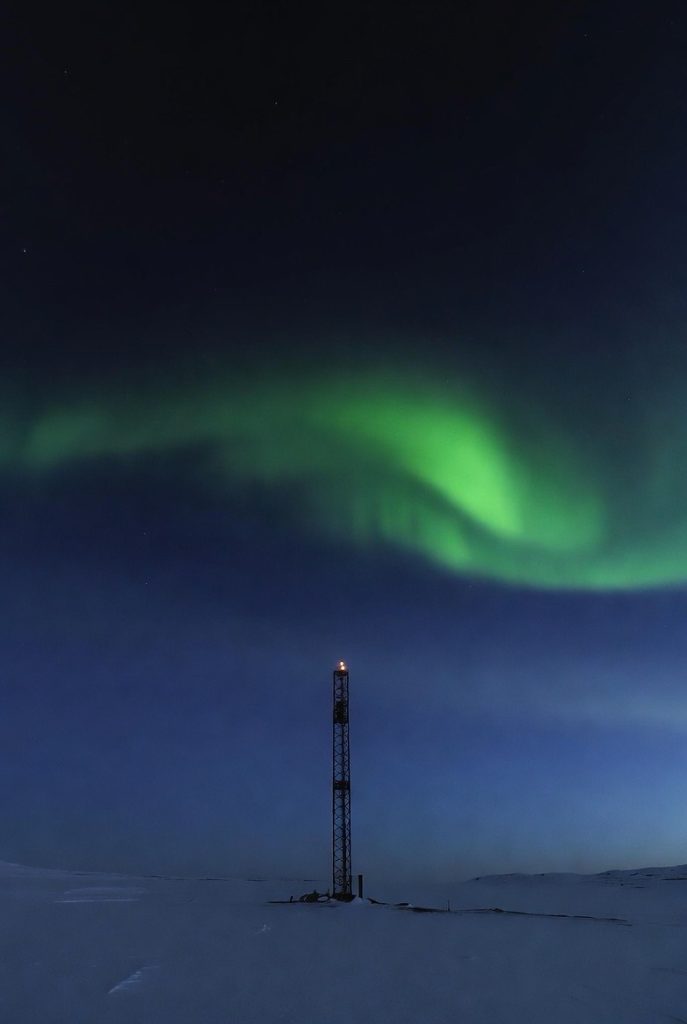
HAARP’s primary tool is ionospheric heating, where radio waves excite electrons in the upper atmosphere, creating temporary plasma disturbances. This mimics solar effects, like geomagnetic storms, allowing observation of responses via radars, digisondes, and magnetometers. For instance, heating generates ELF waves for deep-Earth penetration or artificial auroras for visual analysis.
Research spans atmospheric physics, including thermosphere dynamics and exosphere interactions. It enhances knowledge of solar flares’ disruptions to GPS and power grids, supporting sectors from aviation to energy. Unlike broad geoengineering, HAARP’s effects are confined—altering just a few square miles for minutes—ensuring no widespread fallout.
Insights from these studies inform global models. By simulating space weather, HAARP aids predictions of ionospheric anomalies, crucial in an era of satellite dependency. This work underscores its role in advancing radio science, far from the HAARP mind control theories that misconstrue its low-power frequencies.
Weather Manipulation Myths: A Thorough Examination
HAARP weather manipulation claims dominate discussions, alleging it engineers hurricanes or droughts. Yet, science refutes this decisively. Weather unfolds in the troposphere and stratosphere, driven by ocean heat, air pressure, and winds. HAARP targets the ionosphere, with waves bypassing lower layers without impact. Its energy pales against natural forces; influencing a storm would demand solar-scale power.
Expert analyses, including from atmospheric scientists, emphasize this disconnect. For example, recent debunkings tied to 2024 and 2025 extreme weather events—like U.S. hurricanes—clarify HAARP’s irrelevance. No tech exists to create, steer, or intensify such phenomena, as natural alignments of ocean and air dictate them. Cloud seeding, often confused here, is a separate, limited method for rain enhancement using particles in clouds, not radio waves.
Why do these myths endure? Psychological factors play a role: in uncertain times, attributing disasters to human control offers a sense of order. Social media amplifies misinformation, blending HAARP with unrelated concepts like climatic warfare or artificial weather control. Balanced views recognize public concern but stress evidence: HAARP’s public logs show no correlations with weather anomalies.
Earthquake and Seismic Activity Claims Dissected
HAARP earthquake theories suggest it induces tremors via tectonic manipulation or fault triggers. Proponents cite pre-quake ionospheric signals as proof, implying causation.
Reality check: Earthquakes stem from crustal stress releases, far below HAARP’s reach. Its waves don’t penetrate rock, and the power is trivial compared to seismic energies. Ionospheric disturbances before quakes arise from ground-released gases, a natural precursor, not a cause.
Post-event scrutiny, like after 2023’s Turkey quake or 2025’s regional shakes, finds no HAARP links. Operations are transparent, with no matching timelines. Instead, HAARP contributes positively by studying geomagnetic effects, aiding quake prediction models without causing them.
These notions tie into broader geo-weapon fears, but physics limits them. Exploring nuances, such as ELF waves’ potential for communication, reveals no destructive capacity, reinforcing HAARP’s research-only mandate.
Related Fields: Geoengineering, Cloud Seeding, and Chemtrails Clarified
Distinguishing HAARP from akin technologies avoids confusion. Geoengineering, like solar radiation management via stratospheric aerosols, aims at climate cooling but remains experimental. Projects explore risks—ecosystem shifts or uneven cooling—but HAARP isn’t involved; its focus is observational, not interventional.
Cloud seeding employs silver iodide for precipitation enhancement, proven in arid regions like China’s programs. It operates tropospherically, contrasting HAARP’s ionospheric scope. Success varies, with debates on efficacy and ethics, but it’s no weather weapon.
Chemtrails, alleged chemical trails for manipulation, are actually contrails—engine exhaust condensing in cold air. No evidence supports spraying for HAARP-linked control; atmospheric chemicals from pollution are the real concern.
Global parallels, like Russia’s Sura facility or Europe’s EISCAT, mirror HAARP’s ionosphere heater design for similar research. These underscore international collaboration, not conspiracy networks.
Ethical Dimensions, Health Concerns, and Societal Ripples
Ethically, HAARP prompts scrutiny on military origins and dual-use potential. While now academic, initial funding raises transparency questions. It complies with the Environmental Modification Treaty, prohibiting hostile atmospheric modification.
Health-wise, EMF exposure fears are addressed: emissions fall below safety limits, akin to distant radio signals. No documented HAARP health effects exist, with monitoring ongoing.
Societally, conspiracies erode trust in science, especially amid 2026’s AI ethics and sustainability debates. Misinfo spreads via platforms, linking HAARP to pop culture tropes. Countering this, education builds resilience—understanding ionospheric research fosters appreciation for its benefits, like improved climate models.
Innovative takeaways: Integrate HAARP data with AI for better space weather forecasts, enhancing sustainability in tech-reliant societies.
Global Perspectives and Future Horizons
Internationally, HAARP inspires analogs: China’s weather modification bureau focuses on seeding, while Russia’s Sura explores similar heating. EU regulations on geoengineering emphasize caution, prioritizing natural solutions.
In 2026, HAARP evolves with AI integrations for data analysis, potentially revolutionizing predictions. As climate challenges intensify, its role in distinguishing natural from modifiable phenomena grows vital.
Challenges persist: Addressing conspiracy spillovers requires multifaceted approaches, from media literacy to open data.
Conclusion: Empowering Knowledge on HAARP
HAARP embodies scientific pursuit amid intrigue. Not a harbinger of HAARP debunked myths like weather weapons or mind control frequencies, it’s a beacon for ionospheric insights. By dissecting HAARP conspiracy theories and affirming facts, we see its true value: bolstering communications, forecasting disruptions, and inspiring inquiry.
In a world of rapid change, grasping tools like HAARP equips us to face uncertainties. Stay informed, question critically, and embrace evidence—it’s the key to navigating atmospheric enigmas and beyond.