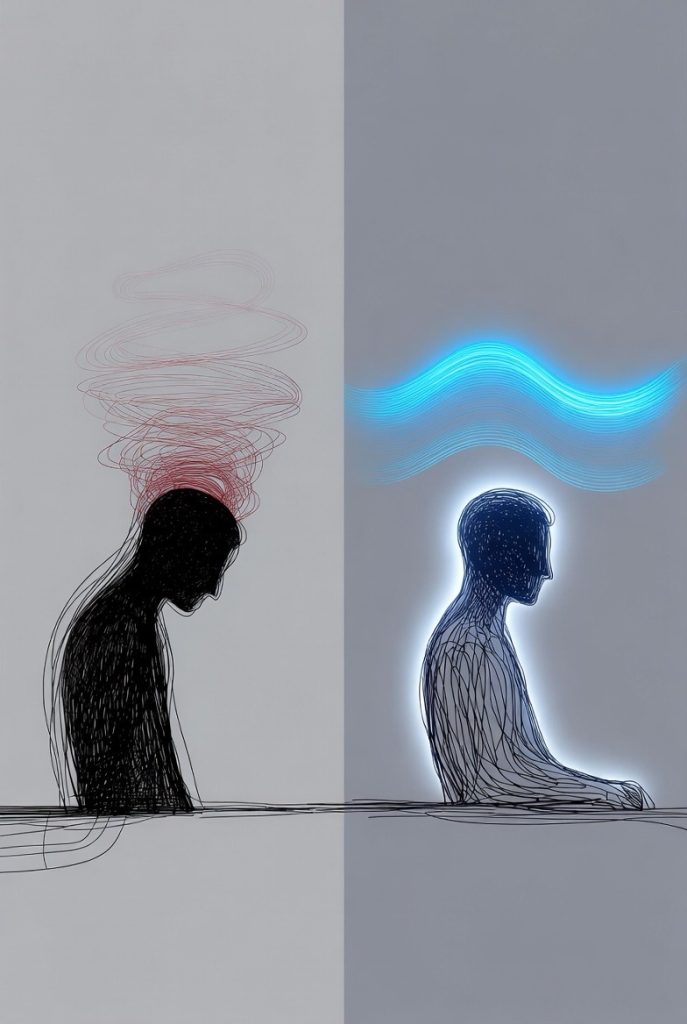
Poor posture from slouching, forward head posture, and rounded shoulders is common in our screen-heavy world, but it seriously impacts brain health and mental well-being. It restricts breathing and oxygen flow to the brain, triggers stress hormones, and shifts the nervous system into fight-or-flight mode, leading to increased gamma brain waves linked to stress. This can cause brain fog, reduced focus, memory issues, low mood, depression, anxiety, and fatigue. Over time, it may contribute to cognitive decline and even raise risks for conditions like ADHD or neurodegenerative diseases. On the flip side, sitting or standing upright improves oxygenation, boosts energy and mood, sharpens thinking, enhances confidence, and supports better emotional balance. Simple fixes like ergonomic setups, regular stretches, chin tucks, and mindful alignment checks can reverse these effects, helping you think clearer, feel better, and protect your brain long-term. Straighten up for a healthier mind and body.
Long Version
The Hidden Dangers of Poor Posture: How Slouching and Forward Head Posture Impair Brain Health and Mental Well-Being
In an era dominated by screens, poor posture—characterized by slouching, forward head posture, rounded shoulders, and disrupted spinal alignment—has become a pervasive issue. What many overlook is its profound impact on brain health and mental health. Research reveals that these postural habits not only strain the musculoskeletal system but also trigger cascading effects on neurological function, cognitive function, and emotional regulation. By boosting stress-linked gamma brain waves, restricting breathing and oxygenation, and activating sympathetic dominance in the autonomic nervous system, bad posture can spark low mood, depression, brain fog, and deficits in focus, memory, and attention. Conversely, maintaining an upright posture enhances energy, mood, sharpness, and overall executive function, offering a simple yet powerful strategy for clearer thinking and emotional resilience.
The Physiological Foundations: How Posture Influences Breathing, Oxygenation, and the Nervous System
At its core, poor posture disrupts fundamental bodily processes that directly feed into brain performance. Slouching and forward head posture—often termed anterior head syndrome or anterior head carriage—compress the thoracic cavity, leading to shallow breathing and reduced lung capacity. This limits oxygenation, depriving the brain of essential oxygen and impairing neural transmission. Studies show that such restrictions strain the respiratory system, making deep breaths difficult and contributing to chronic pain, headaches, and fatigue. The vagus tone, a key regulator of the parasympathetic nervous system, diminishes, shifting the body toward a fight-or-flight response dominated by stress hormones like cortisol.
This sympathetic dominance exacerbates brainstem hyperactivity and hypothalamus involvement, amplifying the stress response and altering cerebrospinal fluid (CSF) flow. Poor posture also promotes flexor dominance over extensor tone, leading to upper cervical instability and neuro-structural shifts that affect proprioceptive mapping and sensorimotor control. These changes can manifest as visual-vestibular mismatch or vestibular dysfunction, further taxing midline neurological functions and hardwired reflexes in regions like the cerebellum, pontomedullary reticular formation (PMRF), mesencephalic reticular formation, superior colliculus, inferior colliculus, and Edinger-Westphal nucleus. Over time, this fosters a cycle of chronic stress, reducing neuroplasticity and increasing vulnerability to neurodegenerative diseases. Enhancing posture awareness through daily habits, such as mindful alignment checks, can help restore balance and prevent these physiological disruptions from escalating.
Cognitive Impairments: From Brain Fog to Deficits in Focus, Memory, and Executive Function
The brain’s salience network and consciousness network, responsible for attention and awareness, are particularly sensitive to postural alignment. Forward head posture has been linked to altered resting-state brain function, with studies demonstrating reduced activity in the frontal lobe and underactivity in areas like the entorhinal cortex and temporal lobes. This results in impaired cognitive function, including brain fog, diminished focus, and weakened memory—effects tied to disrupted hippocampus oscillations and visual-motor mismatch. Research indicates that 90% of brain stimulation and nutrition rely on proper spinal movement, which poor posture compromises, leading to deficits in processing speed and executive function.
Gamma brain waves, associated with high-level cognition and stress processing, are notably affected: slouched postures suppress these waves, while upright positions enhance them, promoting sharpness and alertness. Habitual forward head carriage also correlates with poor episodic memory performance and reduced blood flow to the brain, heightening risks for neurodevelopmental disorders such as Autism Spectrum Disorder (ASD), ADHD, Sensory Processing Disorder (SPD), and Developmental Coordination Disorder (DCD). These findings underscore how descending corticospinal tracts and cranial nerve function are compromised, fogging mental clarity and hindering daily tasks requiring sustained attention. To counteract this, incorporating posture-correcting exercises, like chin tucks or wall angels, can gradually improve neural pathways and boost cognitive resilience over time.
Mental Health Ramifications: Triggering Low Mood, Depression, and Emotional Dysregulation
Beyond cognition, bad posture profoundly influences emotions and mental health. By signaling negative mood states through the nervous system, slouching reinforces low mood and depression via limbic system involvement. Studies link forward head posture to decreased brain blood flow, a key factor in depressive symptoms, as it amplifies negative self-perception and reduces confidence. Poor posture drains energy from the brain, fostering anxiety, decreased self-esteem, and a heightened stress response that perpetuates a vicious cycle.
This connection extends to biofeedback mechanisms, where postural distortions increase self-focus and fatigue, particularly in those with depressive tendencies. The autonomic nervous system’s imbalance—favoring sympathetic over parasympathetic activity—further sparks emotional volatility, with research showing that slumped positions correlate with negative mood states and reduced processing accuracy. In severe cases, this can contribute to broader mental health challenges, emphasizing posture’s role in overall emotional well-being. Building habits like power posing or using posture reminders can actively shift emotional states, providing a non-invasive tool for mood enhancement and long-term mental stability.
The Transformative Benefits of Upright Posture: Elevating Energy, Mood, and Sharpness
Shifting to good posture reverses these effects, acting as a natural booster for brain health. Sitting or standing upright improves oxygenation and breathing efficiency, enhancing energy levels and reducing fatigue. It elevates mood by promoting positive emotions, greater self-esteem, and reduced stress, with studies confirming that upright positions increase positive affect and decrease self-focus in individuals with depression. Cognitive sharpness benefits too, as proper alignment supports better focus, memory, and executive function through optimized neural transmission and gamma wave activity.
Moreover, good posture fosters confidence and emotional resilience, countering the low mood associated with slouching. By alleviating chronic pain and headaches, it frees mental resources for higher-level thinking, making it a cornerstone for sustained mental acuity and vitality. Simple enhancements, such as ergonomic workspace setups or yoga practices focused on core strength, amplify these benefits, ensuring long-lasting improvements in both physical and mental domains.
Practical Strategies for Posture Correction and Long-Term Brain Protection
To mitigate these risks, focus on ergonomic adjustments: position screens at eye level to prevent forward head posture, incorporate biofeedback tools for awareness, and practice exercises targeting extensor tone and spinal alignment. Regular breaks to stretch and realign can restore vagus tone and improve sensorimotor control, while chiropractic or physical therapy addresses underlying neuro-structural shifts. For those with neurodevelopmental disorders, targeted interventions can enhance proprioceptive mapping and reduce vestibular dysfunction. Additionally, mindfulness techniques, such as body scans during work, reinforce these changes, turning posture correction into a habitual practice that safeguards brain health against modern lifestyle demands.
In summary, poor posture is more than a physical habit—it’s a silent saboteur of brain health, mental health, and cognitive prowess. By understanding its effects on gamma brain waves, breathing, oxygenation, and the nervous system, individuals can prioritize upright alignment to unlock greater energy, mood, sharpness, and emotional balance. Straightening up isn’t just about appearance; it’s a pathway to a healthier, more vibrant mind.