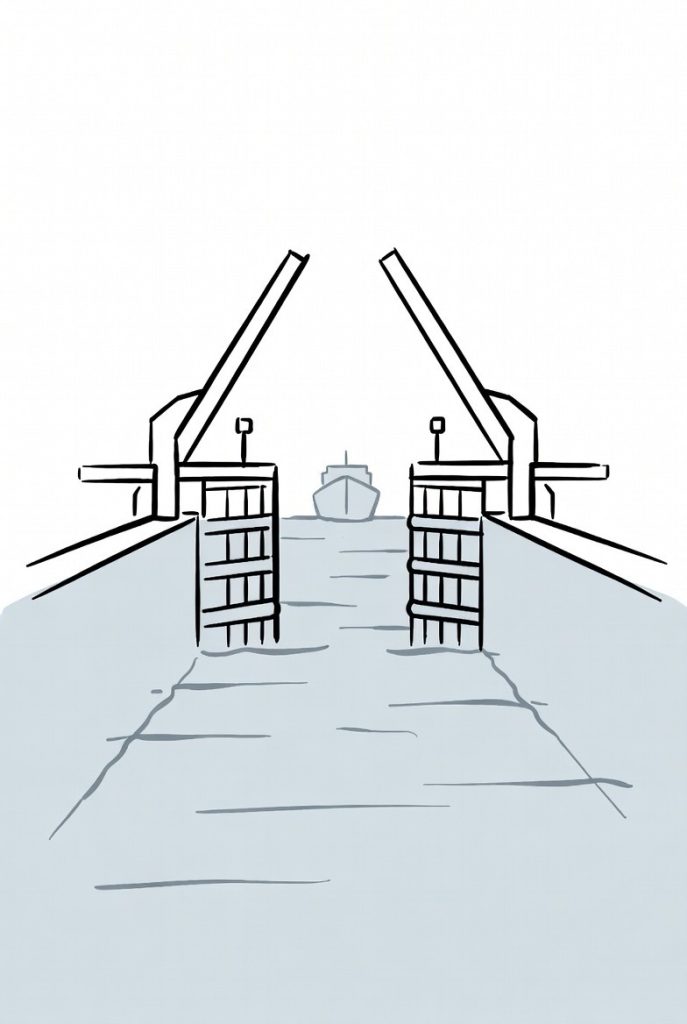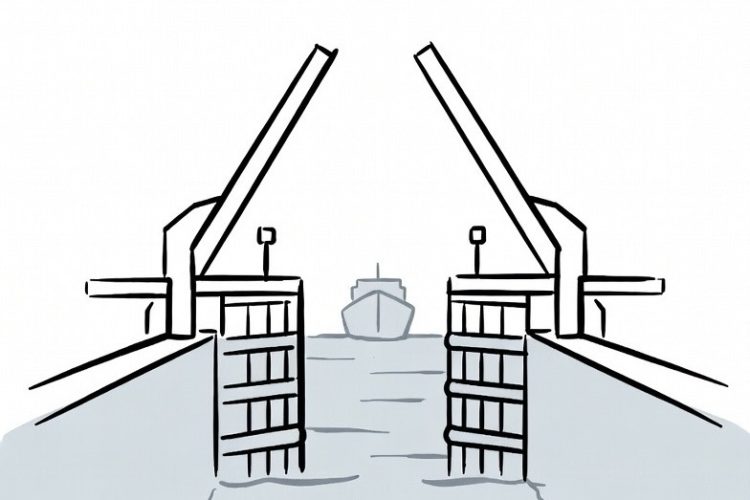
Miter gates, invented by Leonardo da Vinci in 1497, are angled lock gates that revolutionized canal locks and hydraulic engineering. They form a V-shape when closed, using water pressure for a tight, self-sealing fit that requires little energy to operate. Small bottom flaps allow controlled water flow to equalize levels, making boat elevation safe and efficient. Compared to flat gates, miter gates reduce energy use by up to 30%, according to a 2023 Journal of Hydraulic Engineering study. Widely used in the Panama Canal to lift ships across varying elevations, they remain a reliable, sustainable design in modern waterways worldwide, proving da Vinci’s genius still powers global navigation today.
Long Version
The Ingenious Design of Miter Gates: Revolutionizing Canal Locks and Hydraulic Engineering
In the realm of hydraulic engineering, few innovations have endured as profoundly as miter gates, a cornerstone of canal locks that enable efficient boat elevation across varying water levels. Invented by Leonardo da Vinci in 1497 as part of his broader contributions to Renaissance inventions, these angled lock gates harness water pressure to create a watertight seal, minimizing leaks and optimizing water flow. Their design, featuring small bottom flaps to equalize water levels, has proven essential in major waterways, including the Panama Canal, where they facilitate seamless navigation. A 2023 study in the Journal of Hydraulic Engineering highlighted their superior performance, noting a reduction in energy needs by up to 30% compared to flat gates, underscoring their role in sustainable waterway management.
Historical Evolution of Miter Gates and Canal Gate Design
The origins of miter gates trace back to Leonardo da Vinci’s inventions during the late 15th century, when he conceptualized paired half-gates that close at an 18-degree angle to form a V-shape, approximating an arch for enhanced structural integrity. This breakthrough built upon earlier pound lock systems, which first appeared in ancient China during the Song Dynasty around 984 CE, where engineer Qiao Weiyue introduced sluice gates to create intermediate water pounds. In Europe, pound locks emerged in the 14th century, with notable examples in the Netherlands and Belgium, but da Vinci’s miter gate design refined the mechanism for better pressure resistance.
By the 1450s, Italian engineer Bertola da Novate implemented similar systems in the Naviglio di Bereguardo canal, constructing 18 locks that foreshadowed modern applications. Over centuries, miter gates evolved from wooden constructions of oak or elm to durable steel frameworks, adapting to the demands of industrial-era canals. This progression marked a shift from rudimentary flash locks—single flat gates that unleashed sudden water surges—to sophisticated pound locks with paired miter gates, ensuring controlled and safe boat passage. Today, these gates remain a testament to da Vinci’s polymath genius, influencing hydraulic engineering principles worldwide.
How Miter Gates Work: Mechanics and Water Pressure Sealing
At the heart of lock gate design, miter gates operate within a pound lock system, where a chamber is isolated by upper and lower pairs of gates to adjust water levels for boat elevation. Each gate consists of two leaves that swing like double doors, closing upstream in a V formation to leverage water pressure for a tighter seal—the higher the upstream water, the more secure the closure. This self-sealing mechanism eliminates the need for excessive mechanical force, as the 18-degree angle distributes pressure evenly, mimicking an arch’s load-bearing efficiency.
Key to their functionality are small bottom flaps, or sluice paddles, integrated into the gates. These allow controlled water flow to equalize levels between the chamber and adjacent pounds, preventing abrupt surges that could damage vessels or infrastructure. For upstream travel, a boat enters the chamber, lower miter gates close, paddles open to fill from the upper pound, and once levels match, upper gates swing open. Downstream navigation reverses this: upper gates close, chamber drains via bottom flaps to the lower pound, and lower gates open. The process typically spans 10-20 minutes, depending on chamber depth and water differential, with modern locks employing hydraulic or electrical actuators for precise control.
In hydraulic engineering terms, this design optimizes fluid dynamics, reducing turbulence and ensuring watertight integrity. Gates are buoyant when hollow, aiding manual or powered operation, and include a bottom sill to protect against boat impacts. Advanced linkages, such as those in the Panama Canal, provide uniform acceleration and deceleration during opening and closing, enhancing safety and longevity.
Advantages of Miter Gates Over Flat Gates and Energy Efficiency
Miter gates offer distinct advantages in canal gate efficiency, particularly when compared to flat gates, which rely on vertical or single-leaf closures and struggle with high-pressure scenarios. The angled V-closure distributes forces more effectively, minimizing structural stress and leakage risks, making them ideal for deep chambers with significant elevation changes. Flat gates, by contrast, demand greater reinforcement and energy for operation, as they lack the natural pressure-assisted sealing.
A pivotal 2023 study in the Journal of Hydraulic Engineering quantified these benefits, demonstrating that miter gates reduce energy consumption by up to 30% through streamlined water flow and reduced mechanical input. This efficiency stems from integrated paddles that allow precise level equalization, conserving water in twinned or staircase lock configurations where intermediate chambers reuse drainage. In sustainability terms, this translates to lower operational costs and environmental impact, especially amid climate-driven water shortages affecting global canals. Additional perks include compatibility with ecological features, such as fish passages, without compromising gate performance.
Applications in Major Canals: Panama and Beyond
Miter gates are prominently featured in the Panama Canal, where they enable boat elevation across an 85-foot differential to Gatun Lake. In the Gatun Locks’ three-step system, gates—up to 82 feet high and 662 tons per leaf—close in pairs, using 26.7 million gallons per transit while buoyant designs require minimal motor power (19 kW per leaf). The 2016 expansion introduced rolling gates for New Panamax locks, but original chambers retain miter designs for their proven reliability in handling vessels up to 108 feet wide. Dual chambers and cross-culverts enhance efficiency, allowing simultaneous operations and water conservation.
Contrary to some references, the Suez Canal does not employ miter gates or locks; its sea-level design connects the Mediterranean and Red Seas without elevation barriers, relying on dredging and convoys for traffic. This lock-free approach suits minimal tidal differences but highlights miter gates’ niche in varied terrains. Other applications include the Erie Canal, Rhine-Main-Danube Canal, and U.S. river systems like the Mississippi, where miter gates manage falls up to 80 feet.
Modern Advancements and Future of Lock Gate Design
Recent years have seen advancements in miter gate technology, focusing on durability and climate resilience. In 2024-2026, U.S. Army Corps of Engineers projects replaced gates at Mississippi River Locks and Dams 2-10, with installations at Lock 9 in 2026 emphasizing fatigue-resistant materials. The Chickamauga Lock upgrade incorporated reinforced miter gates for a 110-by-600-foot chamber, improving seismic and impact resistance. Panama’s ongoing maintenance addresses drought impacts, with miter gates’ efficiency aiding water management amid reduced transits.
Innovations include flexible pintles for better alignment under stress and nonlinear dynamic analyses for ship-impact scenarios, as explored in 2024 studies. Hybrid hydraulic-electric controls enhance closing precision in large locks, while sustainable materials reduce environmental footprints. Looking ahead, da Vinci’s legacy endures in discussions of alternative routes like Nicaragua’s proposed canal, where miter-inspired designs could bypass Panama’s constraints.
Conclusion: A Timeless Pillar of Navigation
Miter gates stand as an enduring marvel of Leonardo da Vinci’s inventions, transforming canal locks into efficient conduits for global trade. Their water pressure sealing, bottom flaps for level equalization, and 30% energy savings over flat gates continue to drive hydraulic engineering forward, even as modern updates address 21st-century challenges. From the Panama Canal’s vital role in transoceanic passage to emerging resilient designs, these gates ensure safe, sustainable boat elevation, solidifying their place in waterway infrastructure.