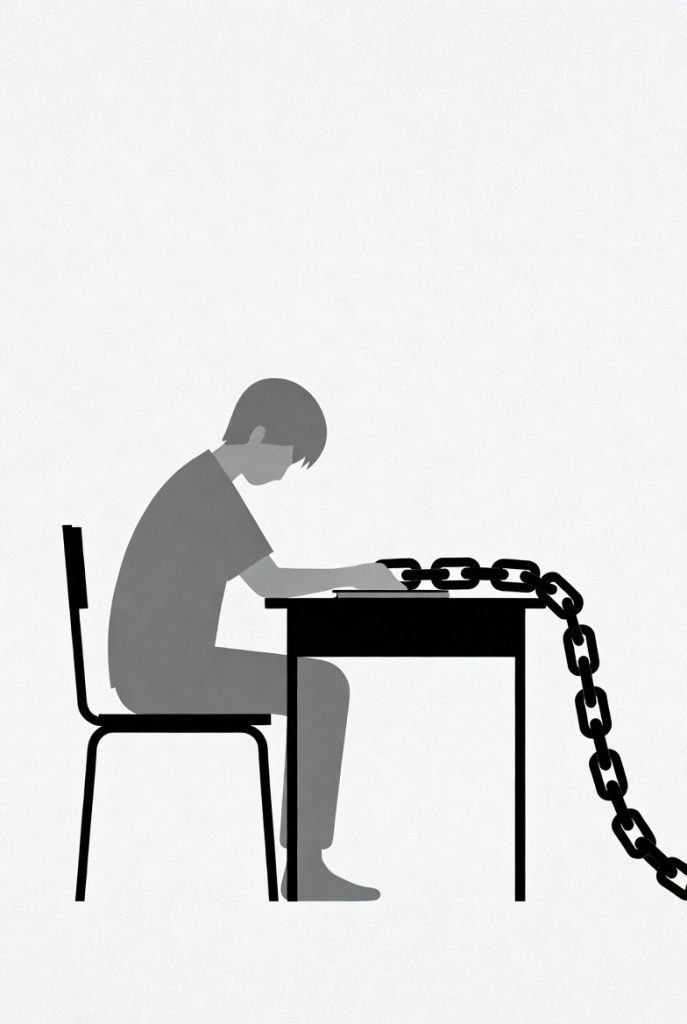
Modern education systems are experiencing a notable decline of critical thinking, as schooling increasingly prioritizes conformity over independent thought—a pattern rooted in industrial-era designs that favored discipline and standardization, now reinforced by high-stakes testing, rote learning, and overreliance on technology that encourages quick answers rather than deep analysis. This conformity in schools suppresses creativity, resilience, and the ability to question assumptions, leaving students less equipped to handle ambiguity, evaluate information critically, or innovate in real-world settings. The consequences reach beyond classrooms, contributing to societal vulnerability to misinformation, reduced intellectual diversity, and workforce skill gaps. Yet reversal is achievable through intentional reforms: adopting inquiry-based teaching, Socratic discussions, thoughtful use of AI to build evaluation skills, balanced curricula that value humanities alongside STEM, and stronger teacher training focused on fostering autonomous reasoning—steps that can restore education’s role in developing thoughtful, adaptable individuals.
Long Version
The Decline of Critical Thinking in Education Systems: How Modern Schooling Prioritizes Conformity Over Independent Thought
Picture a classroom buzzing with potential, where young minds once grappled with complex ideas, debated perspectives, and forged their own paths to understanding. Now, contrast that with today’s reality: rows of students focused on filling in bubbles on standardized tests, echoing prescribed answers, and aligning with group norms to avoid standing out. This transformation highlights the decline of critical thinking in education, a trend where modern schooling increasingly favors conformity over the cultivation of independent thought. As we delve into this issue, we’ll uncover its origins, consequences, and actionable strategies for reversal, empowering educators, parents, and policymakers to foster a more thoughtful future. By addressing these education system problems head-on, we can reclaim the essence of learning as a journey of discovery rather than rote compliance.
The Foundations of Critical Thinking and Its Erosion in Modern Education
Critical thinking in education encompasses a suite of skills: analyzing evidence, identifying biases, synthesizing information, and drawing logical conclusions. It’s not merely about answering questions but about questioning answers. However, recent shifts in educational practices have led to a marked decline in these abilities, turning schools into environments that prioritize uniformity and predictability.
Historical Evolution Leading to the Decline
The roots of this decline trace back to the industrial era, when mass education systems were engineered to produce efficient, obedient workers. Curricula emphasized discipline, repetition, and adherence to authority, embedding conformity in schools as a core value. Over time, this model persisted, evolving with globalization and technological advancements. In the 20th century, progressive reforms briefly championed child-centered learning, but post-war standardization—driven by economic demands for measurable skills—reasserted control. Today, this manifests in high-stakes testing regimes that reward memorization over inquiry, perpetuating the decline of critical thinking in schools.
Consider how historical conformity in education has influenced current flaws in modern schooling. For instance, rigid grading systems often penalize creative deviations, training students to conform rather than innovate. This historical inertia creates a cycle where independent thinking in education is sidelined, as educators themselves, products of the same system, default to familiar methods.
Contemporary Factors Accelerating the Decline
In the digital age, several forces exacerbate this erosion. First, the proliferation of standardized assessments funnels teaching toward narrow outcomes. Teachers, facing accountability pressures, allocate less time to open-ended discussions or project-based learning, which are vital for building analytical skills. This results in curricula that emphasize factual recall, diminishing opportunities for students to practice reflective thinking or problem-solving in ambiguous scenarios.
Technology plays a dual role. While tools like online resources expand access to information, they often encourage superficial engagement. Students might copy-paste answers without evaluation, fostering dependency rather than autonomy. The rise of AI in education further complicates this: automated systems can generate responses, but without guidance on critiquing them, learners miss chances to hone decision-making pedagogy. This ties into broader modern education flaws, where efficiency trumps depth, leading to cognitive skill regression.
Societal influences also contribute. In polarized environments, there’s a push for “safe” consensus, discouraging debates that might reveal uncomfortable truths. Economic pressures favor vocational training over liberal arts, which traditionally nurture intellectual autonomy. Globally, these factors vary— in some regions, cultural emphasis on collective harmony amplifies conformity culture in classrooms, while in others, resource constraints limit innovative teaching.
Measuring the Extent of the Decline
Indicators of this decline are evident in educational outcomes. Studies show declining scores in assessments measuring higher-order thinking, with students excelling in basic comprehension but struggling with synthesis or evaluation. For example, international benchmarks reveal gaps in logical analysis in classrooms, where learners from conformity-focused systems underperform in creative tasks compared to those from inquiry-based models. This decline of independent thinking in schools isn’t uniform; it disproportionately affects underrepresented groups, who may face additional barriers like biased curricula that reinforce social conformity in pedagogy.
Why Conformity Takes Precedence in Today’s Education Systems
Modern schooling’s bias toward conformity stems from practical necessities, but it often overshadows the benefits of fostering independent thought. Understanding this dynamic is key to addressing the imbalance.
The Practical Appeal of Conformity
Conformity in modern education offers structure and equity. Uniform standards ensure consistent quality across diverse populations, making it easier to scale education. In large classes, groupthink in education simplifies management, as standardized behavior reduces disruptions. Policymakers argue this approach promotes fairness, providing all students with the same foundational knowledge. However, this comes at the cost of individual expression, where obedience training in schools becomes the norm.
The Hidden Costs: Suppressing Independent Thought
The tension in education conformity vs independence is stark. When systems prioritize compliance, they inadvertently suppress creativity and resilience. Students learn to navigate rules rather than challenge them, leading to a herd mentality in learning. This is particularly evident in how curricula discourage risk-taking—wrong answers are penalized, deterring experimentation. Over time, this erodes intellectual decline in schools, as learners internalize that success lies in alignment, not originality.
Psychological effects are profound. Conformity pressure can stifle self-esteem, as students who think differently feel marginalized. In extreme cases, it fosters passive learners ill-equipped for real-world complexities, where independent cognition is essential. From a developmental angle, this hinders cognitive development in teaching, as brains wired for exploration are constrained by rigid frameworks.
Balanced Perspectives on Conformity’s Role
Not all conformity is detrimental; it builds social skills and community. Collaborative learning, for instance, teaches empathy and teamwork. The challenge lies in balance—integrating conformity with spaces for divergent thinking in pedagogy. Without this, education becomes a tool for social alignment rather than personal growth, amplifying the decline of analytical skills in education.
The Multifaceted Impacts of Diminished Critical Thinking
The repercussions of this decline ripple through individuals, institutions, and society, underscoring the urgency for change.
Personal and Academic Consequences for Students
On a personal level, students suffer from reduced engagement and motivation. Without critical thinking, learning feels mechanical, leading to burnout or disinterest. Academically, it manifests in poor adaptability; graduates may excel in routine tasks but falter in innovative roles. The effects of conformity on independent thinking in education include heightened anxiety, as learners fear stepping outside norms.
In the context of AI and sustainability, this is critical. Future challenges like ethical AI use or environmental problem-solving demand thoughtful discourse, yet conformity-trained minds may default to simplistic solutions.
Broader Societal and Economic Ramifications
Societally, a populace lacking critical thinking is vulnerable to misinformation and manipulation. In democracies, this undermines informed decision-making, perpetuating cycles of inequality. Economically, workforces need innovators; the decline contributes to skill gaps, where employers lament graduates’ inability to think critically under pressure.
Globally, this affects competitiveness. Nations with strong critical thinking curricula lead in innovation, while others lag. Sustainability education, for instance, requires evaluating long-term impacts, a skill eroded by conformity-focused systems.
Long-Term Cultural Shifts
Culturally, this decline fosters homogeneity, reducing diversity of thought. Over generations, it could stifle artistic and scientific breakthroughs, as independent thought reduction limits paradigm shifts.
Strategies for Reviving Critical Thinking and Independent Thought
Reversing this trend demands systemic and grassroots efforts, blending reform with practical implementation.
Curriculum and Pedagogical Reforms
Begin with critical thinking education reform: integrate inquiry-based modules across subjects. For example, history classes could analyze primary sources for biases, while science encourages hypothesis testing. Promoting critical thinking in schools involves shifting assessments to value process over product, like essays evaluating reasoning.
Teacher training is pivotal. Programs should equip educators with tools for facilitating debates and Socratic questioning, addressing the decline through reflective thinking in students.
Leveraging Technology and Community Involvement
Use technology strategically: AI literacy can teach evaluation of outputs, turning tools into allies for analytical skills in education. Community partnerships—parents hosting discussion groups or experts leading workshops—extend learning beyond classrooms.
For global perspectives, adapt reforms culturally: in collectivist societies, blend group activities with individual reflection to overcome conformity without cultural clash.
Actionable Takeaways for Stakeholders
- For Teachers: Incorporate daily “think-aloud” sessions where students verbalize reasoning, building logical analysis in classrooms.
- For Parents: Encourage home debates on current events, fostering educational inquiry.
- For Policymakers: Fund pilot programs testing balanced curricula, measuring outcomes in independent thought promotion.
- For Students: Practice journaling assumptions and alternatives to cultivate self-directed analysis.
These solutions to the decline of critical thinking emphasize gradual integration, ensuring sustainability.
Conclusion: Forging a Path Toward Empowered Learning
The decline of critical thinking in education systems, fueled by a preference for conformity over independent thought, threatens the fabric of progressive societies. Yet, by dissecting its causes, acknowledging its impacts, and committing to targeted reforms, we can revitalize education as a catalyst for innovation and resilience. This isn’t just about fixing flaws—it’s about empowering every learner to question, create, and contribute meaningfully. In embracing these changes, we invest in a world where thoughtful individuals drive collective advancement, ensuring education fulfills its promise as a beacon of human potential.