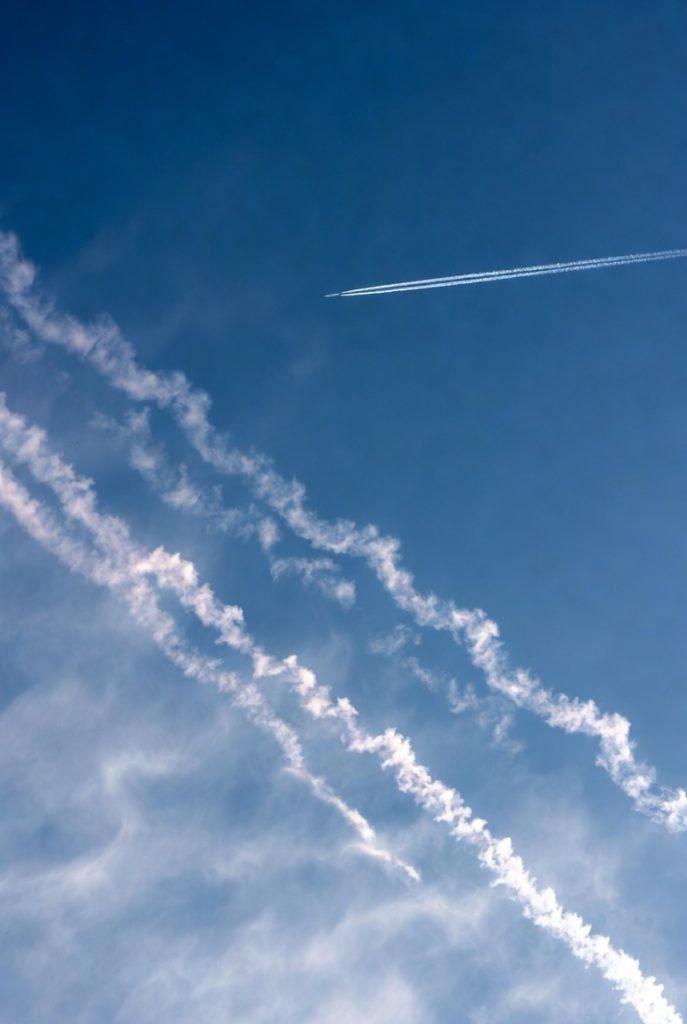
Geoengineering, or climate engineering, involves proposed methods like solar radiation management (SRM) and stratospheric aerosol injection (SAI) to cool Earth by reflecting sunlight, similar to volcanic effects. While research explores these ideas to fight global warming, some claim secret programs are already spraying particles from planes, creating persistent “chemtrails” instead of normal contrails. Allegations include dispersing aluminum nanoparticles, barium, strontium, manganese, surfactants, polymer fibers, and graphene for weather control and ionosphere manipulation, potentially worsening ozone depletion, UV radiation exposure, droughts, floods, hurricanes, wildfires, and ecosystem damage like bee population collapse. However, scientists widely view chemtrails as a conspiracy theory, explaining trails as contrails from aircraft exhaust under specific conditions, with no evidence of large-scale toxic spraying. Real geoengineering studies focus on risks like uneven weather shifts and emphasize emission reductions as the primary solution. The debate highlights the need for transparency and evidence-based climate action.
Long Version
Unraveling the Debate: Allegations of Secret Geoengineering Programs
In late 2025, a widely viewed interview brought renewed attention to claims of ongoing secret geoengineering efforts. The discussion centered on assertions that aircraft are deliberately releasing substances into the atmosphere to manipulate climate and weather patterns, far beyond what is publicly acknowledged. These claims distinguish between normal condensation trails, or contrails, formed by water vapor from aircraft exhaust, and alleged chemtrails, which are said to involve the intentional dispersal of particles for atmospheric modification. This topic intersects with broader discussions on climate engineering, weather control, and potential government involvement in environmental alteration, prompting questions about global warming, erratic weather, and the ethics of such interventions.
Understanding Geoengineering: From Theory to Allegation
Geoengineering, often referred to as climate engineering, includes various proposed methods to deliberately intervene in Earth’s climate systems to mitigate the effects of climate change. A key approach is solar radiation management (SRM), which seeks to decrease the amount of sunlight absorbed by the planet, thereby cooling it. Stratospheric aerosol injection (SAI), a prominent SRM technique, would involve injecting reflective aerosols into the stratosphere to scatter sunlight, similar to the natural cooling from volcanic eruptions. This could enhance cloud albedo—the reflectivity of clouds—and reduce incoming UV radiation. Scientific research into SRM and SAI has advanced, with studies, workshops, and reports from organizations exploring their feasibility, risks, and governance needs. However, while these are largely in conceptual or small-scale experimental stages, some allegations suggest covert, large-scale operations are already in place.
Proponents of these claims argue that visible persistent trails in the sky are evidence of aerosol spraying, using military aircraft equipped with specialized nozzles for dispersing particulate matter. The alleged substances include aluminum nanoparticles, barium, strontium, manganese, surfactants, polymer fibers, and graphene nanoparticles, aimed at ionosphere manipulation and weather modification. Such activities, if real, could potentially violate international treaties like the Environmental Modification Convention, which bans the use of environmental techniques for hostile purposes. Historical examples, such as cloud-seeding operations during past military conflicts to influence weather, are cited as precursors to modern capabilities in atmospheric modification.
Enhanced insights from recent research highlight that SRM methods like SAI could theoretically provide rapid cooling but come with uncertainties. For instance, modeling studies show that SAI might create a protective aerosol layer, potentially reducing Earth’s temperature by reflecting solar radiation. However, precursor gases or direct injections could alter atmospheric chemistry in unpredictable ways, emphasizing the need for careful simulation to understand regional effects.
Key Claims in the Geoengineering Debate
Allegations often describe these operations as part of secret programs for solar radiation management, with trails purportedly containing toxic heavy metal nanoparticles that linger in the atmosphere. Proponents point to lab tests and high-altitude sampling showing elevated levels of metals, suggesting these are not natural contrails but deliberate releases. They link such activities to ozone depletion, allowing harmful UVC radiation to reach the surface and damaging the ozone layer. Furthermore, these claims connect geoengineering to intensified weather events, including droughts, flooding, hurricanes, wildfires, flash flooding, and unusual freezes in certain regions.
Specific environmental concerns include the exacerbation of natural disasters, such as intensified fires or storms, potentially through manipulated precipitation or temperature swings. Broader impacts are alleged to affect ecosystems, contributing to bee population collapse, insect die-offs, and tree mortality due to toxic buildup. Discussions also reference meetings with officials where concerns about using weather as a tool were raised, drawing parallels to historical government experiments involving atmospheric releases.
To enhance understanding, it’s worth noting that proposed geoengineering techniques like SAI could influence global systems, but allegations often extend to unverified scales. Research indicates that if implemented, SAI might involve releasing aerosols or gases at altitudes of 20-25 kilometers, aiming to increase Earth’s reflectivity, or albedo, by about 1-2%.
The Scientific Perspective: Debunking the Chemtrails Narrative
The concept of chemtrails is widely regarded as a conspiracy theory by atmospheric scientists. Surveys of leading experts, including those from universities and aeronautical societies, have overwhelmingly concluded that persistent sky trails are contrails, formed under specific conditions of high humidity and cold temperatures at cruising altitudes. These experts attribute any observed particles to normal aircraft emissions or environmental pollutants, not secret spraying programs. Well-understood physical and chemical processes explain the formation and persistence of contrails, with no peer-reviewed evidence supporting widespread toxic dispersions.
Government agencies have addressed disinformation, particularly after major weather events like hurricanes, clarifying that weather modification claims lack scientific backing. For example, cloud seeding is a real but limited technique used for rain enhancement in some areas, but it does not involve global-scale chemical releases from aircraft. Elevated metal levels in soil or water are more commonly linked to industrial pollution, mining, or natural sources rather than aerial spraying. Terms like “chemtrails” are often viewed as misleading, distracting from evidence-based climate action, such as emission reductions.
Recent advancements in SRM research reinforce this perspective. Studies on SAI, for instance, focus on potential future applications, using computer models to simulate effects like “diffusion-brightening,” where aerosols could enhance cloud reflectivity. However, these are transparent efforts, not covert operations. Experts emphasize that conflating proposed geoengineering with unproven theories undermines trust in science.
Potential Impacts and Broader Implications
If large-scale geoengineering were deployed, the environmental consequences could be significant. Dispersing nanoparticles or aerosols might lead to soil and water contamination, posing risks to human health through inhalation or food chain accumulation. Weather patterns could shift, potentially causing uneven precipitation—drier conditions in some regions and increased flooding in others. Ozone depletion is a noted concern, as certain aerosols could catalyze reactions that thin the ozone layer, increasing UV exposure and affecting ecosystems.
Broader ecosystem impacts from proposed techniques include alterations to biodiversity, agriculture, and marine life. For example, SRM might reduce photosynthetic rates in plants or disrupt ocean currents, leading to changes in species distribution or coral bleaching. Carbon dioxide removal methods, another geoengineering category, could involve ocean fertilization or enhanced weathering, but these carry risks like nutrient depletion or acidification. Social costs are also estimated, with potential economic harms from side effects ranging widely depending on deployment scale.
Scientific literature warns of “large risks” to the natural world, including unintended planetary security issues as climate effects intensify. While geoengineering could serve as a temporary measure alongside emission cuts, it is not a substitute and might create dependencies or geopolitical tensions over control and equity.
Navigating the Ongoing Debate
This debate highlights the tension between innovative climate solutions and fears of unchecked intervention. Allegations of secret programs amplify calls for transparency, while scientific consensus stresses evidence-based approaches. As climate challenges grow, distinguishing between legitimate research—such as modeling SRM risks—and unsubstantiated claims is essential. Informed policy should prioritize reducing greenhouse gases, adapting to changes, and governing any future geoengineering ethically. This ensures decisions are rooted in facts, fostering public trust in addressing climate manipulation and its global ramifications.