
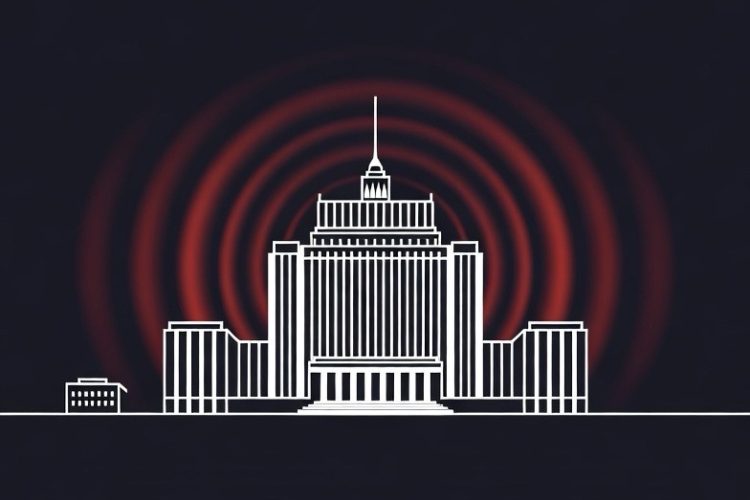
The Moscow Signal was low-intensity microwave radiation beamed by the Soviets at the U.S. Embassy in Moscow from 1953 to 1976. Detected at very low power levels (around 5 microwatts per square centimeter), it sparked Cold War fears of espionage—likely to activate hidden listening bugs—or even mind control and behavioral disruption through non-thermal effects. In response, DARPA launched Project Pandora (1965–1970), a secret program that included primate experiments (Project BIZARRE), crew studies on the USS Saratoga, and embassy staff health monitoring. Tests found no clear evidence of health risks, mind control, or significant non-thermal biological effects at those intensities, though some later analyses noted higher cancer rates among exposed personnel. The microwave auditory effect (Frey effect) and potential blood-brain barrier changes were explored but not confirmed. This incident remains a key historical case in debates over directed energy, non-ionizing radiation safety, and parallels to modern Havana Syndrome cases involving similar symptoms in diplomats.
Long Version
The Moscow Signal and DARPA’s Project Pandora: Unraveling a Cold War Enigma of Electromagnetic Espionage
In the shadowy depths of the Cold War, a peculiar incident unfolded at the U.S. Embassy in Moscow, where low-intensity microwaves beamed from Soviet sources sparked fears of espionage, health effects, and even mind control. Known as the Moscow Signal, this electromagnetic radiation targeted American diplomats for over two decades, prompting a secretive U.S. investigation under DARPA’s Project Pandora. This episode not only highlighted the era’s intense intelligence rivalries but also ignited enduring debates on non-thermal effects of non-ionizing radiation, with echoes in modern phenomena like Havana Syndrome. To provide a fuller understanding, this article delves deeper into the technical aspects, historical context, and long-term implications, drawing on declassified records and scientific analyses for a comprehensive overview.
The Discovery and Nature of the Moscow Signal
The Moscow Signal was first detected in 1953 during routine background radiation monitoring at the U.S. Embassy in Moscow. Originating from an apartment building roughly 100 meters away, these electromagnetic signals varied between 2.5 and 4 gigahertz, with power densities around 5 microwatts per square centimeter—far below levels that could cause thermal heating but exceeding Soviet safety standards by a factor of 100. The beams, described as 50 feet wide, primarily targeted the embassy’s upper floors, where key offices were located. Initially dubbed TUMS (Technically Unidentified Moscow Signal), the radiation persisted until 1976, intensifying in 1975 before the U.S. installed shielding.
This pulsed radiation, a form of non-ionizing radiation, raised immediate concerns about its purpose amid the Cold War’s atmosphere of mutual suspicion. U.S. intelligence agencies monitored the signals closely after discovering Soviet-planted listening bugs in the embassy walls in 1964, suggesting a link to surveillance operations. The low-level microwaves were not strong enough to jam communications directly but could potentially activate hidden devices or induce subtle biological responses. Further analysis revealed variations in modulation patterns, including amplitude and pulse frequency, which added layers of complexity to decoding their intent.
Soviet Intentions: Espionage or Something More Sinister?
Speculation about the Soviet Union’s motives ran rampant within U.S. intelligence circles. The most plausible theory centered on espionage: the microwaves might have been used to power or activate listening bugs embedded in the embassy structure, allowing remote surveillance without detectable power sources. This aligned with the era’s sophisticated intelligence tactics, where electromagnetic signals could discreetly harvest data from foreign outposts. Techniques like harmonic reradiation, where microwaves interact with metallic components in bugs to retransmit audio, were considered viable explanations.
However, darker hypotheses emerged, including attempts at behavioral effects or mind control. Early concerns posited that the directed energy could disrupt diplomats’ cognitive functions, perhaps crossing the blood-brain barrier to induce auditory hallucinations via the microwave auditory effect—also known as the Frey effect, where microwaves create perceived sounds inside the skull. Soviet research into athermal effects of microwaves, which don’t rely on heating but on subtle interactions with biological tissues, fueled these fears. Documents reveal U.S. worries that the signals aimed to degrade personnel performance, such as causing errors in encrypted communications or inducing irritability and concentration difficulties. While no concrete evidence supported mind control, the possibility reflected broader Cold War paranoia about psychological warfare, including experiments in psychotronics and bioelectromagnetics.
Diplomatic protests, including during the 1967 Glassboro Summit, yielded denials from the Soviets, who claimed the signals posed no health risks and promised investigations that never materialized. The affair underscored the tense interplay of radiation, electromagnetic warfare, and geopolitical rivalry, with implications for how nations weaponize technology in non-lethal ways.
The U.S. Countermeasure: Launching Project Pandora
In response, the U.S. government initiated Project Pandora in 1965 under the Advanced Research Projects Agency (ARPA, later DARPA), following White House directives to assess potential threats. This $4.6 million program, running until 1970, aimed to replicate and study the Moscow Signal’s impacts on health effects and behavioral effects. Supervised by figures like Richard Cesaro and Samuel Koslov, it encompassed a range of experiments to determine if low-intensity microwaves could cause non-thermal effects, such as alterations in biological functions without detectable heat.
A highly classified subset, Project BIZARRE, focused on primate experiments to simulate exposure. This built on Soviet literature suggesting modulated microwaves could influence neurological responses at levels far below thermal thresholds. The project’s interdisciplinary approach involved physicists, biologists, and psychologists, aiming to bridge gaps between electromagnetic theory and human physiology.
In-Depth Experiments and Investigations
Project Pandora’s core involved rigorous experiments to probe the signal’s implications. Primate experiments under Project BIZARRE used rhesus monkeys and chimpanzees, exposing them to simulated Moscow Signal waveforms while monitoring heart rates, tissue samples, and behavioral tasks like lever-pulling for rewards. Initial tests at overestimated power levels showed some performance decrements due to modulation, but corrections to accurate low levels revealed no degradation. Tragically, flawed restraint systems led to three monkey deaths by strangulation, highlighting ethical lapses in the rushed protocols. These incidents prompted internal reviews on animal welfare in classified research.
Complementing this, the Big Boy experiment—also called the Saratoga Experiment—surveyed crew members aboard the USS Saratoga exposed to radar microwaves, comparing veterans and recruits for physiological differences. No discernible effects emerged. Blood samples from embassy staff, collected under the guise of the Moscow Viral Study, were analyzed for mutagenic changes, yielding negative results. Advanced techniques, such as chromosomal assays and enzyme activity measurements, were employed to detect subtle cellular alterations.
Human testing was planned in 1969, involving eight subjects with gonad shielding for safety, but the program shut down before implementation. RAND Corporation reviews deemed the primate data inconclusive, attributing any anomalies to methodological errors rather than genuine non-thermal effects. To enhance clarity, it’s worth noting that these experiments struggled with replicating real-world variables, such as chronic versus acute exposure and individual variability in susceptibility.
A 1978 epidemiological study by Abraham Lilienfeld compared Moscow embassy personnel and families (exposed 1953-1976) to those at other Eastern European posts. It found no increased mortality rates (e.g., standardized mortality ratio for all causes at 0.68) and dismissed symptoms like headaches, memory loss, and sleep disorders as unrelated to microwaves, possibly due to infections or media hype. However, a 2019 reanalysis highlighted higher cancer mortality (34.69% vs. expected 16.60%) and worse overall health in the Moscow group, though causation remained unproven. Notable cases included ambassadors like Walter Stoessel, who suffered leukemia potentially linked to exposure. These findings underscore the challenges in long-term health tracking amid secrecy.
Key Findings and the Shutdown of Project Pandora
Overall, Project Pandora concluded that the Moscow Signal posed no significant risks, with mind control ruled out and behavioral effects too subtle to detect. Non-thermal effects, while theoretically intriguing based on the Frey effect and potential auditory hallucinations, lacked empirical support at the observed intensities. The program ended in 1970, shifting focus to broader microwave research, as seen in DARPA’s later RadioBio initiative exploring cellular electromagnetic communication. Declassified documents, including ARPA memos and Senate reports, emphasized the absence of health effects, though secrecy around the affair bred distrust among embassy staff. In retrospect, the project advanced bioelectromagnetics knowledge, influencing safety standards for radar and communication devices.
Echoes in the Present: Connections to Havana Syndrome
The Moscow Signal’s legacy persists in contemporary discussions, particularly with Havana Syndrome—mysterious health incidents affecting U.S. diplomats since 2016, featuring symptoms like hearing loss, brain injury, and fatigue reminiscent of microwave exposure. Recent investigations implicate directed-energy weapons for these attacks, starting as early as 2014. Parallels include theories of psychotronic warfare and non-lethal systems, with victims reporting piercing sounds akin to the Frey effect. Declassified Moscow Signal records are now scrutinized for insights, as government panels and compensation efforts address these anomalous health incidents. This connection highlights evolving threats in electromagnetic domains, from espionage to potential harassment, urging updated protocols for diplomat protection.
This Cold War chapter remains a cautionary tale, illustrating how microwaves and directed energy can blur the lines between surveillance, health threats, and psychological manipulation. While Project Pandora closed without definitive answers, it laid groundwork for understanding non-thermal EMF impacts, ensuring its relevance in today’s debates on radiation safety and international intrigue. Enhanced research continues to explore these phenomena, bridging historical events with modern science for better preparedness against similar threats.


