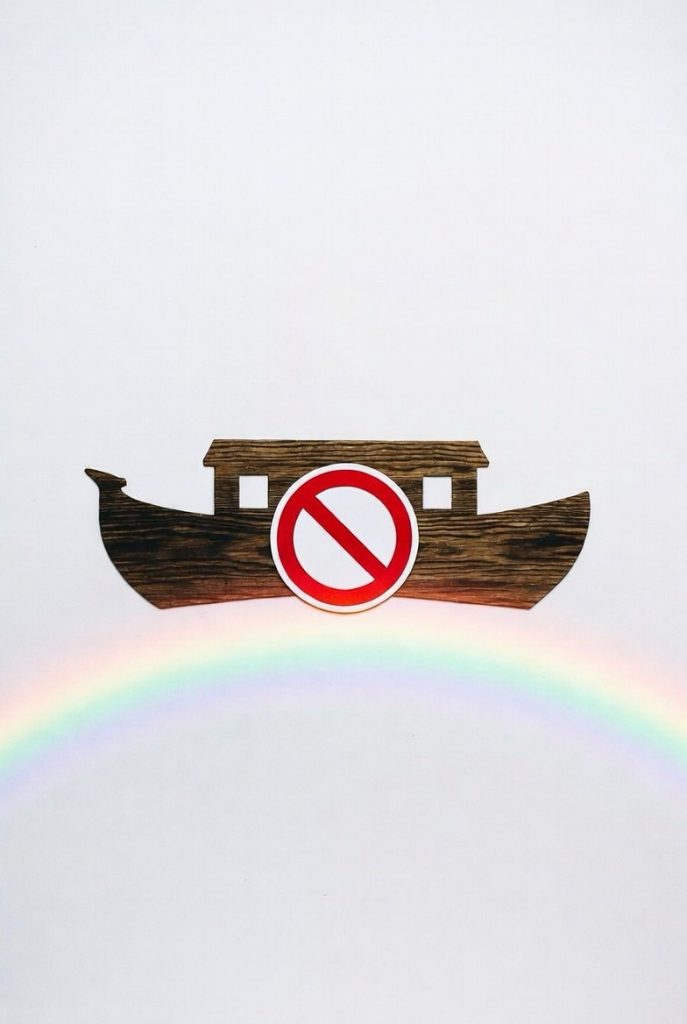
Ghanaian self-styled prophet Ebo Noah has gained widespread attention for claiming a divine revelation of a world-ending flood starting December 25, 2025. He says God instructed him to build multiple wooden arks—reports vary from eight to ten—to shelter believers during three to four years of relentless rain that will devastate the earth. Videos show him constructing these Noah’s ark-inspired vessels, urging followers to prepare and repent. His prediction directly conflicts with the Bible’s Genesis covenant, where God promises never again to destroy the earth by flood, symbolized by the rainbow. The claims sparked public panic, debates over misinformation, and questions of religious extremism or potential scam, as some followers reportedly sold possessions to contribute. While unconfirmed reports mention a brief police detention for causing alarm, no major law enforcement action is verified. As Christmas approaches with no global flood forecast, the story highlights risks of doomsday prophecies and the need for critical thinking.
Long Version
The Eboh Noah Prophecy: A Ghanaian Prophet’s Claim of Imminent Apocalypse and Its Fallout
In the realm of religious predictions that capture global attention, few have stirred as much controversy as the doomsday warning issued by Ghanaian self-styled prophet Eboh Noah. Claiming a divine revelation, Eboh Noah prophesied a world-ending flood set to begin on December 25, 2025, urging his followers to build arks for shelter and prepare for the end of the world. This apocalyptic cult leader’s message, rooted in what he described as divine instruction, quickly spread, sparking public panic and debates over misinformation and religious extremism. As of today, December 24, 2025, with the predicted date mere hours away, the story serves as a stark reminder of how false prophecies can incite fear and disrupt societies.
Who Is Eboh Noah? Background on the Self-Styled Prophet
Eboh Noah, often referred to simply as Prophet Ebo Noah, emerged as a prominent figure in Ghana’s religious landscape through viral videos and online posts. Described as a Ghanaian prophet with no formal theological training, he positioned himself as a modern-day equivalent to the biblical Noah, adopting the name to underscore his claimed role in an impending Genesis flood-like event. His biography reveals a career built on preaching and gathering followers, where he shared messages of divine warnings and calls for repentance.
Prior to his flood prediction, Eboh Noah was known for smaller-scale prophecies and comedic sketches, but his shift to apocalyptic claims marked a turning point. Critics have labeled him a cult leader, pointing to his ability to amass a dedicated following willing to sell possessions and donate proceeds in preparation for the supposed apocalypse. His net worth remains speculative, but reports suggest he benefited financially from followers’ contributions, raising questions about whether this was a scam disguised as religious fervor.
The Prediction: A World-Ending Flood and the Call to Build Arks
At the core of Eboh Noah’s message was a vivid doomsday prediction: God, through divine revelation, had informed him that the earth would face destruction via a massive flood starting on December 25, 2025. Unlike the biblical flood that lasted 40 days, Eboh Noah claimed this event would span three to four years, wiping out humanity except for those sheltered in arks he was instructed to construct. He asserted that divine instruction compelled him to build eight Noah’s ark-inspired vessels to serve as shelters for selected families who would repopulate the earth post-flood.
Videos circulating since August 2025 showed Eboh Noah overseeing the construction of these wooden arks, with followers rushing to secure spots. The prediction emphasized urgency, with warnings of an imminent end of the world that prompted some adherents to liquidate assets and hand over funds, believing it would ensure their salvation. This blend of religious prophecy and practical preparation turned the story viral, amplifying fears of apocalypse and doomsday scenarios across Africa and beyond. To enhance understanding, it’s worth noting that such predictions often draw on historical flood myths, but Eboh Noah’s version uniquely extended the timeline, adding a layer of prolonged dread that intensified follower commitment.
Biblical Conflict: Challenging God’s Covenant and the Rainbow Promise
A key point of contention in Eboh Noah’s prophecy is its direct conflict with established biblical teachings. The Bible, in Genesis 9:11, explicitly states God’s covenant: “Never again will all life be destroyed by the waters of a flood; never again will there be a flood to destroy the earth.” This biblical promise, symbolized by the rainbow covenant, assures humanity of no more flood on a global scale, a detail reiterated in Genesis 9:12-17 to emphasize its permanence.
Religious scholars and critics have decried Eboh Noah’s claims as false prophecy, arguing that they undermine core scriptural assurances and promote religious extremism. By ignoring the “no more flood” decree from the Genesis flood narrative, his message is seen as unbiblical and potentially heretical, leading to accusations of spreading fear rather than faith. This theological mismatch has fueled broader discussions on interpreting ancient texts in modern contexts, highlighting how selective readings can lead to divisive interpretations that challenge communal harmony.
Public Reaction: Panic, Misinformation, and the Spread of Fear
The prophecy’s dissemination led to widespread public panic, with reports of Ghanaians and others preparing for the alleged flood by seeking shelter in the arks. Thousands reportedly hurried to secure places, causing tension and disruptions in local communities. This wave of fear highlighted the dangers of misinformation, as unverified videos and posts amplified the hoax, turning a local religious claim into a global public safety threat.
Followers, described in some accounts as part of an apocalyptic cult, faced criticism for their gullibility, while skeptics labeled the entire affair a scam designed to extract money under the guise of divine warnings. The panic extended beyond Ghana, with international discussions exposing the prediction as potentially fabricated, including claims that the arks were actually built by fishermen for unrelated purposes. Enhancing this section, it’s important to recognize the psychological impact: such events can trigger mass anxiety, underscoring the need for media literacy to discern credible threats from exaggerated claims.
Arrest and Legal Repercussions: Law Enforcement Action Against False Information
In response to the growing chaos, Ghanaian authorities arrested Eboh Noah on charges of spreading false information and causing panic. Reports indicate the arrest occurred amid public outrage, with law enforcement viewing his actions as a threat to public order. This law enforcement action underscores the legal boundaries of religious expression when it incites fear or fraud, particularly in cases involving false prophecies that disrupt society.
The arrest followed investigations into allegations of fraud, especially after followers reported financial losses from donating to the ark-building efforts. As a result, Eboh Noah’s influence waned, though remnants of his following persist, awaiting the predicted date with bated breath. To provide deeper insight, similar cases worldwide show that legal systems increasingly treat misinformation as a public health issue, balancing freedom of speech with societal protection.
Expert Insights and Broader Implications of Doomsday Predictions
Experts in theology and psychology have analyzed Eboh Noah’s case as emblematic of how doomsday cults exploit existential fears, often conflicting with scientific and biblical evidence. Religious leaders emphasize that true prophecy aligns with scripture, not contradicts it, while scientists dismiss flood claims lacking empirical support. This incident highlights the role of digital platforms in amplifying hoaxes and the need for critical thinking amid apocalyptic warnings.
As December 25, 2025, approaches, the world watches—not for a flood, but for the resolution of yet another failed end-of-the-world prediction. Eboh Noah’s story reminds us of the enduring human fascination with apocalypse, balanced against the resilience of factual inquiry and biblical promises that endure. Enhancing the conclusion, it also prompts reflection on societal vulnerabilities, encouraging proactive education to prevent future instances of widespread panic from unfounded prophecies.