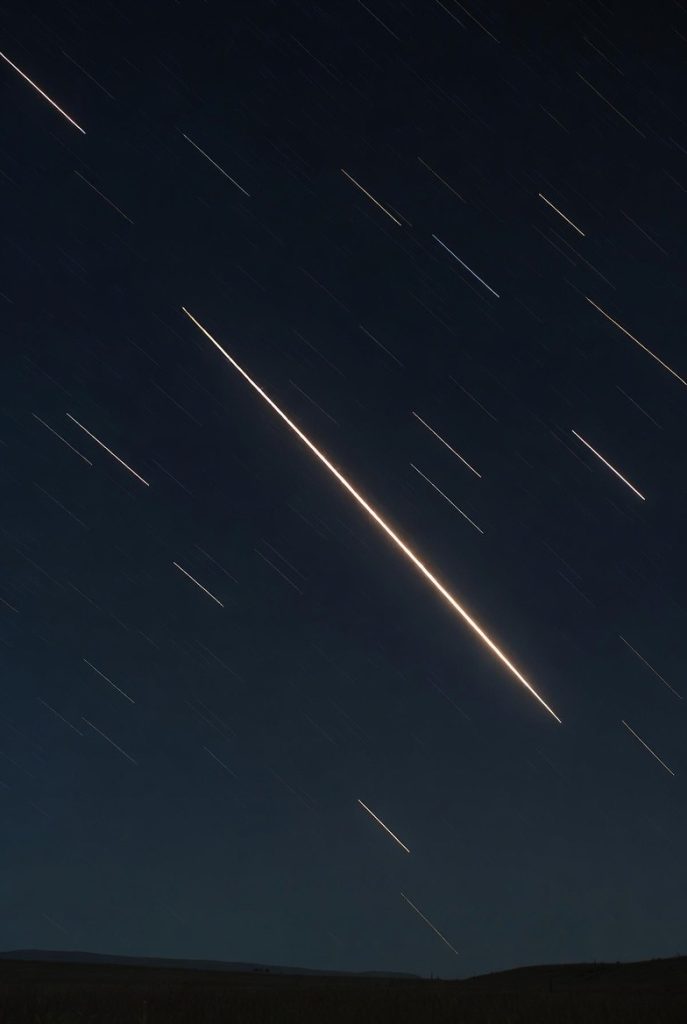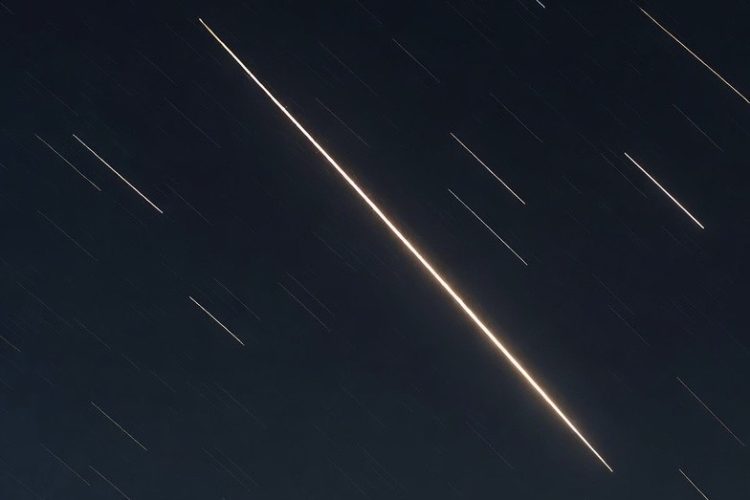
The Geminids meteor shower is one of the most reliable and dazzling annual sky events, peaking each December. Unlike most meteor showers that come from comets, the Geminids originate from asteroid 3200 Phaethon, which sheds debris as it heats up near the Sun. Earth passes through this debris stream each year, producing slow, bright meteors rich in color due to metals like iron and sodium. The shower is active from early to late December, with peak rates often reaching 120–150 meteors per hour under dark skies and minimal moonlight. Best viewing requires a dark location, warm clothing, and patience, as no equipment is needed. The Geminids are valued both for their beauty and for the scientific insight they provide into asteroid behavior and meteor composition.
Long Version
The Geminids Meteor Shower: An In-Depth Exploration
The Geminids stand out as one of the most reliable and spectacular meteor showers in the field of astronomy, captivating stargazers worldwide with their vivid display of meteors, often referred to as shooting stars. This celestial event occurs annually in December, transforming the night sky into a dynamic canvas of fiery streaks as meteoroids enter Earth’s atmosphere and incinerate, producing luminous trails visible to the naked eye. Unlike many other showers derived from comets, the Geminids originate from the asteroid Phaethon, specifically designated as 3200 Phaethon, which exhibits comet-like behavior through outgassing and the formation of a debris trail. This unique parent body contributes to the shower’s distinctive features, including a high meteor rate, colorful meteors enriched with metals such as calcium, silicon, iron, sodium, nickel, and magnesium, and notable fireball activity.
Historical Context and Discovery
The Geminids were first documented in the mid-19th century, with observations dating back to 1862, though the shower’s activity has intensified over time due to the evolving orbit of its debris. Initially modest, the meteor frequency has grown, making it a premier event for observers in both the Northern Hemisphere and Southern Hemisphere. The radiant point, from which the meteors appear to emanate, lies near the star Castor in the Gemini constellation, giving the shower its name. Early records highlight its progression from a minor display to one boasting a zenithal hourly rate (ZHR) that can exceed 120 under optimal conditions.
Origin and Parent Body: Asteroid 3200 Phaethon
At the heart of the Geminids is 3200 Phaethon, an asteroid with a highly eccentric orbit that brings it close to the Sun at perihelion, where solar heating triggers outgassing and the release of sodium gas, forming a tail reminiscent of cometary activity. This comet-like behavior, influenced by the YORP effect—which alters the asteroid’s spin through uneven solar radiation—results in a persistent debris trail of meteoroids that Earth intersects annually. Observations have captured Phaethon’s close solar approaches, revealing how thermal fracturing ejects particles that become the Geminids’ source material. These meteoroids, denser than those from typical comets, enter the atmosphere at about 35 kilometers per second, producing slower, brighter trails often classified as Earth-grazers when they skim the horizon.
Characteristics of the Geminids
The Geminids are renowned for their high ZHR, typically ranging from 120 to 150 meteors per hour at peak, with bursts of fireball activity that can outshine Venus. These meteors display a spectrum of colors due to the vaporization of embedded metals, creating yellow, green, and blue hues as they burn up. The shower’s active period spans from early December to around December 20, with the peak delivering the highest meteor rate under dark sky conditions. Unlike faster showers, the Geminids’ moderate velocity allows for prolonged visibility, enhancing the observing experience for stargazers.
The 2025 Geminids: Peak Dates and Viewing Conditions
For 2025, the Geminids reach their peak on the night of December 13 into the morning of December 14, with strong activity building on December 12-13 and continuing into adjacent nights. As of December 12, 2025, observers can expect rates approaching 75 percent of maximum tonight, providing an excellent prelude to the main event. The waning crescent Moon, illuminated at about 27 percent, will be present but should not significantly interfere, as it rises later in the night around 2-3 a.m. local time, leaving earlier hours darker for prime viewing. This near-moonless setup favors exceptional visibility, particularly in the Northern Hemisphere where the radiant ascends high overhead by midnight, though Southern Hemisphere observers can still enjoy upward-streaking meteors near the horizon. Under ideal circumstances—clear skies and minimal urban glow—the ZHR could reach up to 150 meteors per hour, with suburban or rural sites potentially yielding 30-60 visible meteors hourly during the peak window around 2 a.m. Weather permitting, this year’s conditions rank among the best for the Geminids, with reduced lunar brightness compared to years with fuller moons.
Viewing and Observing Strategies
Optimal viewing requires selecting a location with low light pollution, ideally rated 3 or lower on the Bortle scale, to maximize dark adaptation of the eyes after 20-30 minutes. No telescopes or binoculars are needed; the naked eye suffices for scanning the night sky, focusing 45 degrees from the radiant point to capture peripheral streaks. Dress warmly against December’s chill, recline comfortably, and avoid screens to preserve night vision. For photographers, time exposures can immortalize the display, though patience is key during the meteor frequency’s natural fluctuations. To enhance safety and enjoyment, plan for group outings in secure, open areas, and consider apps or charts to locate the Gemini constellation easily.
Scientific Significance and Ongoing Research
The Geminids offer valuable insights into solar system dynamics, with data collection on fireball activity and meteor composition refining models of Phaethon’s debris trail. Citizen science initiatives encourage reports of sightings, contributing to global databases that track shower evolution and potential hazards from larger meteoroids. Space-based observations continue to probe Phaethon’s perihelion behavior, shedding light on the YORP effect and sodium gas emissions.
Comparisons to Other Meteor Showers
Compared to the Perseids in August, which boast a ZHR of around 100 but faster meteors, the Geminids excel in reliability and brightness, often surpassing them in visual impact. The Leonid meteor shower, known for occasional storms, contrasts with the Geminids’ consistent performance, while the Ursids in late December offer a quieter follow-up with fewer but steady meteors. These distinctions underscore the Geminids’ status as a winter highlight in the annual cycle of celestial events.
Modern Engagement: Livestreams and Community
For those unable to venture outdoors, livestream options from observatories provide real-time access to the shower, fostering global participation in this astronomical phenomenon. Shared experiences amplify the sense of community among astronomy enthusiasts. Whether through direct observing or virtual means, the Geminids remain an accessible gateway to the wonders of the night sky, inspiring awe and scientific curiosity alike.