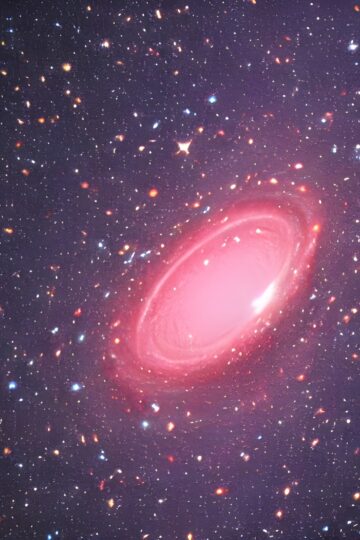
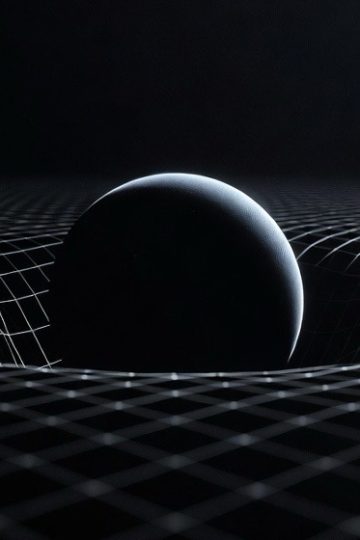
Black holes aren’t actual holes you fall through, but extremely dense objects with powerful gravity. They form when massive stars collapse, squeezing huge amounts of matter into a tiny space. This creates an event horizon, a boundary where gravity is so strong that not even light can escape. Outside this boundary, black holes behave like […]
Tag: astronomy
How Do Galaxy Collisions Impact Planetary Life?
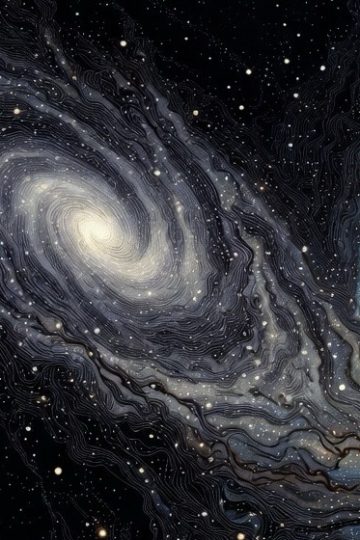
Galaxy collisions, like the future merger between the Milky Way and Andromeda in about 4.5 billion years, involve galaxies passing through each other due to vast empty space, making direct star or planet crashes extremely rare. Gravitational forces can distort shapes, trigger bursts of star formation, and increase supernovae or gamma-ray bursts, potentially harming life […]
What Was the 2026 Wolf Supermoon and How Did It Appear?
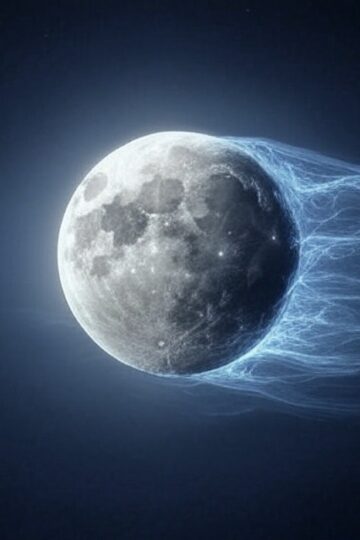
The Wolf Supermoon marked the first full moon of 2026, reaching peak illumination on January 3 at 5:03 a.m. EST, and appeared up to 14% larger and 30% brighter than average due to its alignment with perigee, the moon’s closest approach to Earth. Rooted in Native American and colonial folklore associating January’s cold winters with […]
Geminids
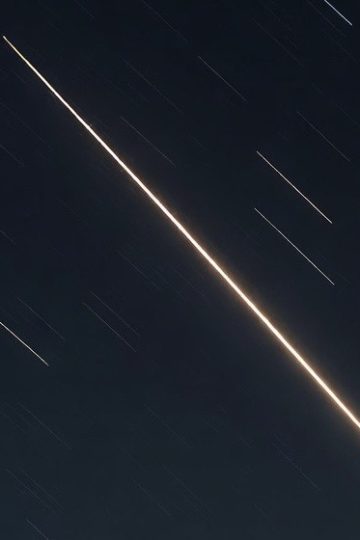
The Geminids meteor shower is one of the most reliable and dazzling annual sky events, peaking each December. Unlike most meteor showers that come from comets, the Geminids originate from asteroid 3200 Phaethon, which sheds debris as it heats up near the Sun. Earth passes through this debris stream each year, producing slow, bright meteors […]
3I/ATLAS
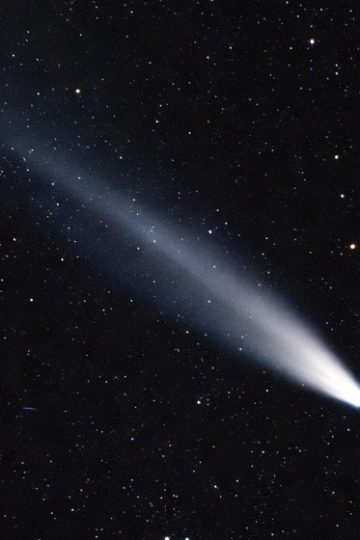
3I/ATLAS (C/2025 N1) is the third confirmed interstellar comet, discovered July 1, 2025, by the ATLAS survey in Chile. Traveling on a hyperbolic trajectory with eccentricity >1, it reached perihelion at 1.4 AU on October 30, 2025, and will exit the Solar System. The 10–20 km nucleus shows strong CO₂ and CO outgassing, low water, […]
Lunar Recession: Moon Drifts 1.5 Inches Yearly from Earth
The Moon is drifting away from Earth at 1.5 inches (3.8 cm) per year, a process called lunar recession driven by tidal forces and angular momentum. Earth’s rotation pulls ocean tides ahead of the Moon, slowing our planet’s spin. This energy transfers to the Moon, pushing it into a wider orbit. Laser measurements from Apollo […]
What is in the Center of the Universe? | Q&A
According to current scientific understanding, there is no center of the universe. The universe is believed to have originated from a single point in space-time known as the Big Bang, which occurred roughly 13.8 billion years ago. Since then, the universe has been expanding in all directions uniformly, and there is no specific point or […]
When will an Asteroid Hit Earth? | Q&A
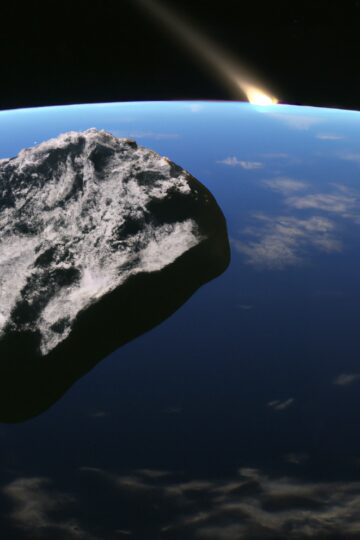
There is no way to predict exactly when an asteroid will hit Earth, as it largely depends on the trajectory and characteristics of any asteroids that might be on a collision course with our planet. However, scientists are constantly monitoring near-Earth asteroids and comets and studying their orbits to identify any potential impact risks. Fortunately, […]
Why is the Sky Blue?
The sky appears blue because sunlight is scattered in all directions by the Earth’s atmosphere, and shorter wavelengths of light (such as blue) are scattered more than longer wavelengths (such as red).