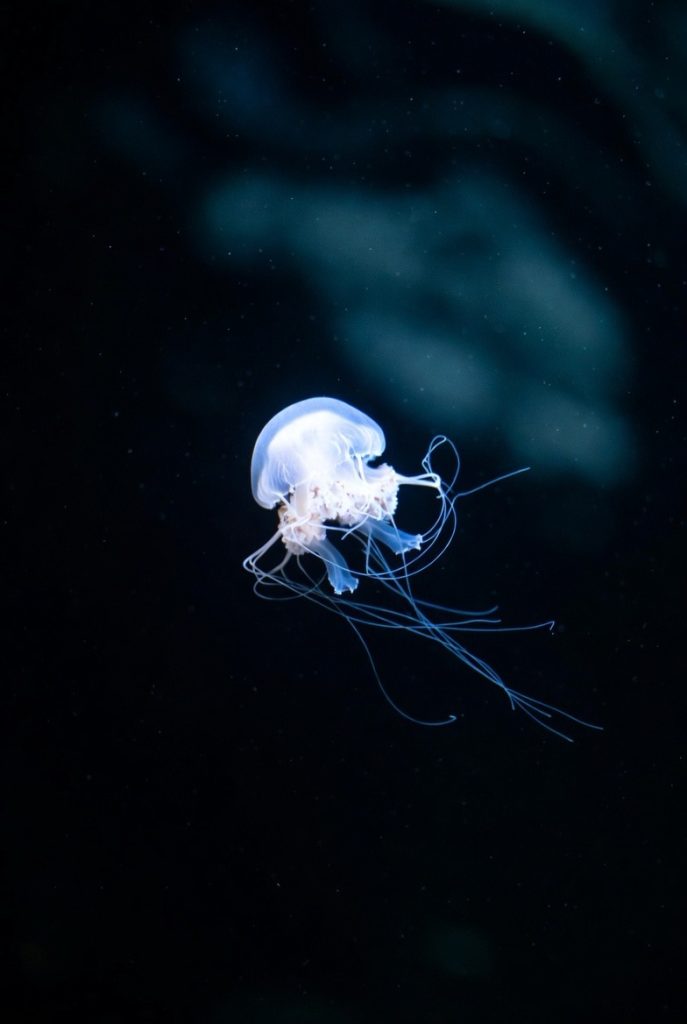
Turritopsis dohrnii, the immortal jellyfish, can reverse its life cycle from adult medusa back to a juvenile polyp, essentially achieving biological immortality. Found in temperate and tropical waters, this jellyfish can reset its development in response to stress, such as starvation or injury, through a process called transdifferentiation. Its ability to avoid aging and regenerate cells has intrigued scientists, offering insights into DNA repair, telomere maintenance, and stem cell-like processes. These mechanisms have potential applications in regenerative medicine, aging treatments, and tissue repair. Despite its immortality, it faces predation and environmental threats but plays a key role in marine ecosystems. Its genetic adaptability also raises concerns about its impact on native species and biodiversity.
Long Version
The Immortal Jellyfish: Unraveling the Secrets of Turritopsis dohrnii
In the vast expanse of the ocean, where marine life thrives amid constant challenges, one remarkable species stands out for its defiance of conventional biology: Turritopsis dohrnii, commonly known as the immortal jellyfish. This tiny animal, belonging to the phylum Cnidaria and class Hydrozoa, has captivated scientists with its ability to achieve biological immortality through a unique process of life cycle reversal. Unlike most species that follow a linear path from birth to death, T. dohrnii can revert from its mature medusa stage back to a juvenile polyp form, effectively restarting its development and evading the inevitable decline associated with aging. This capability not only highlights extraordinary adaptation and evolution within marine ecosystems but also offers profound insights into regeneration, cellular plasticity, and potential applications in regenerative medicine.
Classification and Evolutionary Context
Turritopsis dohrnii is a member of the genus Turritopsis within the family Oceaniidae. As part of the broader Cnidaria phylum, it shares characteristics with other hydrozoans, including the presence of cnidocytes—specialized cells used for capturing prey and defense. Evolutionarily, this species has developed mechanisms that set it apart from relatives like Turritopsis rubra, a mortal counterpart. Comparative genomics reveal that T. dohrnii possesses genome expansions and variants in genes related to DNA repair, telomere maintenance, and cellular reprogramming, which are absent or less pronounced in non-rejuvenating cnidarians such as Hydra vulgaris or Aurelia aurita. These genetic adaptations likely arose through parallel evolution, enabling the jellyfish to thrive in diverse environments and contributing to its status as a model for studying ontogeny reversal and reverse development.
Recent studies have expanded on these findings, identifying additional genetic networks involved in cell plasticity and longevity. For instance, ongoing research highlights how T. dohrnii manipulates pathways relevant to mammalian biology, including those tied to regeneration and anti-aging processes. Originating in the Pacific Ocean, T. dohrnii has spread globally via trans-Arctic migrations and human activities like ballast water discharge, marking it as an invasive species in many marine ecosystems. Its presence underscores themes of sustainability and ecosystem balance, as it integrates into food webs as both predator and prey, influencing zooplankton dynamics and overall biodiversity.
Habitat and Physical Characteristics
Found in temperate to tropical waters worldwide, T. dohrnii inhabits a range of salinities from polyhaline (18–30 PSU) to euhaline (30–40 PSU), often near marinas, docks, and vessel hulls. As benthic polyps, they attach to substrates on the ocean floor, while the planktonic medusa stage drifts freely in the water column. This dual lifestyle enhances its adaptability to fluctuating conditions, such as temperature shifts or nutrient scarcity, which can trigger its remarkable rejuvenation process.
Physically, the medusa form is bell-shaped, measuring up to 4.5 millimeters in diameter, with a thin mesoglea layer and a bright red, cruciform stomach. Young medusae feature eight tentacles, increasing to 80–90 in adults, lined with cnidocytes for capturing zooplankton. The polyp stage, in contrast, forms colonial hydroids with stolons and upright branches, budding off new medusae. This morphology reflects the species’ evolutionary refinement for survival in marine life, where efficiency in predation and evasion is key.
The Intricate Life Cycle
The life cycle of Turritopsis dohrnii begins with free-swimming planula larvae that settle to form benthic polyps. These polyps, connected in colonies, bud off medusae through metamorphosis, which then mature into sexually reproductive adults. Fertilized eggs develop into new planulae, perpetuating the cycle. However, under stress—such as starvation, injury, or environmental changes—the medusa undergoes reverse metamorphosis, a form of life cycle reversal unique in the animal kingdom.
This process, known as transdifferentiation or cellular transdifferentiation, involves the medusa deteriorating into a cyst-like stage, where specialized cells from the bell and circulatory system reprogram into polyp cells. Within 24–36 hours, the cyst transforms into stolons and polyps, resetting the organism to its juvenile form. Gene expression profiling shows dynamic shifts during this reversal: for instance, the cyst stage upregulates genes for DNA repair, ubiquitin-related processes, and chromatin remodeling, while suppressing pathways like RAC G-protein signaling. Transcriptomics analyses reveal peaks in heat shock proteins (HSP70 and HSP90) and Yamanaka-like transcription factors (e.g., Sox2, c-Myc, Klf families) in the cyst and reversed polyp stages, facilitating cellular plasticity and rejuvenation.
Sirtuin proteins (SIRT1–7) play a crucial role, with SIRT3 peaking in the cyst for mitochondrial protection and oxidative stress resistance, and SIRT6 in the reversed polyp for telomere stability. Telomere length is maintained through duplications in genes like GAR1 and variants in POT1, preventing shortening and enabling indefinite cycles. Stem cells and pluripotency factors further support this reverse development, drawing parallels to induced pluripotent stem cell reprogramming in higher organisms. Recent advancements in genome assembly and transcriptome profiling have deepened understanding of these stages, confirming the involvement of conserved pathways that could inform broader biological research.
Mechanisms Behind Biological Immortality
At the heart of T. dohrnii’s biological immortality is its ability to bypass senescence through repeated rejuvenation. Unlike typical aging processes, where telomere shortening and cellular damage accumulate, this jellyfish resets its cellular clock via transdifferentiation. Genetic networks amplify DNA replication (e.g., POLD1 duplications) and repair (e.g., XRCC5, RAD51C), while redox homeostasis genes like TXN and GSR combat oxidative stress. The silencing of polycomb repressive complex 2 (PRC2) targets in the cyst promotes dedifferentiation, and activations of pluripotency genes like SOX7 and MYC enhance reprogramming efficiency.
This immortality is theoretical, as the process can repeat indefinitely in controlled conditions, but real-world constraints apply. The species’ evolution has fine-tuned these mechanisms for survival, making it a prime subject for studying adaptation in unpredictable ocean environments. Emerging research as of 2025 emphasizes the role of these genetic networks in not only jellyfish longevity but also potential cross-species applications, including comparisons with other “immortal” models like Hydra to explore shared pathways in cellular rejuvenation.
Vulnerabilities and Ecological Role
Despite its regenerative prowess, Turritopsis dohrnii is not invincible. Predation by fish, sea anemones, tuna, sharks, swordfish, sea turtles, and penguins poses a constant threat, particularly in the vulnerable medusa stage. Disease and environmental hazards can also lead to mortality before reversal occurs. As zooplankton, it forms part of the marine food chain, contributing to ecosystem dynamics but also facing risks from general oceanic perils.
Its global spread raises concerns for sustainability, as it may outcompete native species in altered ecosystems. However, its role in nutrient cycling and as prey supports broader biodiversity. Recent ecological studies note its increasing presence in various regions, potentially linked to climate changes, highlighting the need for monitoring its impact on marine sustainability.
Implications for Science and Medicine
The study of Turritopsis dohrnii extends beyond marine biology, offering valuable insights into regenerative medicine. By understanding transdifferentiation and stem cell-like processes, researchers aim to develop therapies for renewing damaged human tissues, combating aging-related diseases, and extending healthy lifespans. Genetic findings, such as enhanced telomere maintenance and DNA repair pathways, could inform anti-aging pharmaceuticals. Transcriptomics and comparative genomics provide a blueprint for cellular plasticity, potentially revolutionizing treatments for injuries and degenerative conditions.
New investigations into the full genome and ongoing transcriptomic work are uncovering more about how T. dohrnii achieves repeated rejuvenation, with implications for human health. For example, mechanisms observed in the jellyfish mirror those in mammalian regeneration studies, suggesting avenues for therapies in neurodegenerative diseases or tissue repair. In essence, Turritopsis dohrnii serves as a living testament to the possibilities of biological innovation, challenging our perceptions of life, death, and the boundaries of immortality in the animal world. Through continued research, this enigmatic jellyfish illuminates paths toward greater human health and understanding of evolution’s most extraordinary feats.