
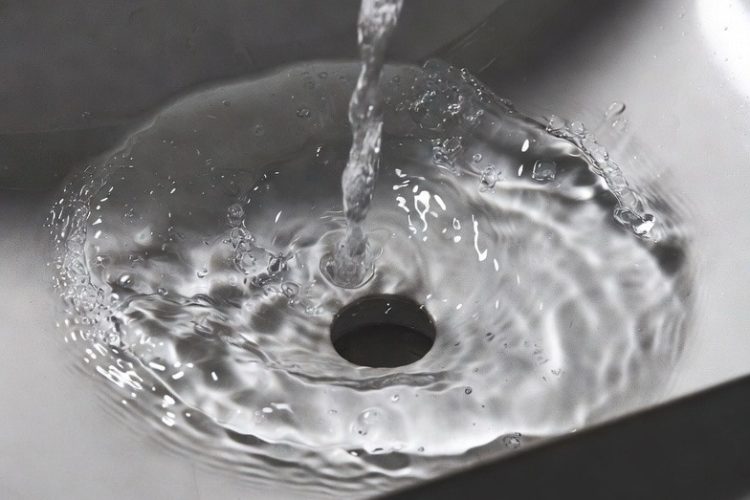
The Coriolis effect, caused by Earth’s rotation, does not influence water drainage direction in sinks or toilets. While the myth suggests that water spins clockwise in the Southern Hemisphere and counterclockwise in the Northern Hemisphere, this is not true. The Coriolis force is too weak to affect small-scale water flow, with factors like basin shape, initial spin, and air currents playing a much larger role. Experiments show that water drainage patterns are random or design-dependent, not determined by Earth’s rotation. The Coriolis effect is significant in large-scale phenomena like hurricanes and ocean currents, but its impact on household drainage is negligible.
Long Version
Debunking the Coriolis Effect Myth: Does Earth’s Rotation Dictate Water Drainage Direction?
The notion that the Coriolis effect causes water drainage to exhibit a clockwise spin in the Southern Hemisphere and a counterclockwise spin in the Northern Hemisphere, while resulting in straight-down flow at the equator, is a widespread misconception. This myth suggests that spinning water in sinks, toilets, and bathtubs is directly influenced by Earth’s rotation, leading to predictable vortex patterns based on latitude. However, this apparent connection is largely illusory, with the Coriolis force proving negligible on such small scales. Instead, factors like basin shape, initial spin, and air currents dominate drain direction. By examining the science, history, and real-world applications, this article provides a complete resource to clarify this enduring urban legend, including deeper insights into related phenomena and practical implications.
Understanding the Coriolis Effect: Origins and Mechanics
The Coriolis effect, often interchangeably referred to as the Coriolis force, is an apparent force that arises in a rotating reference frame, such as Earth. In an inertial frame—where no acceleration occurs—objects move in straight lines according to Newton’s laws. But on our rotating planet, moving objects experience deflection: to the right in the Northern Hemisphere and to the left in the Southern Hemisphere. This deflection stems from Earth’s rotation, which imparts angular momentum to air masses and fluids, making their paths curve relative to the surface.
The effect was mathematically described in 1835 by French scientist Gaspard Gustave de Coriolis in a paper on rotating machinery, like water wheels. Coriolis identified this “compound centrifugal force” as a product of the cross between angular velocity and linear velocity perpendicular to the rotation axis. The Coriolis parameter, f = 2Ω sin φ (where Ω is Earth’s angular velocity of about 7.29 × 10^{-5} rad/s and φ is latitude), quantifies its strength. At the poles, sin φ = 1, maximizing the effect; at the equator, sin φ = 0, rendering it zero.
This apparent force is crucial in dynamic meteorology, where it shapes large-scale atmospheric phenomena and oceanic currents. For instance, it drives the geostrophic balance in winds, deflecting them perpendicular to pressure gradients. To enhance understanding, consider that the Coriolis effect also influences projectile motion, such as artillery shells, where adjustments for deflection are necessary over long distances.
Large-Scale Impacts: From Hurricanes to Oceanic Currents
On planetary scales, the Coriolis effect profoundly influences cyclonic systems. Hurricanes in the Northern Hemisphere rotate counterclockwise, while cyclones in the Southern Hemisphere spin clockwise, as air masses rushing toward low-pressure centers are deflected by Earth’s rotation. This deflection prevents direct inflow, creating spiraling patterns that amplify storm intensity. Similarly, oceanic currents like the Gulf Stream form gyres, with the Coriolis force contributing to their clockwise circulation in the north and counterclockwise in the south.
In atmospheric phenomena, the effect interacts with air masses to form jet streams and trade winds, essential to global climate. Equatorial attraction is minimal here, explaining why hurricanes rarely form directly on the equator—the weak Coriolis force fails to sustain rotation, pushing systems poleward. Additionally, the effect plays a role in phenomena like the El Niño-Southern Oscillation, where weakened trade winds alter ocean temperatures and weather patterns worldwide, demonstrating its broader environmental interconnections.
The Water Drainage Myth: Why Sinks and Toilets Don’t Follow the Rule
Despite its role in grand-scale events, the Coriolis effect does not dictate drain direction in everyday settings. The myth claims that water drainage in the Northern Hemisphere produces a counterclockwise vortex, switching to clockwise spin in the Southern Hemisphere, with no spinning water at the equator due to negligible rotational impact. In reality, this is a misconception; the effect is far too weak for small vessels like sinks, bathtubs, or toilets.
The Coriolis acceleration for typical draining water—say, at 0.1 m/s velocity and 45° latitude—is about 1.03 × 10^{-5} m/s², a mere 1.05 × 10^{-6} times gravity’s 9.8 m/s². This ratio underscores its insignificance compared to other forces. The Rossby number, Ro = U / (L f) (where U is velocity, L is length scale, and f is the Coriolis parameter), further illustrates this: for a 0.3 m sink, Ro exceeds 3,000, indicating inertial forces overwhelm Coriolis deflection.
Instead, drain direction depends on practical factors. Basin shape imparts asymmetry, guiding flow; initial spin from filling introduces angular momentum; and air currents or slight tilts add perturbations. In toilets, water is often injected at an angle, dominating any subtle rotation. These elements ensure that vortex formation is random or design-dependent, observable in either direction regardless of hemisphere. To enhance clarity, note that even in large bodies like swimming pools, the effect remains minimal unless conditions are artificially controlled, emphasizing the scale dependency.
Empirical Tests and Controlled Experiments
Rigorous empirical tests confirm the myth’s invalidity. In 1962, MIT’s Ascher Shapiro conducted a landmark experiment with a 2-meter basin, allowing water to settle for 24 hours to eliminate currents. Draining slowly, the vortex rotated counterclockwise in the Northern Hemisphere, as predicted by Coriolis—but only under these hyper-controlled conditions. Similarly, Lloyd Trefethen at the University of Sydney observed clockwise rotation in the Southern Hemisphere after 18-hour settling periods. These tests required extreme precision, as the Coriolis acceleration is just 3 × 10^{-7} times gravity, taking 15-20 minutes for rotation to emerge.
In everyday scenarios, no such settling occurs, making the effect imperceptible. Tourist demonstrations at the equator, where guides pour water into basins purportedly showing directional changes mere meters apart, are often scams. Videos reveal inconsistencies, with rotations varying due to subtle manipulations rather than genuine equatorial effects. For home experiments, readers can try filling a sink multiple times and observe variability, reinforcing that local factors prevail.
A Real Demonstration: The Foucault Pendulum
For a tangible proof of Earth’s rotation, consider the Foucault pendulum, which vividly illustrates the Coriolis effect on a manageable scale. Suspended from a high ceiling, the pendulum’s oscillation plane precesses—rotating relative to the ground—as Earth turns beneath it. At the poles, it completes a full circle in one sidereal day; at mid-latitudes like Paris, it takes about 32 hours. Introduced by Léon Foucault in 1851, this device uses the same inertial frame principles as the Coriolis force, with precession rate Ω sin φ. Unlike drain myths, it’s a reliable empirical test, unaffected by small perturbations when properly set up. Modern installations in museums worldwide allow public observation, providing an accessible way to experience rotational dynamics.
Conclusion: Separating Fact from Fiction
The Coriolis effect is a fascinating consequence of Earth’s rotation, essential to understanding hurricanes, cyclones, oceanic currents, and atmospheric phenomena. Yet, its application to water drainage remains a persistent myth, debunked by physics and experiments showing dominance of basin shape, initial spin, and other local factors over this weak apparent force. By recognizing its true scope—powerful on global scales but negligible in sinks and toilets—we gain deeper appreciation for dynamic meteorology and avoid common misconceptions. This knowledge extends to practical fields like aviation and navigation, where accounting for Coriolis improves accuracy. Trust in science demands we question such tales, ensuring our insights are grounded in evidence rather than folklore.
Hashtags For Social Media
#CoriolisEffect #WaterDrainage #MythBusting #EarthRotation #WaterFlow #ScienceFacts #FluidDynamics #CoriolisForce #Physics #MythVsScience #DrainVortex #HurricaneScience #OceanCurrents #NatureLaws #CoriolisMyth #ScienceExplained #EverydayScience #WaterSpin #DrainPatterns #GeographyFacts #CoriolisInAction #ScienceMyths #SinkFlow #ToiletFlush #SmallScalePhysics #DynamicScience #FunWithScience #LearnPhysics #ScienceMythsDebunked #EarthScience #PhysicsInEverydayLife #CoriolisEffectExplained #ViralScience
Related Questions, Words, Phrases
does the coriolis effect affect water drainage? | why doesn’t water always spin the same way in sinks? | does earth’s rotation influence toilet flushing direction? | is the coriolis effect responsible for sink vortex patterns? | how does the coriolis effect impact water flow in drains? | why does water drain differently in the northern hemisphere? | does water flow differently in the southern hemisphere? | is there a connection between coriolis and toilet flushing? | why doesn’t water follow coriolis patterns in everyday sinks? | does earth’s spin control the direction of water in drains? | what causes water to swirl in sinks if not coriolis? | does the coriolis effect really change water drainage? | how does coriolis affect large storms but not toilets? | why don’t sinks follow the coriolis effect myth? | does the coriolis effect influence water direction in tubs? | can earth’s rotation influence the way water drains? | how does basin shape affect water drainage direction? | why is there no coriolis effect in home plumbing? | do toilets in the southern hemisphere spin clockwise? | is coriolis force too weak for sinks and toilets? | does the coriolis effect cause clockwise or counterclockwise flow? | does the coriolis force work on small-scale water drainage? | what factors affect water draining in sinks? | does earth’s rotation control the water flow in your bathtub? | how does water direction in drains change by latitude? | what’s the truth behind the coriolis effect in toilets? | why does water not spin according to coriolis in everyday drains? | does the coriolis effect cause vortex in toilets or sinks? | why is water flow in toilets unpredictable? | what determines water drainage direction if not coriolis? | does the coriolis effect affect your daily water flow?


