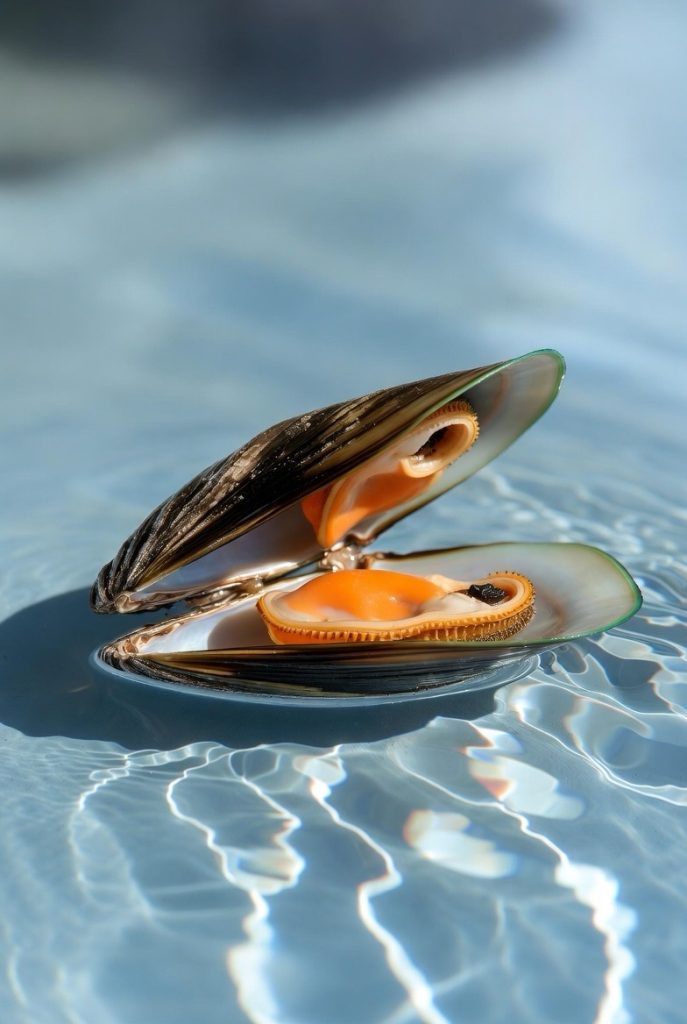
Bivalve molluscs like clams, mussels, and oysters are being used as living biosensors to monitor water quality. These filter feeders are highly sensitive to pollutants and close their shells when exposed to toxins, triggering alarms that can shut off water flow to prevent contamination. Equipped with sensors, bivalves provide real-time alerts, offering a low-cost, efficient alternative to traditional water testing. Systems like the Dreissena-Monitor and MolluSCAN-eye use bivalves to detect harmful substances in both freshwater and marine environments. Although there are challenges, such as false alarms and varying sensitivity, these natural sensors offer an eco-friendly, sustainable solution for continuous water quality monitoring, helping safeguard drinking water supplies globally.
Long Version
Nature’s Sentinels: How Bivalve Molluscs Serve as Living Biosensors for Drinking Water Quality Monitoring
In an era where ensuring safe drinking water is paramount, innovative biomonitoring approaches are transforming environmental monitoring. One such method harnesses the natural sensitivity of bivalve molluscs—such as clams, mussels, and oysters—as living sensors to detect water pollution in real-time. These organisms, wired to advanced detectors, close their shells in response to toxins or contaminants, triggering alarms that can shut off water flow and protect vast water supplies. This low-cost, biological early warning system leverages the clams’ innate filtration behavior to provide instantaneous alerts, offering a complementary layer to traditional chemical testing. Cities worldwide, including systems in the United States like Minneapolis and potentially New York’s reservoirs, have adopted or explored this technology for sentinel species-based pollution detection.
The Role of Bivalves as Indicator Organisms
At the core of this approach is the bivalves’ role as indicator organisms. Bivalve molluscs are filter feeders with exceptional filtration capacity, processing up to 50 liters of water per day per individual. They draw in water to extract nutrients, but their sensitivity to toxicity means they react swiftly to harmful substances like heavy metals, pesticides, or organic pollutants. When exposed to contaminants, they exhibit shell clamping or closure—a defensive valve movement that minimizes exposure. This gaping behavior, or valve gape, serves as a direct proxy for water quality changes, making them ideal for early warning systems. Unlike static sensors that target specific chemicals, bivalves respond to a broad spectrum of threats, including unknown or emerging toxins, due to their pollutant sensitivity.
The Mechanics of Bivalve-Based Monitoring Systems
The mechanics of these systems blend biology with technology. Typically, 8 to 12 bivalves are selected—often species like zebra mussels, sharp-edged river mussels, or Asian clams—and equipped with non-invasive sensors. Magnetic sensors or Hall sensors are hot-glued to one valve, while a probe on the opposite valve detects changes in shell position. High Frequency Non-Invasive Valvometry techniques record valve movements at intervals as short as every few seconds, transmitting data to a computer for analysis. If a threshold—such as four or more bivalves clamping shut—is met, it activates an alarm, halting water intake while lab tests confirm the issue. This real-time monitoring ensures rapid response, often faster than conventional bioassays.
Key Technologies and Innovations
Prominent examples include the Dreissena-Monitor, a biological early warning system developed in the 1990s for zebra mussel-based monitoring. Deployed in Germany along rivers like the Ruhr, it assesses valve movements in groups of up to 42 mussels, computing averages to detect anomalies. In one instance, it identified a chemical discharge, enabling authorities to trace the source via subsequent analysis. Similarly, the MolluSCAN-eye system, a French innovation, uses connected bivalves for 24/7 biosurveillance. It employs high-frequency non-invasive valvometry to track behaviors like feeding patterns and stress responses, alerting to toxic discharges in marine or freshwater settings. This technology has been commercialized for applications in drinking water plants, where bivalves’ cardiac activity and valve dynamics provide nuanced insights.
Global Deployments and Practical Applications
Practical deployments highlight the system’s global reach. In Warsaw, Poland, eight clams monitor the Vistula River intake for the city’s water supply. Sourced from clean habitats, they undergo a two-week adaptation before deployment; if six close their shells, the system shuts down flow, buying time for verification. Nearby Poznan uses a similar setup with mussels, emphasizing their low tolerance for pollutants. In the U.S., Minneapolis employs a dozen freshwater mussels at its treatment plant, where shell closures trigger alerts for contaminants, integrating with broader environmental monitoring. While direct references to New York’s reservoirs are limited, similar biomonitoring principles align with U.S. efforts in critical sectors like reservoirs and rivers, where sentinel species protect against toxicity in drinking water sources. Other sites, such as Italy’s Pontelagoscuro plant and Russia’s automated systems, use invasive species like quagga mussels for ongoing surveillance.
Advantages of Bivalve Biosensors
The advantages of bivalve-based sensors are compelling. They offer cost-effective, continuous monitoring without the need for complex lab setups, detecting changes in seconds via natural behaviors like shell clamping or reduced filtration rates. Their high abundance and longevity make them sustainable, and non-invasive methods ensure ethical deployment—bivalves are often rotated every three months and returned to the wild, marked to avoid reuse. Integration with IoT and AI enhances data analysis, as seen in Russia’s Ecobiomonitor, which uses mussels for real-time contamination detection.
Challenges and Limitations
However, limitations exist. Bivalve responses can vary due to individual differences, seasonal factors, or non-toxic stressors like temperature changes, potentially leading to false alarms. They provide qualitative alerts rather than quantitative measurements, necessitating follow-up chemical analyses. Maintenance is required to ensure sensor accuracy, and in some cases, bivalves may acclimate to low-level pollutants, reducing sensitivity over time. Despite these, their role in hybrid systems—combining biological with physical monitoring—mitigates risks effectively.
Future Directions and Advancements
Looking ahead, advancements in valvometry and multi-biomarker approaches promise greater precision. Research into integrating high-frequency video analysis with traditional sensors could refine detection, while expanding to more species like giant clams for coral reef monitoring broadens applications. As climate change and industrialization heighten water pollution risks, these biological early warning systems stand as a testament to bio-inspired innovation, safeguarding reservoirs and drinking water through the humble power of bivalve behavior.