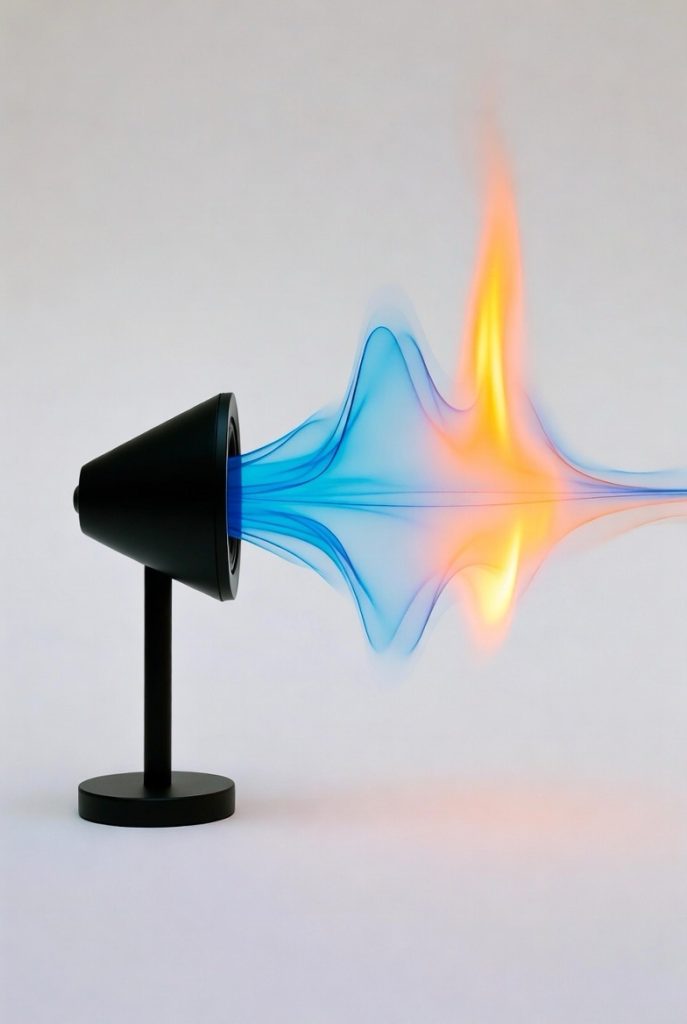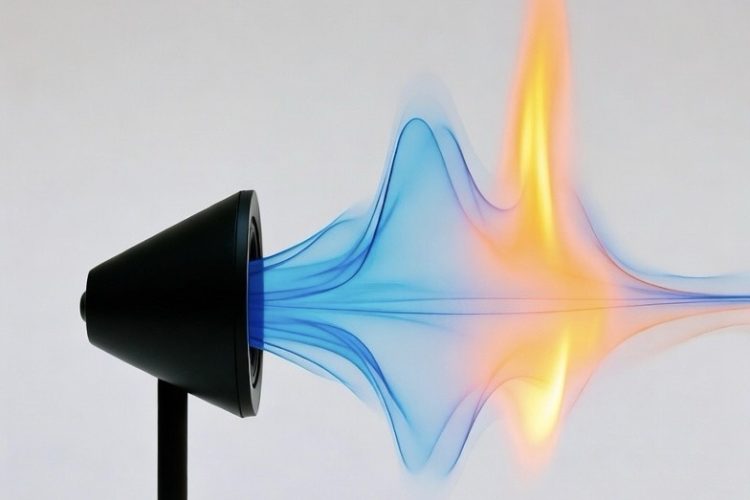
Acoustic fire suppression is an innovative way to put out fires using low-frequency sound waves, or infrasound, that create pressure waves to push oxygen away from the flames, starving the fire without water or chemicals. This clean, residue-free method works best for small fires and sensitive areas like kitchens, data centers, museums, and electronics. Originally inspired by student prototypes and refined through NASA research for space applications, it’s now advancing with portable devices, building integrations, and drone wildfire suppression using AI to target spot fires efficiently. The benefits include being eco-friendly, reusable, and non-damaging, making it a sustainable alternative to traditional extinguishers. While it has limitations—like reduced effectiveness on large blazes or in windy conditions—ongoing improvements are expanding its role in modern fire safety for homes, buildings, and wildfire defense.
Long Version
Acoustic Fire Suppression: Harnessing Sound Waves to Extinguish Flames Cleanly and Effectively
Picture this: a fire erupts in a bustling kitchen, flames licking greedily at a pan of oil. Instead of reaching for a chemical-laden extinguisher or dousing it with water, you activate a device that emits an inaudible hum. Within seconds, the blaze flickers out, leaving no mess, no residue, and no damage to surrounding surfaces. This is the promise of acoustic fire suppression—a innovative technology that uses low-frequency bass tones, or infrasound, to create pressure waves that physically disrupt the combustion process by pushing oxygen away from the fuel. As a clean, non-residue method, it’s gaining momentum for small fires and sensitive areas, drawing from NASA engineers’ expertise and student prototypes. In this comprehensive guide, we’ll unpack the science, history, applications, advantages, challenges, and future of this sound-based approach, equipping you with the knowledge to appreciate its role in modern fire safety.
Understanding the Core Mechanism: How Sound Waves Disrupt Fire
Fire thrives on the interplay of heat, fuel, and oxygen, forming the foundational fire triangle. Acoustic fire suppression cleverly targets the oxygen element through vibration air control. By generating infrasound waves—frequencies typically below 20 Hz—these systems produce oscillating pressure waves that vibrate the surrounding air, creating a barrier that starves the flames of essential oxygen. This oxygen-disrupting fire tech mimics the effect of blowing out a candle but amplifies it via sound pressure, where the waves’ amplitude physically displaces air molecules, interrupting the flame’s ability to sustain combustion.
Delving deeper, the effectiveness hinges on the waveform and frequency. Bass tones in the 30-60 Hz range can handle small flames, but true infrasound enhances penetration, allowing suppression over greater distances without losing potency. The acoustic flame interaction involves the sound energy coupling with the flame’s thermal dynamics, reducing the flame’s velocity and eventually leading to extinction. Unlike high-frequency sounds that scatter quickly, low-frequency waves maintain coherence, making them suitable for targeted applications.
This flame starving method isn’t arbitrary; it’s rooted in physics. Pressure oscillations from the waves increase air velocity around the fire, exceeding the flame’s propagation speed and effectively “blowing” it out. In controlled tests, devices have extinguished flames in under a second, showcasing the precision of this non-fuel disruption technique. For those curious about the setup, a typical sound wave fire extinguisher comprises a speaker or transducer powered by an amplifier, converting electrical energy into mechanical vibrations that propagate as waves.
Tracing the Origins: From Early Concepts to Modern Breakthroughs
The concept of using sound for fire control traces back to the early 2000s, when defense research explored sonic extinguishing for confined environments like vehicles and aircraft. However, the pivotal moment arrived in the mid-2010s with student-developed fire tech. At George Mason University, two undergraduates built a prototype bass tones fire extinguisher using off-the-shelf speakers, demonstrating that infrasound could quench lab flames without physical contact. Their work went viral, highlighting the potential for eco-friendly alternatives.
NASA fire technology played a crucial role in refinement. In space, where microgravity alters flame behavior and traditional methods risk contaminating life-support systems, acoustics offered a non-invasive solution. NASA engineers adapted thermoacoustic principles—originally for refrigeration—to fire suppression, focusing on clean fire suppression that avoids residue in zero-gravity habitats. By the early 2020s, collaborations yielded portable prototypes, and by 2026, commercial entities have iterated on these, incorporating AI for optimized wave modulation.
Key innovations include scalable designs: from handheld units for home use to integrated systems for buildings. The evolution underscores a shift toward sustainable fire suppression, blending academic ingenuity with practical engineering to address real-world needs like drought-induced water conservation.
Everyday Applications: Enhancing Safety in Homes, Kitchens, and Sensitive Spaces
Acoustic fire suppression shines in scenarios where traditional methods fall short. Consider kitchen fire suppression—grease fires, notorious for flaring up with water, can be swiftly contained by a compact device mounted under cabinets. These non-chemical fire extinguishers emit targeted waves to disrupt the blaze without splashing or chemical fallout, ideal for busy households.
In broader building fire tech, systems integrate into smart infrastructure, activating via sensors to handle incipient fires in walls or ceilings. For sensitive area fire suppression, such as server rooms or museums, the non-damaging quencher preserves electronics and artifacts by avoiding moisture or corrosive agents. Hospitals benefit similarly, where clean suppression minimizes infection risks from residues.
Homeowners in wildfire-prone zones are adopting eco-friendly fire suppression devices that create protective perimeters. Installed externally, these vibration fire control units generate waves to neutralize embers, a common ignition source. This proactive approach complements passive measures like fire-resistant materials, offering layered defense without environmental harm.
Scaling Up: Drone Integration and Wildfire Management
Expanding beyond static setups, drone wildfire suppression represents a frontier application. Equipped with acoustic modules, UAVs can hover over remote blazes, deploying infrasound to tackle spot fires before they escalate. In 2026, with AI-integrated suppression, drones analyze terrain and wind patterns in real-time, adjusting frequencies for maximum impact. This precision enhances wildfire acoustic suppression, particularly for embers that leapfire lines.
Swarm tactics amplify efficacy: multiple drones coordinate to blanket larger areas, creating a collective pressure wave fire extinguisher effect. While not a standalone solution for massive infernos, it augments ground efforts, reducing the need for chemical retardants and conserving water resources. Case scenarios from recent pilots show promise in containing early-stage wildfires, aligning with global sustainability goals.
Beyond drones, industrial uses include manufacturing plants, where acoustic systems monitor high-risk zones, providing rapid, non-toxic intervention.
Weighing the Benefits: Why Acoustic Methods Outperform Alternatives
Compared to conventional options, the sound wave fire extinguisher offers distinct edges. Foremost is its environmental footprint: as a sustainable fire suppression tool, it eliminates chemical pollutants and water usage, crucial amid climate challenges. The non-residue fire method ensures no cleanup, saving time and costs in sensitive environments.
Efficiency is another boon; devices are reusable, requiring only electricity, unlike disposable canisters. For users, the emotional reassurance comes from a “hands-off” approach—safe for non-experts, with minimal training needed. Experts appreciate the complementarity: acoustics handle Class A (ordinary combustibles) and some Class B (flammable liquids) fires effectively, bridging gaps in traditional wildfire suppression strategies.
Quantitatively, studies indicate up to 90% reduction in secondary damage compared to foam or powder extinguishers, fostering adoption in eco-conscious sectors.
Addressing Limitations: Realistic Constraints and Mitigation Strategies
Despite its strengths, acoustic fire suppression isn’t universal. Sound wave limitations include efficacy against large or deeply seated fires, where waves may not penetrate sufficiently. Energy demands can be high for prolonged use, necessitating robust power sources. Environmental factors like strong winds or enclosed spaces with echoes can dilute wave focus, requiring adaptive designs.
Comparisons reveal trade-offs: while superior in cleanliness, it lacks the volume coverage of sprinklers for extensive areas. Fire types matter too—electrical (Class C) fires respond well, but metal (Class D) ones demand specialized handling. Ongoing refinements, such as hybrid systems combining acoustics with minimal chemicals, address these gaps.
Safety nuances include the inaudible nature of infrasound, which avoids startling users but raises concerns about prolonged exposure; however, short bursts pose negligible risks. Regulatory hurdles involve certification for widespread use, with standards evolving to ensure reliability.
Global Perspectives and Ethical Considerations
Worldwide, adoption varies by region. In arid zones like Australia and the American West, drone wildfire suppression aligns with water-scarce policies. Europe emphasizes green innovation, integrating acoustics into building codes for low-impact fire control. Developing areas see potential in affordable, low-maintenance devices for rural fire risks.
Ethically, the technology promotes inclusivity by reducing barriers—portable units empower those with mobility challenges. Neutrality in development ensures broad access, avoiding biases toward high-tech regions. As AI ethics intersect, transparent algorithms prevent misuse, maintaining trust.
Envisioning Tomorrow: Trends and Potential Developments
Looking forward, acoustic fire suppression could evolve with smart integrations. Imagine AI predicting fire hotspots via data analytics, preemptively deploying waves. Ties to renewable energy—solar-powered devices—bolster sustainability. Research into broader frequencies might extend applications to larger scales, revolutionizing firefighting.
In education, student prototypes inspire STEM curricula, fostering innovation. As clean tech advances, this method could become ubiquitous, from vehicles to public spaces, redefining fire safety norms.
Final Insights: Embracing a Silent Guardian Against Fire
Acoustic fire suppression stands as a testament to human ingenuity, using infrasound to combat flames with elegance and efficiency. From its scientific underpinnings in pressure wave mechanics to diverse applications in homes, drones, and beyond, it offers a clean, sustainable path forward. While mindful of limitations, its benefits—environmental kindness, reusability, and precision—position it as a vital tool. For anyone navigating fire risks, this technology provides empowerment and peace, proving that sometimes, the most powerful solutions are the ones you can’t even hear.