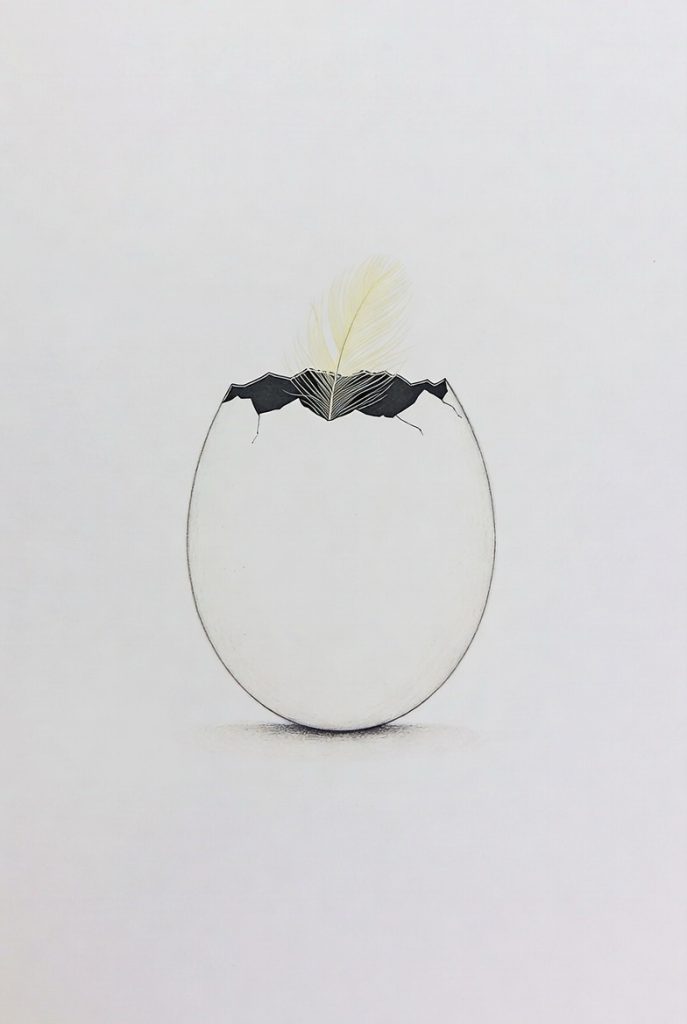
The classic riddle “which came first, the chicken or the egg?” is a philosophical paradox about origins and causality, but science clearly answers: the egg came first. Eggs as reproductive structures existed billions of years ago in single-celled organisms and evolved into amniotic eggs around 340 million years ago, allowing land-based development in reptiles and early birds. Modern chickens (Gallus gallus domesticus) descend from red junglefowl domesticated about 8,000 years ago. The first true chicken hatched from a fertilized egg laid by a proto-chicken—a bird very close to, but not quite, a chicken—due to genetic mutations. Key proteins like ovocleidin-17 (OC-17) help form hard eggshells in birds, but the basic egg structure is far older. Evolution, natural selection, and human domestication together show that eggs predate chickens by vast timelines, resolving the ancient conundrum with biology.
Long Version
Which Came First: The Chicken or the Egg? A Scientific Resolution to an Ancient Paradox
The age-old riddle of “which came first, the chicken or the egg?” has puzzled thinkers for centuries, embodying a classic conundrum of causality and origin. This dilemma, often framed as a philosophical paradox, questions whether the chicken preceded the egg or vice versa, creating a seemingly endless loop. Philosophically, it highlights issues of beginnings and dependencies, but science provides a clear, evidence-based answer: the egg came first. Through the lenses of biology, evolution, and genetics, we can trace this back billions of years ago to the earliest amniotic eggs and forward to the domestication of modern chickens. This article delves into the multifaceted explanation, drawing on fossil records, DNA analysis, and recent discoveries to offer a complete understanding, with enhanced details on genetic mechanisms and evolutionary transitions for greater clarity.
The Philosophical Roots of the Riddle
At its core, the chicken-or-egg question is a dilemma rooted in philosophy, dating back to ancient thinkers who pondered similar causality puzzles in the context of life cycles. It represents a broader conundrum about origins: how can something arise without its precursor? In casual discourse, it’s often treated as an unsolvable riddle, but this overlooks the scientific framework that resolves it. By shifting from abstract philosophy to empirical science, we see that eggs—as reproductive structures—predate not just chickens but all birds, emerging from evolutionary processes that began millions of years ago. This transition underscores how philosophical questions can evolve into testable hypotheses through biological inquiry.
Evolutionary Biology: Eggs as an Ancient Innovation
To understand why the egg preceded the chicken, we must examine the evolution of the amniotic egg, a key adaptation in vertebrate history. Amniotes, the group including reptiles, birds, and mammals, evolved from amphibian-like ancestors around 340 million years ago during the Carboniferous period. The amniotic egg, with its protective membranes and shell, allowed embryos to develop on land, free from aquatic environments. This amniote innovation marked a pivotal shift, enabling diversification away from water-bound reproduction.
The origin of amniotes traces to reptiliomorphs, semi-aquatic tetrapods that gradually adapted to terrestrial life. Fossil records show that early amniotic eggs appeared long before any bird-like species, with structures evolving to include a yolk for nutrition and an amnion for protection. These eggs were laid by proto-reptiles, setting the stage for avian evolution. Natural selection favored mutations that enhanced eggshell durability, leading to the calcified forms we see today. This process involved gradual refinements, such as improved permeability for gas exchange, which were crucial for survival in diverse environments.
The Deep Origins: Insights from Ancient Microbes
Recent research pushes the timeline even further, billions of years ago, to unicellular organisms that hint at embryonic development’s roots. The ichthyosporean Chromosphaera perkinsii, discovered in marine sediments, forms multicellular colonies resembling early animal embryos. This species, diverging from the animal lineage over a billion years ago, develops multinucleate structures that mimic egg-like stages, suggesting that “egg” precursors existed in single-celled life forms long before complex animals. Ichthyosporeans like C. perkinsii provide a window into how embryonic processes evolved, reinforcing that egg-like reproductive strategies predated chickens by eons. These findings highlight the continuity of life from microbial to macroscopic scales, illustrating how basic cellular mechanisms laid the groundwork for advanced reproduction.
From Junglefowl to Chicken: The Path of Domestication
Focusing on chickens specifically, the egg’s precedence becomes evident through speciation and domestication. Modern chickens (Gallus gallus domesticus) descend from the red junglefowl (Gallus gallus), a wild bird native to Southeast Asia. Genetic evidence confirms that red junglefowl were domesticated around 8,000 years ago, likely in multiple regions including India and China, facilitated by rice and millet agriculture that attracted these birds. Whole-genome sequencing reveals that the first “chicken” emerged from a fertilised egg laid by a proto-chicken—a red junglefowl or hybrid—carrying a mutation that distinguished it as the new species.
This speciation event involved DNA changes accumulated over generations via natural selection and human intervention. The fossil record supports this, showing gradual transitions from junglefowl ancestors to domesticated forms. Interestingly, modern red junglefowl populations have interbred with domestic chickens, inheriting significant portions of their genomes from them, blurring lines but affirming the wild origin. Thus, the first true chicken hatched from an egg laid by a non-chicken bird, resolving the paradox biologically. Human selection further accelerated traits like increased egg production and docile behavior, transforming wild junglefowl into the versatile domestic species we know today.
The Genetics of Egg and Chicken Formation
Delving deeper into genetics, the process begins with a zygote—the fertilised egg cell formed in the ovary. In birds, sperm fertilises the ovum in the oviduct, where layers including the eggshell form around it. A critical protein, ovocleidin-17 (OC-17), unique to birds like chickens, catalyzes eggshell formation by promoting calcite crystal (CaCO₃) deposition. Discovered in the calcified layer of Gallus gallus eggshells, OC-17 acts as a matrix protein, regulating calcium carbonate crystallization to create a robust shell.
Mutations in DNA drive such innovations; for instance, a genetic tweak in a red junglefowl’s ovum could produce the first chicken egg. This aligns with observations that Gallus gallus was the primary ancestor, supported by modern genomics showing multiple domestication events. Selective breeding for traits like larger eggs or better plumage in low-fear junglefowl lines further illustrates how human domestication amplified natural genetic variations. Additionally, epigenetic factors, such as environmental influences on gene expression during egg development, play a role in shaping phenotypes, adding layers to the evolutionary story.
Resolving the Conundrum: Science Over Speculation
Biologists unanimously agree that eggs came before chickens, as eggs are ancient female gametes predating avian species. The “chicken egg” specifically arose when a mutated zygote in a proto-chicken’s fertilised egg hatched into the first chicken. This isn’t a false dichotomy; while chicken eggs require chickens today, the initial one did not. Recent studies, including those on OC-17’s role in eggshell formation, confirm that proteins essential for modern eggs evolved in bird lineages, but the egg structure itself is far older.
In summary, the egg’s primacy stems from evolutionary timelines spanning from ichthyosporean origins to red junglefowl domestication. This scientific narrative not only demystifies the riddle but underscores biology’s power to illuminate life’s origins, offering a grounded perspective on a timeless question while emphasizing the interplay of mutation, selection, and human influence in shaping species.