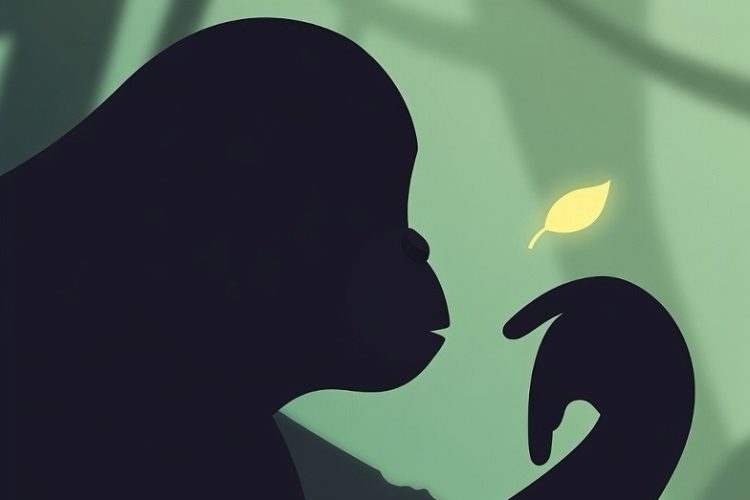
A wild Sumatran orangutan named Rakus was observed in Indonesia’s Gunung Leuser National Park treating a fresh facial wound with the medicinal plant Fibraurea tinctoria. He chewed the leaves to extract their anti-inflammatory and antibacterial juice, applied it directly to the injury, and healed without infection within weeks. This is the first documented case of a wild animal using a topical plant remedy, highlighting advanced primate intelligence and the evolutionary roots of self-medication. The finding underscores the importance of conserving critically endangered orangutans and their rainforest habitat.
Long Version
Groundbreaking Discovery: A Wild Sumatran Orangutan’s Self-Treatment of a Facial Wound Reveals Insights into Primate Behavior and Animal Intelligence
In the dense rainforests of Indonesia’s Gunung Leuser National Park, a remarkable event unfolded in 2022 that has reshaped our understanding of wildlife capabilities. A male Sumatran orangutan named Rakus, observed in the Suaq Balimbing research area, actively treated a fresh facial wound using a bioactive plant known as akar kuning, or Fibraurea tinctoria. This incident marks the first systematically recorded case of a wild animal engaging in self-medication through the topical application of a medicinal plant with known analgesic and anti-inflammatory properties. By chewing leaves and applying the resulting plant juice and pulp as a poultice, Rakus not only accelerated his wound healing but also showcased the profound animal intelligence inherent in great apes, offering valuable clues about the evolutionary roots of such behaviors.
Background on Sumatran Orangutans and Their Habitat
Sumatran orangutans, scientifically classified as Pongo abelii, are one of the three species of orangutans and are critically endangered due to habitat loss, poaching, and human-wildlife conflict. Native exclusively to the island of Sumatra in Indonesia, these great apes inhabit peat swamp forests and tropical rainforests, where they exhibit complex primate behavior, including tool use and problem-solving. With a population estimated at fewer than 14,000 individuals, conservation efforts in national parks like Gunung Leuser are crucial for their survival. This vast protected area, spanning over 7,900 square kilometers, serves as a biodiversity hotspot and a key site for long-term wildlife studies, including the Suaq Balimbing station established in 1994.
Rakus, an adult male in his mid-30s, was first sighted in the area in 2009 as an unflanged male and developed his distinctive facial flanges—a sign of maturity—by 2021. Flanged males like him are often involved in territorial disputes, which may explain the origin of his injury, though the exact cause remains unconfirmed. Such conflicts underscore the challenges of animal behavior in dense, competitive environments, where injuries from fights can pose significant risks without intervention.
The Medicinal Plant: Fibraurea tinctoria (Akar Kuning)
At the heart of this self-treatment lies Fibraurea tinctoria, a liana—a woody climbing vine—commonly referred to as akar kuning or yellow root in local languages. This evergreen plant from the Menispermaceae family thrives in the tropical forests of Southeast Asia, including Sumatra. Traditionally used in Indonesian and Malaysian folk medicine, it treats ailments such as dysentery, diabetes, malaria, and skin conditions through its analgesic, antipyretic, diuretic, anti-inflammatory, antibacterial, anti-fungal, and antioxidant properties.
Chemical analyses reveal that Fibraurea tinctoria contains furanoditerpenoids and protoberberine alkaloids, including compounds like jatrorrhizine and palmatine, which inhibit bacterial growth (e.g., against Bacillus cereus, Staphylococcus aureus, and Escherichia coli) and promote wound healing by reducing inflammation and preventing infection. While orangutans rarely consume this plant—accounting for only 0.3% of their feeding time in the Suaq Balimbing area—47 out of 132 monitored individuals have been observed eating it sporadically, suggesting selective use in plant medicine.
Detailed Observation of Rakus’s Self-Medication Behavior
The pivotal observation occurred in June 2022 during all-day focal follows, a non-invasive method where researchers track individual animals at a distance to document rare behaviors. On June 22, Rakus was noted with a fresh facial wound on his right flange, extending into his mouth, accompanied by signs of recent male-male aggression, such as long calls heard in the vicinity. Three days later, on June 25 at 11:16 a.m., he selectively ripped off leaves from a Fibraurea tinctoria liana and began chewing them without swallowing, producing a juice that he repeatedly applied to the injury using his fingers for seven minutes.
Following this, Rakus smeared the chewed pulp directly onto the wound, creating a poultice that fully covered the area—a deliberate act lasting over 30 minutes in total. He continued feeding on the plant for an additional period, and flies were observed on the wound only after the application, indicating the poultice’s potential repellent or protective effect. The next day, June 26, he consumed more of the plant briefly.
Notably, Rakus increased his resting time post-injury, spending an average of 33% of his day resting compared to 14.8% before the wound, which likely supported the healing process by promoting growth hormone release and cellular repair. By June 30, the wound had closed without signs of infection, and by July 19, it had fully healed, leaving only a faint scar. This rapid recovery, completed in about a month, highlights the efficacy of the self-treatment in preventing complications common in humid rainforest environments.
Scientific Context and Comparisons to Other Animal Behaviors
This case stands out as the first documented instance of active wound treatment in a wild animal using a bioactive plant, distinguishing it from other forms of self-medication observed in primates. While chimpanzees have been seen applying insects to wounds and chewing bitter pith for internal parasites, and Bornean orangutans rub anti-inflammatory lather on their skin, Rakus’s behavior involves targeted topical application to an external injury. Such actions align with broader patterns of animal behavior, including sick behaviors like anorexia and prophylactic ingestion of plants, but elevate our view of great ape capabilities.
Researchers hypothesize that this self-medication could stem from individual innovation—perhaps an accidental discovery leading to pain relief—or social learning, though it has not been observed in over 21 years and 28,000 hours of study at Suaq Balimbing. As a dispersing male possibly originating from outside the area, Rakus may have acquired the knowledge elsewhere, adding layers to our understanding of knowledge transmission in wildlife.
To further contextualize, self-medication is not unique to primates; numerous species across the animal kingdom exhibit similar behaviors. For instance, birds like starlings incorporate aromatic plants into their nests to repel parasites, while elephants consume specific clays to detoxify harmful compounds in their diet. Insects such as woolly bear caterpillars ingest pyrrolizidine alkaloids to combat parasites, and even domestic animals like dogs and cats eat grass to induce vomiting for digestive relief. These examples illustrate a widespread evolutionary adaptation where animals leverage environmental resources for health maintenance, often mirroring human ethnobotanical practices.
Evolutionary Implications and Conservation Insights
The observation provides profound insights into the origins of wound care, suggesting that medical treatment behaviors may trace back to a common ancestor shared by humans and great apes, predating documented human practices from 2200 BC that involved herbal plasters and honey. It underscores the intelligence of primates, demonstrating intentionality through selective plant choice, repeated application, and extended time investment, which parallels human ethnobotany and traditional knowledge.
From a conservation perspective, this discovery emphasizes the need to protect critically endangered species like the Sumatran orangutan and their habitats. Long-term research sites like Suaq Balimbing reveal hidden facets of animal intelligence that could inform biodiversity strategies, highlighting how habitat preservation enables such innovative survival tactics amid threats like deforestation.
Limitations of the study include the single-instance nature, absence of direct footage of the treatment, and untested chemical effects on orangutan wounds specifically. Future research could explore the prevalence of this behavior across populations, its transmission mechanisms, and experimental validations of the plant’s efficacy. Additionally, ongoing monitoring might uncover more instances, potentially revealing cultural variations among orangutan groups or responses to environmental changes.
In summary, Rakus’s self-treatment not only exemplifies the sophistication of primate behavior but also bridges the gap between animal and human intelligence, reinforcing the urgency of conservation to safeguard these windows into our evolutionary past. This event serves as an authoritative reminder of the intricate healing strategies embedded in nature.