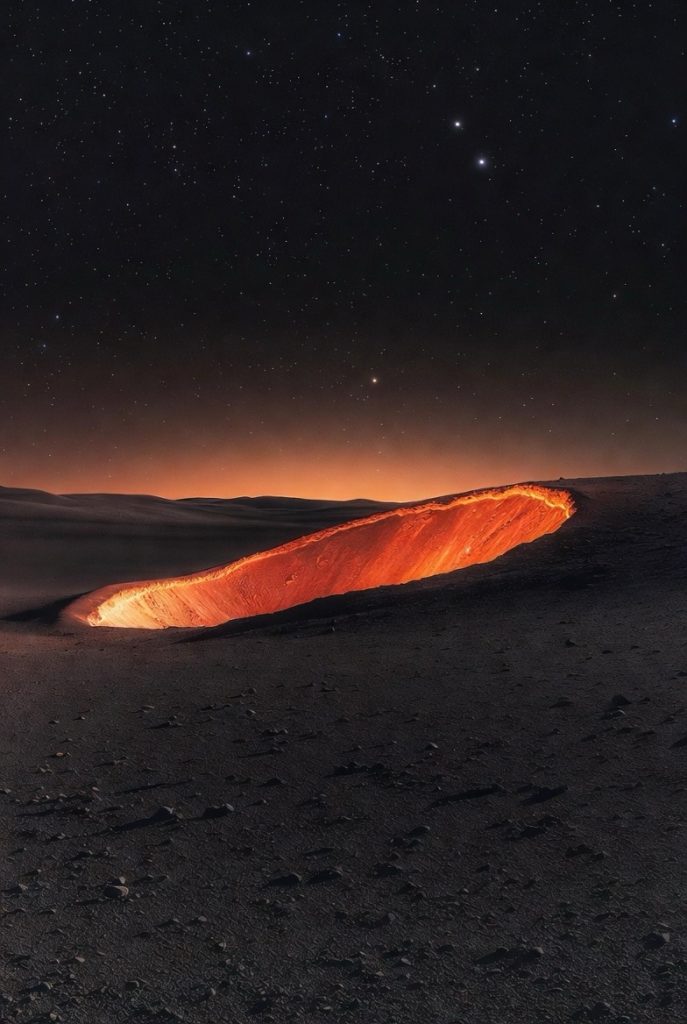
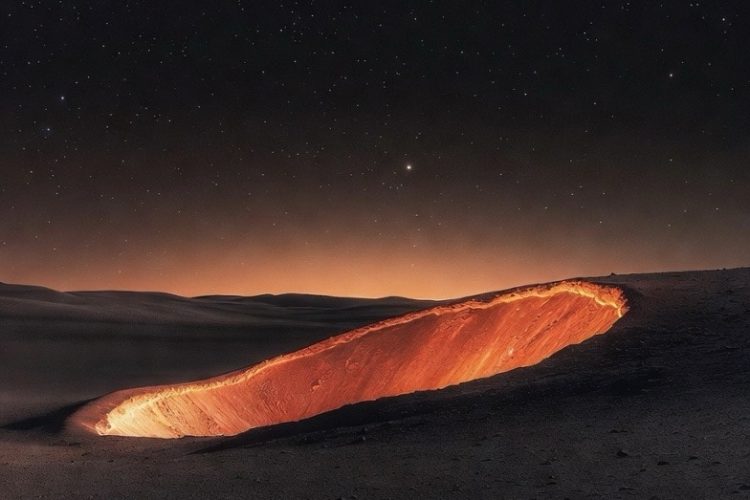
The Darvaza gas crater, known as the Door to Hell, blazes in Turkmenistan’s Karakum Desert near Derweze, about 260 km north of Ashgabat. Formed in 1971 when Soviet drilling pierced a gas cavern, causing a 60-70m-wide, 30m-deep sinkhole, engineers ignited the methane leak expecting a quick burn-off—it raged for over 50 years instead, releasing poisonous gases and 20,000 tonnes of greenhouse methane yearly. This eternal flame lit up the night with roaring heat and sulfur scents, drawing tourists to yurt camps for hypnotic views. In 2013, adventurer George Kourounis rappelled in, collecting soil revealing heat-loving thermophiles and resilient camel spiders. Compared to Iraq’s Baba Gurgur or Azerbaijan’s Yanar Dag, it’s a unique inferno from human error. By late 2025, government gas-capture wells via Turkmengaz have dimmed the flames threefold, easing environmental harm and unlocking resources, though pockets persist—signaling the end of this fiery icon and lessons in resource management.
Long Version
The Darvaza Gas Crater: A Fiery Phenomenon in the Heart of Turkmenistan
Nestled deep within the vast expanse of the Karakum Desert in Turkmenistan, the Darvaza gas crater stands as one of the world’s most captivating and enigmatic natural wonders. Often referred to as the Door to Hell or Gates of Hell, this massive sinkhole has been engulfed in flames since 1971, earning it local names like the Shining of Karakum or Garagum ýalkymy. Located approximately 260 kilometers north of the capital city of Ashgabat, near the village of Derweze, the crater is a testament to the unpredictable power of natural gas fields and the long-lasting consequences of human intervention in hydrocarbon exploration. What began as a routine drilling operation has evolved into an eternal flame, an inferno that has mesmerized scientists, adventurers, and tourists alike for over five decades.
Origins and Formation
The story of the Darvaza gas crater traces back to the Soviet era, when Turkmenistan was part of the USSR. In 1971, Soviet geologists and engineers were prospecting for natural gas in the gas-rich Karakum Desert, an area known for its abundant hydrocarbon reserves. During a drilling expedition, the ground unexpectedly collapsed beneath the rig, forming a massive crater due to the puncture of an underground cavern filled with methane and other poisonous gases. This sudden sinkhole swallowed equipment and released vast quantities of gas into the atmosphere, posing immediate environmental and health risks to nearby workers and communities.
To mitigate the danger, the Soviet engineers decided to ignite the escaping gases, creating a controlled flare that they anticipated would burn out within a few days or weeks. However, the fire persisted, fueled by the immense underground gas field. Historical accounts vary slightly—some suggest the initial collapse occurred in the 1960s, with the flames set in the 1980s, while others pinpoint the event squarely to 1971. Regardless, the burning has continued unabated for more than 50 years, transforming the site into a perpetual blaze. The crater’s formation highlights the challenges of extracting resources from unstable desert terrains, where collapses and gas emissions are not uncommon.
Physical Description and Ongoing Activity
Measuring about 60 to 70 meters in diameter and roughly 30 meters deep, the Darvaza gas crater resembles a colossal cauldron of fire. Flames leap from hundreds of points across its floor and walls, producing a roaring sound akin to a jet engine and illuminating the surrounding desert with an eerie orange glow, especially at night. The heat is intense, making it difficult to approach the rim for extended periods, and the air carries a strong scent of sulfur and burning methane. This clean-burning fire produces no smoke, allowing clear views of the dancing flames and the crater’s rugged interior.
For decades, the site has been a symbol of unrelenting energy, with the eternal flame drawing comparisons to mythical underworld portals. However, recent developments indicate gradual change. As of late 2025, the inferno has shown signs of diminishing, with the fire’s intensity reduced over recent years due to efforts to capture the methane through surrounding wells. While the flames have lessened significantly, pockets of fire still persist, marking a shift from its once-roaring state. This evolution underscores the finite nature of even the most persistent gas-rich environments, though the exact timeline for complete extinguishment remains uncertain.
Environmental and Health Impacts
The Darvaza gas crater’s prolonged burning has raised significant concerns about its effects on the environment and public health. Methane, a potent greenhouse gas, has been released and combusted in large volumes, contributing to atmospheric pollution and climate change. Estimates suggest the site has emitted around 20,000 tonnes of methane annually, exacerbating global warming while wasting valuable hydrocarbon resources that could be harnessed for energy production. The poisonous gases, including sulfur compounds, pose risks to local wildlife and human populations, potentially affecting respiratory health and contaminating the surrounding desert ecosystem.
High-temperature environments like this foster unique conditions, but they also highlight broader issues in gas field management. Efforts to address these impacts have intensified, with Turkmenistan’s government recognizing the crater’s role in hindering nearby natural gas development. In 2010, then-President Gurbanguly Berdimuhamedow first called for measures to limit its influence, and by January 2022, he ordered its extinguishment to safeguard health, the environment, and economic interests. State-owned Turkmengaz has since drilled wells to redirect the gas, leading to the observed reduction in flames. These actions reflect a growing awareness of the crater’s long-term detrimental effects on both local and global scales.
Tourism and Cultural Significance
Despite its remote location in the arid Karakum Desert, the Darvaza gas crater has become a premier tourist attraction in Turkmenistan, drawing adventure seekers from around the world. Designated a natural reserve in 2013, the site offers a raw, unfiltered glimpse into geological drama. Visitors often camp in traditional yurts set up nearby, embarking on nocturnal excursions to witness the flames’ hypnotic dance against the desert night sky. Access involves traversing rough, unmarked roads, adding to the sense of exploration.
The crater has featured in high-profile events, such as serving as an overnight stop during the 2018 Amul-Hazar automobile rally, where participants marveled at its glow. In 2019, President Berdimuhamedow even performed doughnut stunts near the site on state television to dispel rumors of his death. However, with the fire’s intensity waning, its appeal as a major draw has evolved, prompting reflections on the potential loss of this iconic landmark while highlighting its enduring cultural intrigue. Nearby attractions, including a water-filled crater with bubbling gases about 23 kilometers away and a mud crater roughly 10 kilometers distant, provide additional points of interest for tourists exploring the region.
Notable Explorations and Scientific Insights
The crater’s extreme conditions have attracted daring explorers and researchers eager to probe its depths. In 2013, Canadian adventurer George Kourounis became the first person to descend to the crater’s floor, sponsored by National Geographic and featured in the documentary series Die Trying. Equipped with a Kevlar harness, Technora ropes, an aluminized suit, and a self-contained breathing apparatus, Kourounis collected soil samples amid the blazing heat, describing the interior as a “coliseum of fire” with thousands of small flames and no smoke.
These samples contributed to the Extreme Microbiome Project, which studies life in harsh biomes. Findings revealed the presence of thermophiles—microorganisms thriving in high-temperature environments—and adaptations to gas-rich environments. The crater’s floor also hosts resilient arachnids, including spiders, camel spiders (also known as wind scorpions or sun spiders), which have adapted to the infernal conditions. Journalist Irina Luryeva has documented similar expeditions, highlighting the site’s scientific value. Kourounis has expressed interest in returning for further studies, emphasizing the crater’s potential to reveal insights into extremophile life forms that could inform broader understandings of biology in extreme settings.
Comparisons to Similar Sites
The Darvaza gas crater is not unique in its fiery persistence but stands out for its scale and duration. It draws parallels to other eternal flames and geological anomalies worldwide. For instance, Baba Gurgur in Iraq features an ancient natural gas seep that has burned for millennia, while Yanar Dag in Azerbaijan showcases a hillside flame fueled by seeping gases. In contrast, the Batagaika crater in Siberia represents a permafrost collapse rather than a gas fire, and the Centralia mine fire in Pennsylvania, ignited in 1962, burns underground due to coal seams, displacing an entire town.
These comparisons illustrate diverse ways in which human activities or natural processes can create long-lasting infernos, from accidental flares to subsurface blazes. The Darvaza site, however, remains unparalleled in its open-pit spectacle, serving as a cautionary tale in the annals of energy exploration and environmental stewardship.
Current Status and Future Prospects
As of late 2025, the Darvaza gas crater’s once-mighty flames have significantly subsided, though the fire continues to burn in reduced form across parts of the site. Government initiatives to harness the gas for economic benefit persist, balancing preservation with practicality. Whether it fully extinguishes in the coming months or lingers as a smoldering remnant, the crater will endure as a symbol of nature’s resilience and humanity’s impact on the planet, offering enduring lessons in geology, ecology, and resource management. Ongoing monitoring and potential closure efforts may reshape its role, but its legacy as a geological marvel is assured.