Q&A

Q&A

At What Point Does ‘Voluntary Compliance’ Become Mandatory?

A system based on “voluntary compliance”—where people are expected to self-report but face no prior compulsion—crosses into being effectively mandatory the moment failure to comply triggers coercive penalties such as fines, property seizure, or imprisonment. At that point, the choice to participate is no longer truly free; people comply to avoid punishment, not out of […]

Q&A

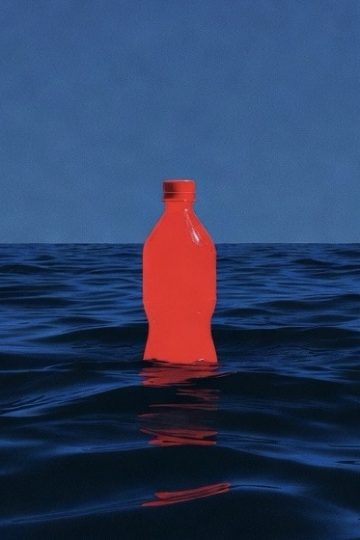
Has Plastic Pollution Reached Irreversible Levels Yet?

No, the exponential rise in global plastic production has not yet caused irreversible degradation to Earth’s ecosystems, but it has pushed us into a high-risk zone. Recent data shows global production reached around 445 million metric tons in 2025, generating massive waste that leaks into oceans, soil, and air, spreading microplastics everywhere. The 2025 Planetary […]

Q&A

Why Does Bryan Johnson Look Older Despite Reversing Biological Age?

Bryan Johnson’s Project Blueprint has produced verifiable biological age reversal—multiple epigenetic clocks show he has reduced his biological age by years, and individual organ ages (heart, lungs, kidneys) test younger than average for his chronological age. Yet his appearance—very low body fat, pale skin, and a lean, almost gaunt face—leads many people to say he […]

Q&A

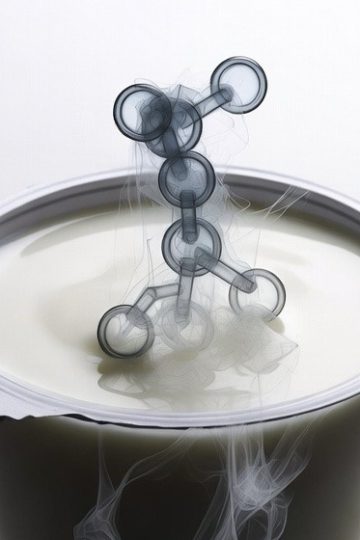
Is Chobani’s “Natural” Yogurt Label Deceptive Due to Phthalates?

Chobani’s “Only Natural Ingredients” claim on plain Greek yogurt faces scrutiny in the ongoing Wysocki v. Chobani class action lawsuit, filed in April 2025. Independent 2024 tests by PlasticList detected trace phthalates—synthetic plastic chemicals like DEHP and DBP—in the yogurt, likely leaching from packaging, which plaintiffs argue misleads consumers expecting purely natural products free of […]

Q&A

Is Body Temperature Different in Men and Women?

Average normal body temperature is similar for men and women, usually around 36.5–37°C (97.7–98.6°F), but small, consistent differences exist. Women often have slightly higher resting temperatures, especially after ovulation, because the hormone progesterone raises basal body temperature by about 0.3–0.5°C. During the menstrual cycle, temperature is typically lower before ovulation and higher in the luteal […]

Q&A

How Did Cookie the Tortoise Get a 3D-Printed Wheel?

In 2024, Cookie, a 10-year-old male red-footed tortoise, flipped over in his enclosure and got pinned under a log while his owners were away. Red-footed tortoises often struggle to right themselves, and the prolonged pressure damaged blood vessels and nerves in his left front leg, causing necrosis. Veterinarians at DoveLewis Emergency Animal Hospital in Portland, […]

Q&A

What’s the Average Age People Lose Their Virginity?

The average age people lose their virginity varies widely by country and culture, with no single global average due to differing definitions and data sources. Surveys indicate most people worldwide first have sexual intercourse between 17 and 20 years old. In the United States, CDC data shows an average of about 17 years for both […]

Q&A

Can Tetris Treat Lazy Eye?

Tetris can help treat lazy eye, or amblyopia, a condition where one eye has weaker vision because the brain favors the stronger eye. Traditional treatment involves patching the strong eye to force use of the weak one, but compliance is often low, especially in kids. Research from McGill University and others shows that playing a […]

Q&A

What Happens If You Bite a Super Hot Jawbreaker?

Biting into a super hot jawbreaker, typically one heated in a microwave, is extremely dangerous because the microwave warms the inner layers faster than the outer shell. This turns the center into superheated molten sugar while the hard exterior traps steam and pressure inside. When you bite down, the shell cracks and the built-up pressure […]

Q&A

Why Isn’t Venezuela Rich Like Saudi Arabia Despite Huge Oil Reserves?

Venezuela holds the world’s largest proven oil reserves (~303 billion barrels as of recent estimates), surpassing Saudi Arabia’s ~267 billion, yet it produces only about 900,000–1.1 million barrels per day in late 2025/early 2026—roughly 1/10th of Saudi Arabia’s ~10 million barrels daily. Saudi oil is mostly light, sweet crude: cheap to extract (low costs), easy […]